

This Week’s Topics:
- Rundown Preamble Ramble: What’s The Deal With Akumako?
- Natalie Played The Trails in the Sky Remake (Hot TitS On A Platter)
- Nintendo is Withholding Switch 2 Dev Kits (Another Factor That Makes Modern Game Dev So Perilous)
- Natalie Muses About Live Services Some More (And How She Thinks It’s All Gonna Burn!)
- Duet Night Abyss Scraps Its Gacha and Stamina System (What Is a Gacha Without the Gacha? Good?)
Rundown Preamble Ramble:
What’s The Deal With Akumako?
Something I sometimes forget is that every Natalie.TF Rundown could be someone’s first. While most elements are self-explanatory thanks to the headers and subject matter— this is a weekly news and editorial segment that begins with a related or unrelated preamble, veers into gaming news, and occasionally drifts into random topics that the creator finds interesting. What podcasts used to be before that term became shorthand for a way for White Patriarchy Enthusiasts to spread their beliefs under the guise of a casual conversation, but written and with only one host.
Akumako: “One host? Then what am I? Some sweaty bag of old tuna?”
…But there are certain elements that are not clear to new readers, such as how there are semiregular interjections from what is presented in a format that I assume people would know to read as character dialogue or quotes. Akumako is presented as my friend/companion/cohost throughout Natalie.TF Rundowns, and has been a core part of Natalie.TF Rundowns for about two years at this point, first appearing in Rundown (2/12/2023) Natalie Reviews Rintarou Panic! (And Other Assorted Treats). However, she did not become a regular part of Natalie.TF Rundowns until Rundown (6/25/2023) A Gray Day Is DOPE!, where she was depicted as killing Natalie as she went on a tangent. Or, as I wrote, “for being too much of an aspie-ass bitch-ass fucklo-ass bitch.”
Akumako: “You have such a way with words.”
Now, why did I decide to start using her in these Rundowns? Well, the answer is somewhat simple. I am a rambler, a yapper, and sometimes when I am talking about a subject, going off into a direction, it can get boring, dull, or clunky if I need to pause and correct myself. Some things are easier to explain through banter between characters. And while I do not play a character in these Rundowns— I am me, I am all of me— I do feel the need to stop myself. I have this compulsion to turn topics into conversations for the sake of framing and variety.
Is it weird that I think it’s easier to explain things in the form of a conversation between characters? …Uh, no. If I had a nickel for every educational video I watched as a child where a complex topic was framed as a conversation, I would have enough for a round trip on the L train. It’s a framing device, a way to present information, and a tool that, as a novelist who enjoys writing character-focused stories, I am familiar with. Or, if that answer is still insufficient, I think it’s just fun and funny. Like someone arguing with their puppet or a little companion critter.
Akumako: “Is that all I am to you? A damn critter?”
No, but you are a tool.
Akumako: “Fuck you!”
Thank you~!
Ah! We have fun here! …But who is Akumako, where does she come from, and what was the impetus for including her in these Rundowns?
Akumako: “I can answer that! In short, the character of Akumako originates from a 7 episode OVA series by the name of K.O. Century Beast Warriors, or KO Beast. Akumako is an antagonist sidekick character, basically the Meowth analog to the series’ Team Rocket equivalent. A shouty and exaggerated little demon woman who enjoys cracking jokes, making exaggerated threats, witnessing violence or destruction, and talking about eating souls. Because that’s what demons do. She’s a fun character, and her portrayal in the English dub is wonderful. She was brought to life by the excellent Lisa Ortiz, who you may know from her role as Lina Inverse in the Central Park Media dub of Slayers. Sonic The Hedgehog’s Amy Rose from 2004 to 2010. Or… a bunch of minor characters in the Pokémon anime! Natalie loved her performance, and that’s probably the reason Akumako, as a character, stuck out to her.”
It definitely was. Ortiz was a very familiar voice from my childhood, and I relished the raspy gremlin energy she brought to the role. …Back to the series though, KO Beast is a good, not great, anime series. Though, it succinctly captured an immaculate vibe unique to 1990s anime, and while I only watched it through once, it stuck with me, becoming something I would occasionally reference. I referenced the Ortiz’s performance, and the loose concept of Akumako with the character of Peatrice in My Life As Abigale Quinlan (2014). The name Akumako, or Aku_Mako, was used as an alias in Terrance & Urabe’s Alien Assassination Adventure (2014) and Return of Mighty Terra: 2052 – The DNApocalypse (2014). In Verde’s Doohickey (2015), KO Beast was brought up a few times as being a much loved anime for a main character, Maxxisaurus “Maxxie” Omega Flare. Hell, I even made Maxxie the owner of the KO Beast IP, and had her create a small mural for the series as a school art project.
The references dried out after that though, not returning until TSF Series #003: J.J.’s Transformation Dysphoria (2019), a short story wherein the titular J.J. is transformed after uttering an ill-advised wish. I decided to have J.J. be transformed by a small demonic character, and in a spew of spontaneous thought, a decision made on the fly, I decided to model, and name, them after Akumako from KO Beast. Because I liked Akumako, and wanted to make my own version of her.
Akumako: “That sounds pretty sus, my girl. You sure that isn’t copyright infringement?”
Do the rightsholders have a copyright on Akumako as a concept? I’m guessing not. The name Akumako just means demon girl. Akuma is a type of Japanese demon, sometimes used as a generic term for demons or devils, and the suffix of ko is commonly affixed to feminine given names is Japan. It is a very basic name, and while Akumako has a unique design, with green hair, a purple jumpsuit, brown skin, and yellow boots, that design is not unique to KO Beast. In my periodic ‘research’ over the years, I found that there is a very similar looking character, also named Akumako, from the anime series Akahori Gedou Hour Rabuge (2005). And if two companies, a decade apart, can use characters with the same name, very similar designs, in the same medium, then why can’t I just take the same character name, design, and general personality? I’m not stealing, I’m taking creative inspiration.
Akumako: “Lying bitch. You are totally stealing. And you love it.”
You’re just saying that to boil my piss.
Anyway, after her debut in TSF Series #003, I decided to reuse her periodically across TSF Series. …In fact, let me just make a list of every TSF Series and clarify what role, if any, she plays in it.
- TSF Series #001-1: My Grandpappy is Pyrie – Not present, as Akumako was not created. She WILL NOT be added to sequels retroactively.
- TSF Series #002: Doctor Decagon – Deep Diver – Not present, Akumako’s role was fulfilled by a Jovian, as a Dr. Octagonecologyst reference.
- TSF Series #003-1: J.J.’s Transformation Dysphoria – The initial introduction of Akumako, she is the magical instigator.
- TSF Series #004-1: Gacha My Soul for an SSR Waifu – The premise is technological in nature, not magical, so Akumako was not present.
- TSF Series #004-2: It’s a VoRE Christmas – The premise is technological in nature, not magical, so Akumako was not present.
- TSF Series #004-3: VoRE_EOS – The premise is technological in nature, not magical, so Akumako was not present.
- TSF Series #005-1: Ghost Milky in… The Cookie Crumbles – The magical instigator was Ghost Milky, not Akumako.
- TSF Series #005-2: Ghost Milky in… Genocide the G.O.D.S. – The magical instigator was Ghost Milky, not Akumako.
- TSF Series #005-3: Ghost Milky in… The White Terror – The magical instigator was Ghost Milky, not Akumako.
- TSF Series #006-1: Office Party Panic – Amorous Indulgence – Not present, but in a later part it is revealed that demons were responsible for the magical instigation and Akumako appears an executive of Hell.
- TSF Series #006-2: Old Person Pandemonium – Anarchistic Incident – Not present, but in a later part it is revealed that demons were responsible for the magical instigation and Akumako appears an executive of Hell.
- TSF Series #006-3: OPPAI 3 – Let’s Go To Hell – Akumako appears an executive of Hell, a major character in the story.
- TSF Series #007: Nana and the Nomap – Akumako is mentioned, but her role as a magical instigator was fulfilled by a related angel-based character named Tenshiko. Just as a last minute twist.
- TSF Series #008: Project F – Final Chapter – Akumako appears at the very end as the secret instigator of the magical body swap event that happened before the beginning of this story.
- TSF Series #009-1: That Time I Became a Cactus Waifu – The magical transformation event was caused by American terrorists who wound up destroying Afro-Eurasia. Akumako has no role to play here.
- TSF Series #010: The Island of Doctor Bitz – Akumako is mentioned as the magical instigator during the end of the story, particularly her ‘crystallized demon girl pussy juice.’
- TSF Series #011-1: My Master; My Suiter – The magical instigator is a skinsuit-ing knife. Akumako is not mentioned.
- TSF Series #011-2: My Master; My Suitor – The magical instigator is a skinsuit-ing knife. Akumako is not mentioned.
- TSF Series #012: Boxfort – An Escapist Transsexual Fantasy – The magical transformation is left deliberately vague. Originally, I planned on incorporating Akumako into the story, but I decided against it as she added too much fun to a depressing story.
- TSF Series #013: Delusion Kamera – Poolside Switching – Akumako provides the protagonist with a mission to take candid pool photos using a magical body swapping camera and formed a business venture with the protagonist’s friend. She does not appear, but she played a BIG role!
- TSF Series #014: Satanica Intervention – What’s Yours is Mine – Akumako is the magical instigator of the story, and rapes one of the protagonists with her pussy-sealing penis made entirely of smegma, identity deathing them.
- TSF Series #015: JK no Sarariman – A Turnabout of Despair! – The cause of the transformation is left deliberately vague, and Akumako’s presence would not improve the story.
- TSF Series #016: Darling Lust – This story is set in a fantasy world, has a firm explanation for all of its TSF elements, and Akumako does not appear. However, she would have appeared if I chose to expand the story.
- TSF Series #017: Cassandra – The Cuddly Demon Queen – Akumako appears as an executive of Hell, and plays a major role in the story. She is also implied to be responsible for isekai-ing the protagonist.
- TSF Series #018: Dæmon;Heäd – Akumako is the main confidant of the protagonist, posing as her girlfriend, and is responsible for her unintended transformation.
Cripes, that took forever to compile…
Akumako: “When’s TSF Series #019 coming out?”
When I find the time, that’s when.
So, as you can see from this list, Akumako is a recurring character, but she is not a mandatory element of TSF Series, and she will NOT be in TSF Series #019, because she’s a little tyrant. Personally, I think that having her as a sometimes element works better than her being this mandatory figure, as it keeps the reader on their toes and gives me more creative freedom. The only rule in TSF Series is that it needs to be TSF. Other than that? It’s a free-for-all!
Akumako: “Hold up, am I the same character in every TSF Series? Are all installments interconnected? Can I jump into any installment just fine or—”
No, ya dumb pea! Every new numbered entry in TSF Series is its own universe. Every Akumako depicted in this series is her own entity. There are no crossovers in the series, except for two exceptions, AND ONLY TWO! Every installment, except for the clearly denoted sequels, like #006-3 and #011-2, can be read with no prerequisite knowledge. I use numbers because otherwise it would be too hard to keep track of all of them.
Akumako: “Really?”
What’s the name of Fire Emblem number 6 and 14? What’s the eighth Tales of game?
Akumako: “…Fuck if I know.”
What’s the name of the seventh Dragon Quest game?
Akumako: “…Dragon Quest 7?”
My point exactly.
Akumako: “Hey! We’re supposed to be talking about ME! Am I related to the Akumako from TSF Series?”
None of the Akumakos from TSF Series even know the others exist, so why would you be related to them? You are your own entity, created to live in these Rundowns as my cohost, and you are, according to the LORE I bury in these dumb things, actually a version of me, Natalie Neumann, wearing an Akumako skinsuit. …Beneath several alternating layers of Natalie and Akumako skinsuits. I think I’m the original Akumako, wearing alternating layers of Natalie and Akumako skinsuits. However, I wiped out memories, did a full on memory swap at some point, so I don’t know who we are. I think we are just two halves of the same combined identity at this point.
Akumako: “♫Don’t overthink it or else you’ll just be stuck in a world where everyone wears all their glasses for a reason!♫“
…Did I do everything I was supposed to? Did I explain who the heck you are?
Akumako: “About as well as you can.”
What does that mean?
Akumako: “I dunno. That you’s a bitch?”
I am a bitch, but that’s beside the point. Lemme just review what I’ve written out here and… yeah, okay, that’s sufficient. Now to grab the KO Beast screencaps from my ripped KO Beast DVDs!
Akumako: “For the record, those are the only DVDs Natalie owns.”
Well, that and a double-sided Godzilla DVD.
I would be more than happy to buy the LaserDisc set of KO Beast and send it to the good people at Kineko Video, because the LaserDisc set for the series is pretty dang cheap, but I know they don’t work for free, and I have never even seen a LaserDisc IRL.
Akumako: “This bitch has never seen a PS4 IRL…”
That’s because I don’t go to other people’s houses! I ain’t no creep!
Natalie Played The Trails in the Sky Remake
(Hot TitS On A Platter)

So, this past weekend I chose to indulge myself a little by checking out the 2025 remake of the series forging Falcom classic, The Legend of Heroes VI: Trails in the Sky (2004). Harbinger of the Trails or Kiseki series that has been keeping Falcom afloat for the past 20 years. Why did I check it out? Well, because while I am not a real fan of Trails, I have a soft spot for Falcom, and was curious to see how the game remade the original, which I do have a bit of familiarity with.
I played Trails in the Sky, for about ten hours a decade ago, and I was not particularly the biggest fan of the game. I believe I described it as “amazingly average” at some point, but I would like to amend my thoughts thanks to hindsight. Trails in the Sky (2004) is a game that is earnest and understanding in what it wants to be, and committed to being the most detailed, thorough, and robust version of that. It wants to be a traditional RPG with all the depth made possible through modern technology. It boasts a cast of hundreds of minor characters, many with their own scattering of micro plots that carry through the rest of the game, and other games. It is a title committed to building a realized world, a platonic ideal of a classic Japanese role-playing game, from a studio that helped define what a Japanese role-playing game is.
Seriously, not enough Anglophones give big ups to Xanadu (1985), because it never came out in the West. The best we got was Famicom Xanadu (1987), and that was just Hudson doing their thang before becoming the PC Engine guys.
I think TitS is a good game, a very good game, but also one that requires the player to be thoroughly invested in its world, characters, and lore in order to fully appreciate it. A detailed game for people with the ability to balance dozens of characters in their head, and can parse the effort and love even in something that seems like filler. Something that I simply lack the patience for, especially nowadays. A decade of micro scrolling through Disco, Twitter, ResetEra, and Bluesky has left me very dismissive of short-form banter from people who I do not know, do not care about, and truthfully do not want to care about. Because I know there won’t be an adequate return on my investment of giving a shit. …Or maybe that flavor text is just meant to be there for those who have the capacity, and I’m not, like, obligated to read it all. Huh. Never considered that until now. I guess I could have just beelined the main story and only talked to everybody once, not seven times.
Akumako: “You’ve made your point! Focus, bitch!”

So, the Trails in the Sky remake aims to be a faithful yet expansive remake that updates the game to modern presentation values, and I understand that pursuit, because TitS 2004 is a very lopsided looking game. I think its UI is great, methodical, yet precise and pointed. I think its pixelated texture low poly 3D world is what HD-2D games should actually strive to be, looking retro while having the modernity of 3D camera control. And I think the artwork it uses is quite sharp, capturing a lot of the characters’ personality. However, it has some of the butt-ugliest sprites I have ever seen in my life.
Originally being designed for PCs, the game aimed to minimize the requirements with pre-rendered character sprites, but the way they look, the filtering over them, and the way they are pixelated, I just did not care for it. And, unlike the Ys games that used the same basic technology, the TitS sprites were a lot less… agile, often standing in place for long stretches of time, rather than rushing through and slashing up mooks at a brisk pace. Proper pixel art sprites would have been far superior, as would little chibi 3D models. Instead, they went with the worst of both worlds.
This, more than anything, justifies a remake in my mind. A remake for basically the entire PSP era of the series— so, six games. Not because the games look old, but because part of them just looks bad. Like, Donkey Kong Country (1994) levels of bad.
Akumako: “Are you trying to pick a fight here?”
Maybe!

With that in mind, I was most curious to see how the cutscenes and presentation would change between games and… huh. TitS 2025 looks good. The assets are a clear step up from even Ys X Nordics (2023). Every environment is lovingly crafted, and the character models are excellent, bar none, no ifs ands or buts. The developers are committed to giving the game a vastly ‘improved’ presentation, and fill story cutscenes with bespoke animations meant to make certain moments come to life in a way that was impossible in the 2004 game. Characters are more expressive, more animated, and are simply more capable than the fruit-snack-looking critters in the original version. Yes, the environments lack the same vibes or aesthetic as the original, but I have accepted that we are still a decade away from people recognizing that retro 3D environments ‘peaked’ in 2003. (Gosh, Ark of Napishtim looked so freaking good, especially if you turn off texture filtering, which nobody on YouTube understood.)
That being said, there is a strong difference between the presentation styles. TitS 2004 was an overhead/isometric game set in large 3D environments that consumes the lion’s share of each screen, with the protagonist being li’l guys in a big world. A world that you could spin at every angle, which was just a nice feature to make the world seem more realized and lively. You can see they modeled all four sides of each building! While TitS 2025 is more committed to the standard third-person behind-the-back perspective. …And if you wanted to make a video essay or lecture on how the camera angle and perspective can change the look and feel of a game, this is a fantastic example. Because more than the revised character designs, world design, and general look of the game, this does a LOT to make the game feel different, and I would say worse.

Much of TitS is about exploring the interiors of homes and bumping into characters, talking to them as you see fit, and generally exploring. The game is designed around sweeping locales, vistas, and making its world feel like a truly large and realized place. In TitS 2004, you see the rooftops of the buildings you pass by, the tops of the trees, and get a sense for the scale of everything without ever needing to look up, because you can’t look up. In TitS 2025, you can look up, but the game is frequently defaults to this notable standard third-person perspective. Where the characters are in the lower center of the screen, the floor takes up the bottom half of the screen, and everything else fills the upper half.
This is a standard for a reason, and there is nothing inherently wrong with this concept. But knowing how this world used to look, this feels wrong to me. The way you interact with and perceive the world changes the impression it leaves on you. The world’s main visual identity has been changed and repainted in more vibrant blue and greens than ever before. While this new, safe, and palatable presentation is likely meant to make it seamless for people immediately pick up and play the title.

On that note, the combat. TitS 2004’s combat is… alright. Far from my favorite, I’m not really even a fan of its grid-based movement (I wish it were more like Radiant Historia), but the worst thing I could say about it was that it was functional. A functional RPG with a bit of flair and dash of inspiration from all sorts of places. 2025 offers a number of changes, ditches the grid system, and has battles take place on the overworld. A handy time-saving feature that makes the world more cohesive. However, the remake also makes several changes to the underlying combat system, by adding a new action based combat system in conjunction with a modernized version of the original turn-based battles. At first, I thought this was a way to let the player choose between an action-based system and a command-based system, as the flurry of tutorials made that seem to be the case.
In actuality, the game wants you to start off encounters on the overworld using a three button action combat system. Standard strikes, dodge, and heavy attacks that use up a green meter that accumulates through standard attacks. This system allows the player to deal small yet rapid damage to enemies, build their stagger meter, and generally trounce enemies while taking minimal damage compared to the trading blows of turn-based combat. By in large, you could just dispose of standard enemies like it’s a super basic action game, and that may be faster in some instances. But you are supposed to beat up some enemies, dealing chip damage, stunning one, before pressing the right face button to initiate command-based combat. If the player times it right, they will get to deal big damage with a preemptive strike, and then be able to use their characters at the start of the Grandia-esque turn order system.

In combat, the player is meant to manage their three core stat meters. Health, magic, and crafts. Health is just health, which is very important, as even early enemies can hit like Truck-kun and will send you to the next dimension. Magic is used to exploit enemy weaknesses and apply various support effects based on this game’s magic orb equipment system. But MP is limited, MP lets you get HP, so you don’t want to spend it willy-nilly unless it’s a boss or obnoxious enemy. While crafts accumulates gradually over battle, have a low cap, and lets characters deal more damage across a wider range. So, in short, you are to use crafts in most combat encounters to conserve your other meters.
This all works… but the balancing just feels off. Like they didn’t have an unwitting tester play the game, pretending to be a newbie, and get totes creamed three battles into the first area. Hell, the first area is what I call a Dragon Quest I starting area as, despite the tension of the storyline, the game seems to want you to spend some time dawdling about, farming for money. Just so you can buy decent equipment, armor, and weapons in order to stop level 3 enemies from cleaving off half of a character’s health in a lucky hit.

I do not remember if the original game was like this, but if it was, this is something that should have changed. Hell, I failed a tutorial boss battle against three souped up mobs, because an enemy murked a child escort in one hit. I did nothing wrong. I was just trying to understand the new mechanics the game was teaching me, missed because of RNG, and I guess that’s enough to lose. So I reloaded my save, bought the upgraded weapons, grinded out a level or two, and beat the boss like it weren’t no thang.
It makes for a bizarre level of friction in what is meant to be a breezier JRPG, meant to make the series more palatable to the RPG loving kids of the now-now. …And speaking of friction, I need to go back and harp on the cutscenes. While I will commend the game for trying to upgrade and expand the presentation of the original, so much of it looks more stilted due to the lack of abstraction. There’s something uncanny about watching a highly detailed 3D model idle in place, lightly emote, while they speak, especially when it is followed by a genuine cutscene where characters move with grace and finesse.

You can plainly tell when more effort was put into a cutscene, and by cutscene, I really mean part of a cutscene. It does not look bad, but the way the presentation jumps in quality can be jarring, especially coming off of a game that was so consistent with its presentation. Just the little sprite critters, textboxes, character portraits, and a few flashier moments that feel more like extensions of battles, rather than bespoke cutscenes. The 2025 remake has higher highs, and looks better on a technical level, but the lack of consistency in the presentation just does not feel right.
Also, I don’t think I will live to see the day when characters’ hair doesn’t clip into their outfits or weapons. We had this problem in the PS2 era, and we have it now in the PS5 era.

Speaking of not feeling right, the English voice acting. I don’t know what happened, but the voice quality of this dub sounds far worse than it did for prior games in the series, for the same characters. The main characters sound a bit more strained, nasally, and like they are fighting through a cold or something. They still sound like the same people when doing a comparison, but it’s so muffled that I could not tell that Estelle and Joshua were reprised by Stephanie Sheh and Johnny Young Bosch when playing. This could be due to a lot of reasons. Maybe the voice actors had a cold, throat issues, and were not able to reprise these roles— roles they have played for 14 years. Maybe there was a new voice acting director who wanted them to present these characters as younger, like their voices had yet to fully develop— which is a weird goal. Maybe they were at a different studio with worse microphones. Or maybe the person at Gungho responsible for editing the audio did something wrong.
I will say that Bosch’s performance improves— no surprise, dude’s an old pro at this— but Sheh maintains this nasally raspiness that just does not fit Estelle’s character, and I don’t know where this comes from. She did not sound like that across her many other roles, or roles as Estelle, so something must have happened.

Hell, the same nasally inflection happens with Michelle Ruff’s portrayal of Scherazard. She sounds fine in Trails Into Reverie. But then look at this trailer and listen to how she annunciates “so early in the morning.” Yet, the voice actor for Oliver, Matthew Mercer, sounds basically the same between that same clip from Reverie and the TitS remake.
Okay, okay, okay. So, I have a lot of qualms about this remake, despite not being the biggest fan of the original. But do I ultimately consider it to be good? Yes. If anything, I would say I prefer it over the original, but I cannot argue that it feels different, that it is a vastly different game, despite its many similarities. It is not a replacement, not a strict upgrade either. Rather… it is just another package, version, or way to experience a story, characters, world, and journey, designed to fit modern technological expectations and gamer sensibilities. Aside from these elements carried over from the original, this is just a new game. A better game in some ways, worse in others, but most of those come down to a matter of opinion.

I have and will continue to say that the state of game remasters, revisions, remakes, and re-whatevers is just in a frustrating quagmire. And at this point, I don’t know what to think. On one hand, remakes like this was a way to prop up and continue series, give devs jobs, and allow people to feel things as they play a game they loved as a kid, but created using modern technology. They do not prevent new games from being made, and it’s widely understood that they are not the original version, that they are remakes, with much of their marketing selling them as such.
If it were possible to buy, enjoy, and play the original going forward, then that is not really much of an issue. If it attracts new fans, then it’s a new game to them. If it fails to capture the original, then the original is always there. And for as much as I may want to believe that every remake should be devoutly respectful of the original in terms of story, characters, world design, art direction, and general vibes, I know that is an impossible ask. Hell, it’s going against what many of the most celebrated remakes of all time have pursued.

Without straying too far off topic, Falcom has had a long history of remaking and fully transforming older works. I loved Ys: Oath in Felghana (2005), a remake of Ys III: Wanderers from Ys (1989) but it’s a completely different game. With reworked story, a new perspective, completely different art direction, and creative liberties up the ass. And… is the game lesser for it? Well, no. I think the game kicks ass, and I don’t have much interest in playing the original. Which, I could, since it came out on Switch under D4’s EGGCONSOLE brand. Twice in fact!
So, what’s the conclusion? …Well, Gamindustri needs to fix its shit and bring older games back so they can be easily bought on major storefronts and ported forward for future generations. The state of re-whatevers that aspire to preserve is too damn unpredictable for me to be happy with it, possibly ever. And remakes… their goal is the same as nearly any game developed in good faith. To be a good game. I often find them unnecessary, and their changes often piss me off in the same way that things often do when they fail to live up to their potential. But I cannot dictate laws that force game developers to live up to my infallible vision. Because everybody’s vision is different. Everybody wants something slightly different from a remake. And, no matter how many times people see remakes come out and be met with ‘it’s good, but it also isn’t as good as it could be and screws up a few things’ they will keep wanting more. I know I will, like an abused spouse begging for pain.
Ugh. Topics like this really make me want to divest from modern gaming and just focus on where it was. Because, at this point, we have 40 years of Real Video Games to enjoy, and that’s basically a lifetime in these modern times.

With this collection, who even NEEDS new games?
…Me. I need new games! I ain’t never gonna stop getting games until I die at age 63 and leave all my goodies to those who deserve it. I gots it all wrote down and er’rythang! Steam might say that your account cannot be transferred to a descendant, but companies can own accounts, and companies are immortal!
Akumako: “Actually, if you die in 2063, then you will be 69. And if you do it on Christmas, you’ll be 69 and 37 days old.”
Hell yeah! New plan! Put it in the history books, booooiiiiii!
Nintendo is Withholding Switch 2 Dev Kits
(Another Factor That Makes Modern Game Dev So Perilous)

So, here’s a topic that I could not help but find curious. Nintendo has been bizarrely stringent on distributing dev kits for Switch 2, with some developers not expecting to receive one until Q1 2026, over half a year since the console came out. This is highly unusual, as dev kits are typically distributed prior to a console being released, and can be purchased for a non-exorbitant fee once the game system has properly launched. Supply issues for consoles could alter the supply issues for dev kits, but when you have (probably) sold five million consoles, you should be able to make at least 5,000 dev kits for external devs.
From a logical perspective, this is just stupid as it could lead to third party software droughts and could slow the amount of ports coming to Switch 2. Game devs want to put their games on Switch 2 and there is a not insignificant subset who want everything on Switch 2. So, why not just make the dev kits and ship them out? Well, this is Nintendo, so logic is strictly optional for… 25% of decisions, and I can only speculate what is going on here.
- Nintendo has seen how their lenient approach to Switch 1 dev kits has turned the Switch into the stomping grounds for shovelware and trash games made by developers who view game dev as a grift. So they want to be more restrictive with how dev kits are distributed.
- Nintendo wants to artificially prolong the life of the Switch 1 by preventing certain developers from upgrading to the Switch 2. Because some people will not be able to upgrade to the Switch 2 for a long while. As a reminder, this is the company that kept the 3DS alive for two years after the Switch 1 came out, as a fallback plan.
- Nintendo currently lacks the infrastructure to offer full support to the influx of devs who would need to learn the Switch 2 and is delaying hardware shipments until they can staff up. Which sounds really stupid, but I would believe it.
Regardless of the reason, I think this will only end badly for Nintendo. Fewer dev kits means fewer releases, and if developers don’t have the time needed to learn how to develop for Switch 2, then that means more shoddy ports, like the upcoming Elden Ring port, harming its reputation from the jump. Which is a problem, as the Switch 2’s whole schtick is that is is a 2023 gaming phablet, rather than a 2015 gaming phablet. (Seriously, what does this look like?)
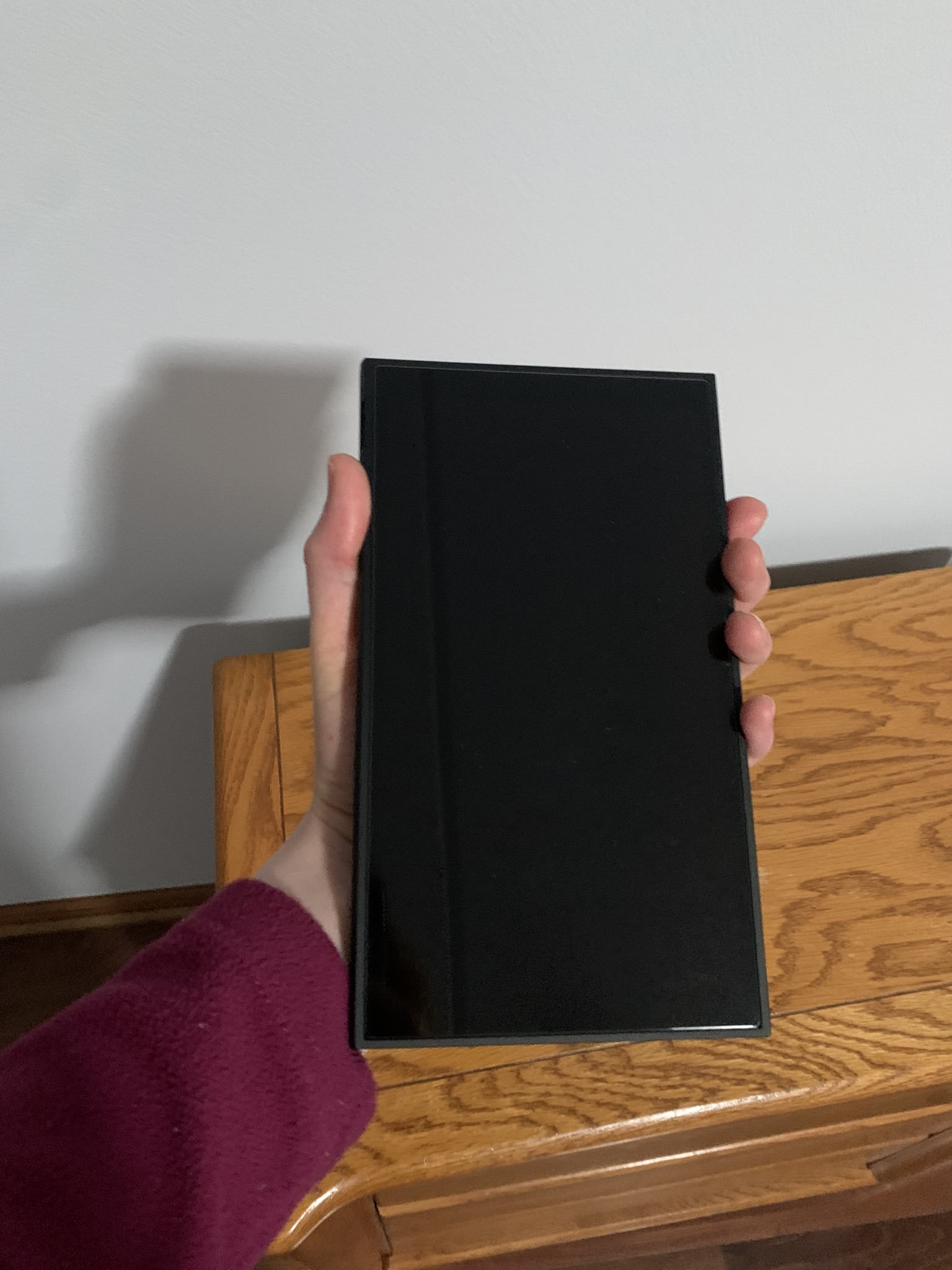
This is something that I worry about. Not as a Nintendo fan— something I would not call myself— but as someone who is increasingly concerned about Real Games and the continued viability of games you play, complete, and then move past. The past few years have been brutal for people working in games. I would discourage anybody from working in this field unless they needed to make games. And while I think the industry avoided a sharp decline (for now), it is far less healthy than it was in, say, 2019.
Many of the issues that allow game developers to be discarded by mega corps, that make it so hard to sell games, and make games so expensive to make are systemic ones. We don’t have a good solution for it other than get organized, stay connected, and join the union. Seriously. If you haven’t, DO IT NOW! So, developers need to take whatever avenue they possibly could. Ever since Twitter was sold to a Nazi Technocrat, the social media landscape has been worse. It has been harder for games, in general, to take off. And with the glutton of scams, grifts, trash, generally awful news, and AI slop trying to pierce people’s feeds, I’d say people are discouraged from exploring social media more than ever.
So, they need to scrounge for other opportunities. They need to gauge their launches, try to synergize with Steam Next Fest, seek out streamers and influencers who might be willing to play their game before a captive audience of dozens. Try to work out coverage from the handful of websites that still get decent traffic and are not just content mills. Use connections, sharp pitches, and slim budget proposals to get games funded from the relatively few publishers willing to fund games. And if they are really lucky, they might be able to get some placement in a Nintendo Direct or Indie World presentation, where millions will sit and look at their game. Maybe even 1% of those millions will actually buy it when it’s 60% off!
When keeping this in perspective, it’s hard for me to not get mad when any bigger company inhibits developers’ ability to make games, sell games, and continue making a living off of this intensive and demanding career. And while I might have once been chuffed or frustrated about this or that game looking dull, blasé, or repetitive compared to the others hitting the market, I find that dismissive attitude harder to rationalize. Even games that people don’t want to make are still something they made for their job, something that will go on a resume, and something whose production helped them continue to live.
I will try to keep this empathetic rational lens in mind as I keep doing these Rundowns, or just see headlines go by. When hearing about some showcase announcement for the revived corpse of Acclaim, I just look at it as a pragmatic mechanism. A way for games to get funded, people to get paid for making games, and for the medium to be expanded with new games, even if they look mid.
Akumako: “What about signs that things aren’t alright at Ubisoft, given how they just sold the IP for five previous titles to Atari of all people. When we know that Atari is not exactly flush with cash. We even looked at their financials a while back. Are you gonna be sad or happy about that?”
I don’t like Ubisoft, but I know that anything that happens to them is just going to hurt the workers, lead to layoffs, and let the executives jump away with golden parachutes. Because that’s how modern businesses operate in a world where crime is legal is you are rich and White. I’ll believe that is not the case when I see these types of people go to jail. Not because I believe in jail, but it is a sign of justice.
Akumako: “…That quickly devolved into a 1,000 word tangent.”
It’s a skill of mine.
Natalie Muses About Live Services Some More
(And How She Thinks It’s All Gonna Burn!)

So, there are a handful of live service related stories, and general ideas, that cropped up in my feeds this past week that I think can be stitched together to make a semi-cohesive story. And that story is centered around the subject of live services— my favorite! But as a framing device, I think that I should spin a li’l history lesson— my actual favorite!
In the mid 2000s the Japanese games industry was undergoing a dramatic shift. Console sales went down and the jump to HD game development, to making large scale games for complex machines, put a strain on the deluge of mid-scale developers who thrived during the PS2 generation. Many developers scaled back operations to move to handheld game development, while others opted to make games for cell phones. At this point in time, Japanese cell phones were on a whole ‘nother level compared to the rest of the world. Well, prior the luxury item that was the original iPhone. There is an entire (dying) history to these Japanese Feature Phones, which were home to hundreds of different games and obscure tie-ins to major properties. However, the biggest thing to come from this rise in Japanese phone games is a shift away from bite-sized micro-experiences towards free-to-play games with randomized microtransactions, and online dependencies. Also known as gacha games.
This new field of Japanese gacha games was not something never seen before. But throughout the early 2010s, it exploded in popularity. Plucky startups grew into to billion-dollar companies, and phone live services became the growth sector in the Japanese games industry. More and more developers moved away from developing packaged games to developing live operations. Studios changed their structure, grew with trends, grew as feature phones, then smartphones, became increasingly powerful. In the process, many of these games died. Most games of this era are lost media.
As budgets grew and phone technology became unified across the world, more Japanese developers began localizing these gacha live services across the world, where they became a cornerstone of the games industry. However, this success also attracted more game developers, particularly those in Korea and China, to pursue their own take on these gacha games, and they proved to be successful throughout the latter half of the 2010s. While I doubt this particular subset of gacha gaming represented the majority of mobile game revenue of the 2010, it was a big part of the broader games industry. It kept investor money coming in, kept people employed, and developers honed their skill sets around making these games.
…Then Genshin Impact came out and the world of gacha was changed forever. Before this, gacha games were almost exclusively menu and instance based games. Where you navigate a complex web of menus, options, and customization fields before setting off on quests, stories, or some snippet of traditional gameplay. They did not take place in a continuous world, they did not have the structure of most console games, and were meant to be lite experiences. But that all kind of changed with Genshin, whose immense ambitions changed what gacha games were and could be. Because Genshin Impact is effectively a console open world action RPG with the appropriate level of production values, playable on a smartphone, PC, or console, complete with all the usual gacha trappings. The summoning, microtransactions, endless grinding, dailies, and hot waifus for you to buy via the art of gambling.
This marked a shift in the world of gacha games, a generational leap, and while games following the old menu structure and smaller scope were still made— looking at you Uma Musume (2021)— this changed the development environment needed to make a competing gacha game. Projects that cost a couple million USD were now ballooning past 50 million USD due to scale, production values, testing, simultaneous localization costs, and general marketing. The era of games like Fate Grand Order being an industry leader were over, and basically every new gacha game over the past four years has been reacting to Genshin in some way.
During these past few years, long-standing gacha games have been struggling to keep up. Players were leaving, new players were not willing to get into a game that has been around for five years, and games made for 2015 budget phones looked positively cryptic next to a game boasting PS4-level graphics. Furthermore, development of these games was becoming harder, because the systems these games relied upon were getting harder to deal with and manage. Middleware stopped being supported, developers who made these systems left their companies, and as features compounded, the base of these programs became harder to deal with.
As a result of these factors, a lot of 2010s titles have been lined up for the chopping block. Just this past week, Final Fantasy: Brave Exvius (2015) and Dragon Quest of the Stars (2015), got the coveted EOS announcement, and they are not outliers. This raises questions about how much Japanese game developers, who have been honing this older form of gacha game, can compete with the more striking and impressive gachas coming from Korea and China. …And questions about the future for these game developers. Of the individuals who are making these games, and the whole studios they work for. Because while one might think that someone who directed or did planning on a gacha game that came out in 2017 could just move into the console space… that’s just not true. The skills, while still being based in video games, do not neatly transfer, and these people are left without jobs. They do not have experience designing or directing console games, and they spent a decade plus of their career specializing in a declining subset of an industry.
This entire segment was sparked by a mobile game dev veteran saying that “I once again feel that gacha games are becoming like the Titanic.” And I believe it. The same article that I got this quote from said that Japanese domestic game market for live services dropped from $10.89 billion in 2023 to $7.48 billion in 2024. A steep decline, made all the worse as costs keep going up as developers compete for people’s time and money.
It’s easy to interpret this as a decline in the Japanese games industry as they are unable to adapt as quickly as larger countries with more agile development structure or… rampantly accepted employee abuse. But I view this as a sign that the live service side of the games industry is brushing up against certain limits. The problem with all entertainment services is that people only have so many hours in the day, and when you flood the market with options, then there’s less money to share around. Cue the Matthew Ball slide showing that 90% of all time spent playing games in 2023 was spent playing live services.

Gaming has become a matured market. There will not be another massive influx of money or people who take up gaming. The growth gaming experienced in the 2010s cannot be replicated again, as games have already been brought to people around the world. Mobile has long-since overtaken console and PC games as the true economic heart of the games industry, and given the accessibility of the smartphone, they will continue to be the key driver of growth, likely the first device most children play their first video game on. Which, statically, will probably be Roblox.
How do you break a cycle like this? Well, not to sound too negative, I don’t think you do. Smartphones are the preferred gaming device amongst the Zoomies (ages 13 to 28). Roblox and Fortnite alone are designed to consume one’s life and just are video games to millions of people. These games are accessible, they are social platforms, they cost nothing to get involved, and are the main option many children have for video games in a harsh economic climate. Why would a parent buy their kid a Switch when all they want is Robux or V-Bucks, which they can pick up when out getting groceries.
I fear a future where a generation of people just view video games as interactive content, don’t care about its design, its history, or analysis, and just view it as a thing they do when they’re bored. Some people will always care about games, game history, and want to see new games that do new things. But every time I think back to the data, to seeing a handful of live service games define gaming for so much of the audience, I worry that things will only get worse. That the games industry as I know it, as I have observed for two decades, is going to enter a steep decline. That artists, creatives, and those who analyze games are all going to be left by the wayside, either denied the essentials to live, or denied the opportunity to create.
…Also, a ‘practical’ solution would be to just destroy the servers for Fortnite and Roblox, rendering the games unplayable. …But then the players would just head off to TikTok and rot their brains on right-wing propaganda or whatever people do on that platform. I wouldn’t know. TikTok refuses to allow me to log back into my account. Not that I would even want to use it. The content distribution system is all wrong.
Duet Night Abyss Scraps Its Gacha and Stamina System
(What Is a Gacha Without the Gacha? Good?)
…So, I was originally hoping to implement this story into the last segment, but I couldn’t do it. Sorry. So it’s getting its own segment.
Duet Night Abyss is one of the many gacha live services that has been riding the post Genshin waves. Another Chinese anime action RPG with the goal of creating a vast world full of attractive characters and propped up by flashy animations. It actually is trying something slightly different, featuring character stat building through dialogue options, dialogue stat checks, and a dual character system. Its gameplay is a lot more character action than I would expect from the genre, with fast, dexterous moves, and even a DMC style combo rating. I actually watched a beta impression video on it by Pseychie, a prominent gacha game YouTuber, a while back, as I like to keep abreast of the happenings in this wild world. Based on that snippet, it seemed like a good gacha game that would have been better if it was a packaged game. Though, at least it was projecting reasonable pull rates for new weapons and characters, just letting you get a copy of the new character after 50 pulls.
Just this past week, the developers announced that the game was going live on October 28, 2025— which is not an ideal time in my book, but I think gaming moved past Octobergeddon. But, alongside this announcement, the developers announced that the game would do something relatively unheard. They were making all characters and weapons free to unlock, with no stamina system to limit what the player can do. Seemingly making it a gacha live service… without the gacha.
So, this is an idea that I have a very strong fascination with. It’s why I reviewed Mega Man X DiVE Offline, one of the few live services to be repackaged as an offline title. Why I checked out Animal Crossing: Pocket Camp when it was released as a paid app. And why I wrote Dragalia Lost V3 Re;Works, a comprehensive game design document that explains, in exhaustive detail, how Dragalia Lost (2018) could be converted into an offline title, while rebalancing every character and introducing dribs and drabs of new content.
I am fascinated by live services, admire what can be done with them, and think that they are games worthy or praise and analysis just as much as any other. (Except for Fortnite and Roblox, those are interactive content delivery platforms.) So any time a gacha game says they are ditching their main drive of monetization, ditching the bad game design of a gacha system, I grow very curious. From what the press release says, it sounds as if they are just letting you grind to your heart’s content. No gacha, no stamina system, no real limitations. You can just play it, like a real video game, and choose what you want to pursue, what characters you want to unlock. Sure, that is still grindy. Sure, I would say that no game other than a framing sim should contain the word “farm” in their press release. But this is an improvement. However, I have to ask where the money will come from then?
In an Automaton article, Duet Night Abyss producer Deca Bear (great name) was surprisingly direct and confident with this decision, saying “We’re avoiding pay-to-win mechanics and forced spending as much as possible, instead prioritizing getting players to enjoy the game. In the short term, this means having to give up on some fast monetization opportunities, but in the long term, we believe it will lead to stronger player retention, a better reputation, and a healthier, more sustainable business model. ” Which is a bold strategy, it’s doing the right thing, but also something that sounds like it could be a recipe for disaster. Per the same article, Duet Night Abyss will rely on cosmetics as its sole monetization method, seemingly lacking even those pesky ‘time-savers’ that rebalance the game to something sane.
Now, part of me cynically thinks that this might be some creative PR move, a way to pivot the game in the eyes of the gacha community, earn goodwill, and attract players under the guise of being ethical, in order to then spend that goodwill at a later point. Now, I HOPE that is not the case! I want to believe that people, even those investing oodles into a commercial project like this, want to do something transparent and not exploitative of their audience. I want to believe in this game, and am curious to see how it shapes up at launch. In fact…
Akumako: “…Fine, you can play it for a week after it comes out, assuming you are not on caretaker duties.”
Yay~!
Progress Report 2025-08-31

Here’s the full resolution header image for this week’s Rundown. The DVD rip screenshots I took were a resounding 14 MB when combined like this. Also, if you are wondering why there are borders on some of these screenshots, that’s just an artifact of DVD technology, especially in the early 2000s. VHS, DVDs, and older games often had black borders on the screen as ‘TV safe lines’ to prevent information from being cut off by CRT displays. God, I am so glad we don’t need to deal with CRTs anymore! They just destroyed image quality. And if they were so great, why aren’t you carrying around a CRT phone and editing spreadsheets on a CRT? We only need one type of screen, and it may as well be what sane people use nowadays.
Also, Akumako is a perfect henchwoman. I love her so, so much!
Akumako: “But you love me more, don’t you? …Master.”
Ha! No! My feelings towards you are determined by the bit. But I will let you eat my soul when I die!
Akumako: “…Eh, that’s good enough for me!”
2025-08-24: Wrote 4,200 words for TSF Showcase 2025-11, wrapping that shit up, meaning I can get back to Da Hundo Line and hopefully finish this fucking thing! Wrote 3,100 words on the Trails in the Sky remake. Because I like calling that game TITS!
2025-08-25: Skimmed KO Beast for the header image, edited 8,200 words for TSF Showcase 2025-11, because I want to get it ret-2-go a month in advance. But I didn’t have the time to edit it all after work, so I decided to finish off season one of Severance. It’s a good prestige drama show, but man was it designed to be the first season of a larger storyline, and boy can it be too subdued and slow for its own good.
2025-08-26: Today was another big work day. Starting at around 10:30 AM and ending at 00:45. Because I am the type of person who would 3 12-hour-days a week than 5 8-hour-days.
2025-08-27: Finished editing the last 5,500 words of TSF Showcase 2025-11, grabbing screenshots, of text, and posting it. Wanted to do something more, but I kept chatting with Missy!
2025-08-28: Wrote 2,500 words, edited this 9.5k bitch. Missy convinced me to play through Pokemon Y by LYING about how short it was. I got four hours in, and wasn’t even close to the second gym!
2025-08-29: More Pokemon Y! Played like ten hours today, getting right up until the third gym.
2025-08-30: Like 12 hours of Pokemon Y! THANKS SCRUMPTIOUS! At least I’m at the final third now, having beaten the sixth gym.
i just interpreted akumako in a similar light to how youtube review channels in the early 2010s had a character interject, some just being the presenter with a shitty mustache
Yeah, Akumako is pretty much that. I was really into ‘internet reviewers’ back in the last 2000s and early 2010. Channel Awesome, AVGN, HVGN, a deluge of other people who are super obscure nowadays, like The Necro Critic. For better or for worse, these shows did a lot to shape my critical lens, shape how I write, and gave me the drive to find my voice as a critic and (after nine months) a creator. I did not really view Akumako as my version of this trend, but… she is, and I carry many influences from that era. Hell, I would say that TSF Showcase is effectively my version of Atop the Fourth Wall specifically, as Linkara was always one of my favorites (not only for the subject, but his voice as a critic, and I have continued watching his show regularly for almost 17 years.)