

This Week’s Topics:
- Rundown Preamble Ramble: Natsume Atari Is Now Winning Entertainment Group
- Student Transfer Version 9 is Out! (Enjoy and Rejoice in The Swappings!)
- GOG is Under New Ownership! (Which Could be Good or Bad)
- Granblue Fantasy is Coming to Steam! (Which is Weird and Confusing!)
- Rance is Coming to Steam! (Steam, Clarify Your Damn Guidelines!)
- Natalie Muses About Chinese RPGs (Because She’s Ignorant But Wants to Care)
Rundown Preamble Ramble:
Natsume Atari Is Now Winning Entertainment Group
The story here is that Natsume Atari has changed its name to Winning Entertainment Group, and if you are confused by that, you should be, because the fact that this company was called that, or even exists, leads into so many wormholes that it drives me crazy whenever I see their dumb name come up. I’ve talked about this before, but I will need to explain aaaalllll of this in some future Rundown. And, well, it will be easier if I do it now and link back to this segment later. Here I go!
Starting with the first part of this confusion, Natsume is a rather curious entity for several reasons. Natsume Co., Ltd. was founded in 1987 as a Japanese game developer that had an admirable run on the NES and SNES, putting out games that would grow on to become ‘cult hits’ or ‘underappreciated classics’ by weird freaks on the internet— like me. Being a forward-thinking company, Natsume Co., Ltd. launched an American branch in 1988 by the name of Natsume Inc. The two worked in twain for years before, rather abruptly, the two parties split off in 1995 for reasons that you’d need to do an interview to suss out.
This split-up was rather confusing to the North American audience, as Natsume Co., Ltd. continued creating a deluge of titles throughout the 90s and 2000s, though most were Japanese exclusive or licensed titles. Tony Hawk’s Pro Skater for Game Boy Color, Power Rangers games for GBA, even some Nicktoons games for DS. They even made the first few Medabot games, or Medarot games if you like worse names. However, they never delivered any hugely noteworthy game after the Super Nintendo. They just kind of made do, searched for work where they could, and delivered a lot of games. Also, most companies do not proudly display the type of company they are, so you cannot assume the layperson to see the difference between an incorporated entity and a limited company. (There basically is none.)
Meanwhile, Natsume Inc. has remained a game publisher, not developer, and spent the first few years of their independent life publishing basically whatever. Lufia II (1994), a couple Puzzle Bobble games for PS1, and the seminal kissing game masterpiece known as Chulip (2002). Natsume Inc. continued to publish a couple Natsume Co., Ltd. games like Pocky & Rocky with Becky (2001) and some Medabots titles they developed. But the series most people will know Natsume Inc. for is Harvest Moon. …And now I need to explain another quirk with this damn mess.
Okay! In 1996, Victor Interactive Software, Inc., a small division of the larger Victor Entertainment, Inc., also known as JVC, developed a game called Bokujo Monogatari, or Farm Story. A farming life sim released late into the SNES’s lifespan, and a true passion project from a small team who, in their desire to create something new, made the first cozy farm sim. At least the first one that I care to acknowledge. Because the SNES was basically dead in the US at this point, nobody was eager to publish this game internationally, but Natsume Inc. decided to take a chance and publish the title. However, rather than just call it Farm Story, Natsume Inc. decided to call it Harvest Moon and trademark the name of Harvest Moon.
This was, per what I can tell, not a common practice. Even if a western publisher was responsible for filing the name in another region, the original developer or IP holder typically retained ownership of the trademark. And nowadays, stuff like this would never happen. With this trademark, Natsume Inc. owned the name Harvest Moon and subsequently used it on every localized Bokujo Monogatari game from 1997 to 2013.
In 2003 Victor decided to get out of video games completely and sold Victor Interactive Software, Inc., the folks behind Bokujo Monogatari, to Marvelous Entertainment. Victor Interactive Software was renamed to Marvelous Interactive Inc., and continued to produce Bokujo Monogatari games at a steady pace. Marvelous Entertainment largely stayed out of the western market, and mostly published titles from the likes of Grasshopper and Tamsoft. So there was no reason to NOT maintain a working relationship with Natsume Inc. when it came to publishing Bokujo Monogatari games as Harvest Moon. However, things got weird in 2011, when Marvelous Entertainment merged with AQ Interactive. …Oh, and some mobile company called Liveware. I don’t care about Liveware.
Okay, so who the hell are AQ Interactive? They are a wack-ass homunculus of Artoon, Cavia, FeelPlus, and Xseed. They took the developers of Blinx 2: Masters of Time and Space (2004), Yoshi’s Island DS (2007), Club Penguin: Game Day! (2010), Nier Gestalt (2010), Bullet Witch (2006), Beat Down: Fists of Vengeance (2005), Hajime no Ippo: Revolution (2007), MindJack (2011), N₃ The Second: Ninety-Nine (K)Nights II: The Second (2010), Blue Dragon (2006), Lost Odyssey (2008), and The Last Story (2011) and put them together. And if that is not the formula to make the best damn developer of all time, I dunno what is!
This new entity was Marvelous AQL, who would later rename themselves to Marvelous Inc., and this represented something of a problem for Natsume Inc. Marvelous AQL had their own western publishing branch, Xseed, later renamed Marvelous USA, so they no longer needed Natsume Inc. to handle the international publication of Bokujo Monogatari. Ideally, Natsume Inc. would accept this and just sell them the trademark. But for one reason or another, they did not, and we were met with the Harvest Moon timeline split.
Marvelous, Inc. would continue to develop the Bokujo Monogatari, and Marvelous USA would localize them under the name of Story of Seasons. While Natsume Inc. would go on to use the Harvest Moon name on titles from developers Tabot, Inc., who would later be renamed APPCI. A fairly obscure studio who did support work on some Pokémon games and made Birthdays: The Beginning (2017).
This is all rather confusing to a casual fan because… have you read any of this? But what makes this extra confusing is how Marvelous has been remaking a bunch of Bokujo Monogatari titles over the past decade. Namely, Friends of Mineral Town, A Wonderful Life, and Grand Bazaar. Games that are meant to appeal to people who played these specific games… but even though the subtitle is identical, the series name is different, and that’s just plain old confusing!
Sorry, sorry, I HAD to go on that tangent, because like weeds, all of these points are related, intermingled.
With regard to the overarching topic, Natsume Inc. and Natsume Co., Ltd. are simply different companies at this point, and only sometimes collaborate. Natsume Inc. is an American game publisher that owns the Harvest Moon trademark and the new Harvest Moon games they have released since 2013. Marvelous is the owner of the Story of Seasons trademark and the successor to the developer of every Harvest Moon game released from 1996 to 2013. Natsume Co., Ltd. is a Japanese game developer that mostly worked on licensed games and the Medabot series during the late 90s and 2000s.
…Oh, and Natsume Inc., the American company, has its own subsidiary, Natsume Inc. Japan.
ANYWAY, that explains Natsume Co., Ltd. up until about 2013, when the company restructured and merged with a company named Atari Inc.
…And now I need to explain the history of Atari, don’t I? Goldarn it.
Atari, Inc. was formed in 1972 by a group of budding programmers who thought that the world of computer game entertainment had some major potential and made the ancient ancestor of all video games, Pong. With the name Atari being borrowed from a term in the Chinese board game Go. Atari, Inc. created home video game consoles as we know them today, and if you are reading this site, you don’t need me to tell you about the success of the Atari 2600, aka the Atari VCS. However, the namesake and form of Atari grew murky during the early 1980s after the company was in a bit of flux, let’s say. After the North American Video Game Console Crash of 1983, Atari’s owner circa 1976, Warner Communications, decided that they wanted to get rid of this company. They lost a bunch of money, and wanted to get out ASAP. So they effectively broke off the company into two pieces. Atari Corporation and Atari Games Corporation.
Atari Corporation put out the Atari 7800, Lynx, and Atari Jaguar among other systems, and if you know the gist of games history, you know those systems were all failures. Atari Corporation crashed and burned through the 1990s before being acquired by Hasbro as their video game division, Hasbro Interactive, purchased in 1998 for a mere $5 million. There, they worked as a component of Hasbro’s entertainment machine before the whole of Hasbro Interactive was acquired by Infogrames in 2001. With all of Atari’s trademarks and licenses, Infogrames rebranded themselves as Atari SA in 2003. Under their new namesake, Atari SA mostly used their newfound namesake to publish a veritable grab bag of games. Such as a bunch of Dragon Ball Z games until Bandai Namco came to be and actually took the international market seriously. The only good run of Godzilla games, ever. The brilliant Atari Flashback console. And the dismal 2008 Alone in the Dark reboot.
Atari Games Corporation was a game developer that created games for a wide variety of platforms throughout the 1980s, but eventually got into legal trouble with Nintendo after launching unlicensed NES games under the brand name of Tengen. After their unsuccessful lawsuit with Nintendo, Time Warner Interactive, formerly Warner Communications, acquired controlling interest in Atari Games Corporation. Warner always owned 40% of Atari Games Corporation, but after Atari Games Corporation faced financial troubles, Warner became the majority shareholder, owning over 50%. Warner then sold their interest in Atari Games Corporation in 1996, where their assets were acquired by WMS Industries. Who are WMS Industries? A game developer that made a killing in the early days of arcade games with their brands Williams, Bally and Midway. They are responsible for 80s classics like Defender (1981), Joust (1982), Robotron: 2084 (1982), and Sinistar (1983), along with 90s staples like Mortal Kombat (1992) and NBA Jam (1993).
In 1996, WMS Industries bought Atari Games Corporation, made them part of their video games division, then spun-off their video game ventures as a new company, Midway Games Inc., in 1998. Where they were the ONLY major games publisher to ever call Chicago its home. And as a Chicago gal, that makes me very bitter. Midway… had a run. But as a reorganized revision of a company that had always excelled in the arcades, they struggled to find their footing in the more IP driven console space. A domain where people wanted to buy games from a familiar brand. Not a name that was slapped on everything from Hydro Thunder (1999), The Suffering (2004), and the first two Shadow Hearts games. Sensing they were a all over the place, Midway eventually shut down the remnants of Atari Games in 2003.
Midway Games Inc. later collapsed after the 2008 financial crisis and releasing a series of costly HD games that did not make back their money. Like John Woo’s Stranglehold (2007). Or the canceled This is Vegas. So they sold off their assets to whoever would pay, and Warner Bros Interactive, a publisher/developer established in 2004, was willing to pay bankruptcy rates for a grab bag of IPs. Meaning that Warner regained ownership of Atari Games’ back catalog 13 years after they sold them. But not any of the classic Atari games from the 70s and early 80s. Everybody got that?
However, it gets even more confusing, because Atari SA, née Infogrames, renamed their main development studio, Infogrames, Inc., who was originally GT Interactive, to Atari, Inc. So, we have TWO DEVELOPERS with the EXACT same name!
Now, I could go and talk about the way Atari SA fumbled things over the years. How terrible their mid-2010s output was. How they pivoted to crypto for a stint. How they went bankrupt in 2013. And how they sold off some Atari IP which… bro, what? You went through all this trouble to get these IPs, and then sell them to Embracer of all people? lol. lmao even.
However, the current incarnation of Atari SA is committed to just making quality retro-flavored games. Making them available via the AntStream streaming service. Having Nightdive and Digital Eclipse make the best damn re-releases and collections around. Buying Thunderful after the indie market became even more of a crapshoot. And even buying other cheapo IPs from other publishers.
…But this Atari has ABSOLUTELY NOTHING to do with the Atari in Natsume Atari Co., Ltd.
Because Atari Inc. (1972-1985), Atari, Inc. (1999-present), and the Japanese Atari Inc. are not the same company! There are THREE companies named Atari Inc. How? How did nobody THINK about how confusing this is? AAAARRRRGGGHHHH!!!!!!
Atari Inc. (Japan) was a Pachinko company that decided to merge with Natsume Co., Ltd. in 2013. Why did Natsume Co., Ltd. want to merge with a pachinko company? I don’t know! I tried to find a contemporaneous announcement of this, tried to check their website, but after ten minutes, I gave up. The reason is not that important. What is important is what the newly formed Natsume Atari Co., Ltd.
In the decade since their merger, Natsume Atari Co., Ltd. developed a couple Kamen Rider games, worked on Eiyuden Chronicle: Rising (2022), and lead the FuRyu Disappointment™ that was Reynatis (2024). But the studio also has a sub-division called Tengo Project, where a bunch of old-ass dudes make better versions of the games they made when they were spry and limited by technology. Games like Wild Guns Reloaded (2016), The Ninja Saviors: Return of the Warriors (2019), Pocky & Rocky Reshrined (2022), and Shadow of the Ninja Reborn (2024). Which I NEVER hear brought up in discussions about video game remakes, when they should be.
…So, what’s the lesson here? What did we learn by going through this? Well, mergers and acquisitions are nightmares. And that you should NOT distinguish two completely different companies with a different classifications like this. Co., Ltd. Inc. Corporation. SA. LLC. LP. These are not meaningful or wise way to distinguish companies. NOBODY says these things and outside of legal documents, NOBODY cares about what corporate suffixes a company has. And IF you think enough time has passed for you to just reuse a name… you’re just wrong. All it does is make things MORE confusing!
Lucasarts, Acclaim, Infogrames, Intellivision, Digital Eclipse, so many company names have been resurrected from the grave, and I frankly HATE IT when this happens. Just come up with a new company name! Or be like THQ Nordic and transform it in a meaningful way. PLEASE!
Ahem.
What I mean to say is thank you Winning Entertainment née Natsume Atari. I don’t like your new name, but it is not the confusing mess that your last one is. It does make you sound like a prediction market though.
Student Transfer Version 9 is Out!
(Enjoy and Rejoice in The Swappings!)
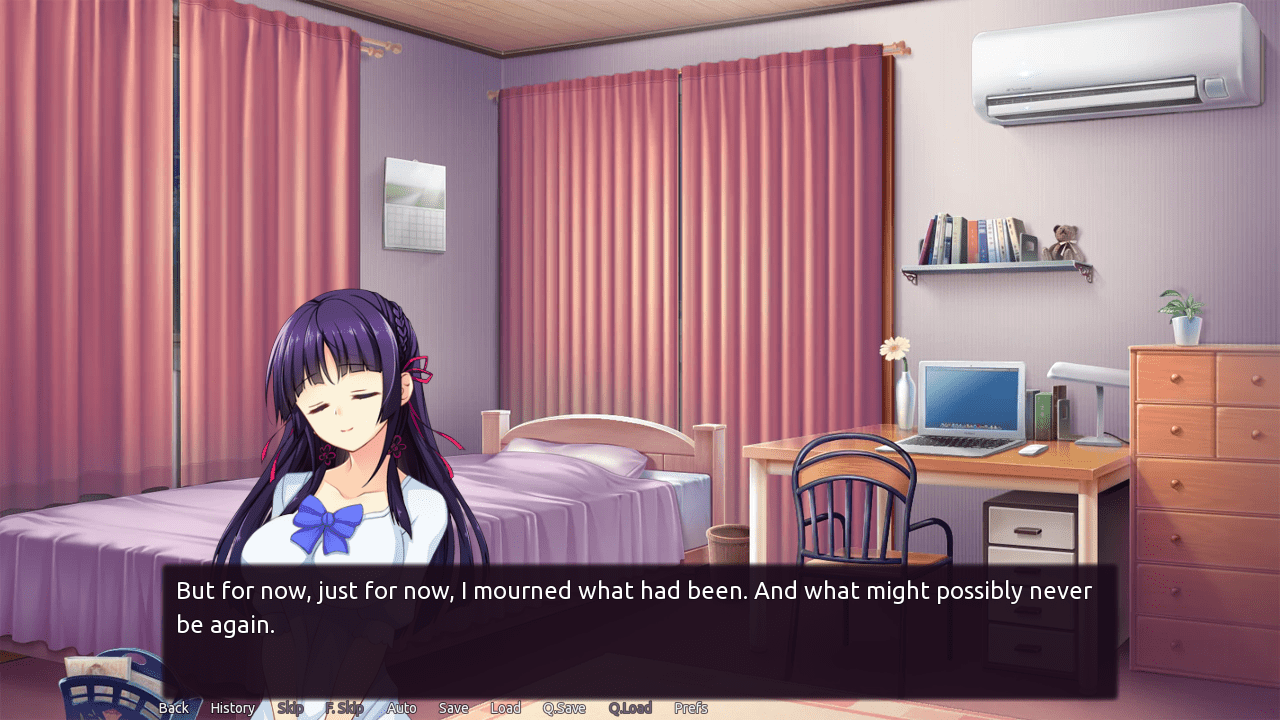
In case you have not heard, Student Transfer Version 9 released this past Monday afternoon, and is available to download at the usual site. As per usual, I am in the process of playing through it for review, but that may take a while, given how long some of the updated routes are and how I am currently entering busy season at work, and want to do as much prep work as possible, as spring tax season last year was damn miserable for me. Accordingly, my review of Version 9 will not be particularly timely, and I might not get it out until the latter half of the month. Because while I love Student Transfer… my day job comes first.
Anyway, I prepared my flowcharts, I am enjoying my time with the game so far, barring some irks with the current trajectory with the project, and I look forward to sharing my thoughts with you SOON™!


That’s all! Now back to the news.
GOG is Under New Ownership!
(Which Could be Good or Bad)

Well, this was an odd story to end out the year. GOG, the DRM-free storefront for PC games and home of many classic PC titles, has been sold by its owners at CD Projekt for a trim $25 million USD, and is now being operated as an independent company owned by Michał Kiciński, the co-founder of CD Projekt and GOG. Which is an… odd arrangement.
The development of CD Projekt from a plucky Eurojank studio to a developer of True AAA Experiences has been an immensely impressive one, and the fact they are expanding so much is both exciting and concerning. Because I remember how terrible the crunch on Cyberpunk 2077 was and how management shoved it out a few months before it was finished. However, their desire to flourish as a global AAA studio was somewhat at odds with the side project that is GOG. A place to buy DRM-free games and several noteworthy titles that were not legally available for several years.
Next to games with seven languages and budgets well into nine digits, GOG seems like a rounding error, and does not make much sense as part of a larger corporate structure. So spinning off the company makes sense for several reasons. Independence allows for leaner operations and for GOG to focus on doing what they want to do without adhering to a larger corporate structure. This way the funds made by selling games on GOG filter directly back to GOG, rather than accruing into the main game development funds. Meaning GOG has more money to pursue licenses, update games, and sell them on their storefront indefinitely. And there may be certain legal and registration benefits for GOG being a dedicated storefront. I don’t know, I’m not a Polish tax accountant.
A change in ownership like this could be fine, but that depends entirely on Michał Kiciński. What he wants to actually do with this company, how good he is at running it, and if he dares to fly too close to the sun with some of his desires. I know nothing about the guy as a person. He could be crazy, or he could have kept his cool despite owning 10% of CD Projekt.
Also, on a semi-related note, I decided to not become a GOG Patron, due to the simple fact that there are tax-deductible ways to contribute to the preservation of gaming history. Like donating to the Video Game History Foundation. And I think you should too, as effective 2026, single individuals can take an “above the line” charitable deduction of up to $1,000 without itemizing. And this is only for CASH contributions, no Goodwill donations or whatever.
Granblue Fantasy is Coming to Steam!
(Which is Weird and Confusing!)

One of the surprise hit releases of 2025 was Umamusume. A horse girl raising (NOT RACING) simulation game from mobile juggernaut Cygames that took Japan by storm when it launched in 2021, and gradually gained a following in other Asian countries. As a Second Generation mobile live service gacha game, I assumed it would be viewed as outmoded in a post-Genshin Third Generation gacha world, and function as little more than a niche curiosity. Instead, it was arguably the big 2025 gacha hit of the Anglosphere, with a highly dedicated and highly online community. It’s so pervasive that I don’t go a day without seeing these dumb horse girls because I need to monitor a community where people like to post softcore horse girl porn.
As a self-published title in the worldwide market, this was fabulous news for Cygames, who likely looked at their strategy and tried to replicate it with an older title. Yes, I am talking about Princess Connect! Re:Dive Dragalia Lost World Flipper the title that really made them the company they are today, Granblue Fantasy (2014). I don’t know how to describe Granblue Fantasy other than the gacha game of the 2010s that largely established the standards and norms of the genre that many, if not most, gacha developers tried following for the next 7 years. It defined what I am choosing to call the Second Generation of gacha games, before Genshin and their Chinese “AAA” production standards shaped up the whole scene.
Its event structure, gacha structure, copious amounts of characters, and detailed long-form storytelling were all remarkable and replicated by other developers. It was not really anything fully new, having been built on the foundation of several smaller projects that are ALL dead, but it wrapped things up and structured them in a way that was a true generational leap. For that, I respect this title, bur I would also un-exist it from history if I could. There are a lot of games that fall into this category…
That being said, Granblue Fantasy is a fairly janky game. You don’t develop a title over the span of nearly 12 years without running into some shoddy code, nonsense systems, and various unoptimized stuff that is too old and foundational to change unless you want to break everything. And the title represents a strange progression in how gacha games were played.
GranBlue is a browser game, part of the infamous Mobage platform, a phone app, and hosted on a number of “obscure” platforms that support it because it made sense at the time. Also, the game was never officially released internationally. Like, you cannot find it on the Apple or Android app stores if you are in America. And this lack of accessibility prevented the game from ever being as huge in the Anglosphere. Cygames added English language support in 2016, but they just never bothered with publishing it outside of Japan, likely for legal reasons.
…Until today as, on March 10, 2026, the game’s twelfth anniversary, Cygames is releasing GranBlue Fantasy in the west… on Steam. A move that sounds like a decent idea except for three things. One, who is going to go back to such an old live service where endgame content is so far away and the existing playerbase is made up of weirdos? Two, this game has already been playable via browsers for over a decade, so shouldn’t a Steam version be less accessible? And three, this release will NOT be compatible with existing accounts. Making this… effectively a re-launch of a 12-year-old live service. …Like World of Warcraft Classic (2019)?
So, who is this for? People who don’t want to play games on their browser but want to play them on Steam? Anglosphere folks who want to officially play this game? People who prefer to play gacha games with a UX reminiscent of the maximalist approach of Umamusume’s Steam version? …Okay, I actually think that UX for Umamusume‘s Steam release fucks though. I love the idea of taking multiple vertical phone screens and arranging them side by side so you have more information and ease of access to things. Some might find it overwhelming, but just seeing all of this stuff presented in the example screenshot they provided… it makes me want to try it out.
Akumako: “You literally know exactly what you will think of this game already though. You appreciate the art, music, UX design, and copious amounts of content. Take umbrage with some old game jank. Miss Dragalia Lost. And won’t get to play as much of the game as you want to, because you’d be in the middle of tax season. You would gain NOTHING by playing this game.”
That’s not true, I would gain a ferocious desire to play Granblue Fantasy Relink (2024).
Akumako: “You are forbidden from playing a live service in 2026. Drop the crack, Nat!”
But I only feel alive when I’m eating crack…
Rance is Coming to Steam!
(Steam, Clarify Your Damn Guidelines!)
There is so much tea to spill, that has been spilled, and will inevitably be spilled, about Steam’s role in the world of video games. How they are a gatekeeper, an arbiter of content, and what they deem as permissible has influence over the industry and gaming culture writ large. Because of the dynamics of power, how people’s values are shaped by their environment, and American culture’s dominance mixed with a lax sense of regulation towards anything.
Ahem.
A recurring problem that I have had with Steam, as a lover of anime style games with sexual content— I’m just being honest— is when Steam just arbitrarily refuses anime style games with sexual content. They let full-on sex simulators on the platform, but “seminal masterworks” like Full Metal Daemon Muramasa are denied ever entering the platform for reasons that not even the greatest seer in all the land can divine. So imagine my surprise when, this past week, listing for the Rance games suddenly appeared on Steam.
Specifically the Rance 1 and 2 remakes, the Rance 3 remake, and Rance IX. With plans to release the entire MangaGamer catalog of Rance games. Including Rance VI: Collapse of Zeth + Rance 5D: The Lonely Girl, Rance VII: Sengoku Rance, Rance VIII: Magnum Quest, and the genre defining masterpiece known as Rance X: Showdown, which has been in the localization gulags for years now, as it is a million word literary epic. (Still not as big as [Hundred Line](Hundred Line) though)
Now, you might be wondering “what the hell is a Rance and why should I care?” And the answer to that is a bit complicated, and I’m not the best person to answer that question. Amelie Doree is, but she still hasn’t made the Rance video. The short version is that Rance is a long-running series of erotic RPGs from developer Alicesoft, which proved to be highly influential. Not just to the wild and wacky world of eroge, but the Japanese RPG genre at large, with every game boasting or doing something remarkable on some level, even if it means reinventing its systems. They are titles that truly deserve time and attention even among people who don’t care about sex in their video games. However, in the Anglosphere, despite having earned a slight following, the series remains mostly known for its reputation.
This is partially due to how the Rance series did not receive any official localizations until 2016, when MangaGamer released a localization for two games that were both a decade old and were released on their website. Which, uh, does not look like a place you should buy things from. (I want to love you MangaGamer, but just compare your site to JAST’s.) And even though the series was released on other platforms, like GOG, it largely has not taken off. Partially because these platforms have fewer users. Partially because these games are all a bit old. Partially because game discovery is crap nowadays. And partially because people don’t like raving about “how cool this porn is.” Not me though. I LOVE that shit!
Sadly, I have just not made the time needed to get into the Rance series. I own 6-ish of them, have them ready to play in a minute, but I just do not have the time allocated to commit to these games. And with tax season already here, I’m not gonna get time to experience and love more of gaming history!
However, the fact that the Rance series is coming to Steam could, and should, spell good news for the series. With a Steam release, the series would now be on a widely available and accessible platform popular all over the world, in the most commonly spoken language in the world. And sometimes that is all it takes for a series to hit off. …Assuming there are enough people talking about it and making memes/content out of it. And I just know these games are full of some truly outlandish, goofy, nonsense.
As for HOW this is all possible, I’m guessing that the co-publisher of these releases, Kagura Games, has a better working relationship with some Valve representative and was able to convince them that the Rance games really belonged on the platform. They put out a lot more games than MangaGamer, many of them overtly sexual, so that’s my best guess. Regardless, I am truly hoping for the best for these games, as I recognize quality and cultural importance when I see it!
…Speaking of which!
Natalie Muses About Chinese RPGs
(Because She’s Ignorant But Wants to Care)
One of my great shames as a games yapper is that I don’t know precious little about the Chinese games industry and its history. I tend to view it as something that did not develop as part of the global games industry, and effectively an alternate history that was informed by what developers were doing in Japan and The West. But mostly Japan. But, really, that is not true. I know that the country was home to its own booming games industry with a wide number of acclaimed and beloved titles, including oodles of RPGs. The problem for me is more that… I never played one.
I don’t have a frame of reference to appreciate most of them. I have never had someone introduce them to me in a way that makes them seem like something truly significant. And whereas I have a deeply seated love of Japan due to their excellent soft power rush during the late 90s, when I was a small child, I don’t have anything close to that experience with anything Chinese.
My childhood was basically defined by Pokémon, Dragon Ball, Sonic the Hedgehog, and Nintendo. Chinese entertainment imports were not common in the United States, and everything I knew about the country in the 2000s made it sound like a shithole. To emphasize: I grew up in a country that wanted to exploit China of all their value, but only wound up enriching and empowering them in the long-run. Ultimately handing them the mantle of the de facto new global superpower, leading innovations in just about everything.
As such, looking at this broad genre as an adult, I always find myself… turned off by it. Because a lot of the biggest, most prominent, and most praised Chinese games I happen across feel like they require prerequisite knowledge. You look at Dragon Quest, Final Fantasy, Pokémon, or anything Nintendo branded, and you don’t need to know jack bupkis about Japan to enjoy them. When looking at The Legend of Sword and Fairy or Xuan-Yuan Sword, or any number of classics from this country, I find the aesthetics to be strangely unified and a bit perplexing.
I know effectively nothing about the Wuxia or Xianxia genre many of these games belong to, or the eras these games are meant to represent. And I don’t find the character designs particularly appealing. Something about the prevalence of robes, long hair on men, and martial arts over traditional weaponry strikes me as strange. It makes sense to me in a setting like Dynasty Warriors, where everything is absurd, but in what is meant to be a historical drama? I don’t get it!
However, you don’t need to get something to respect it or recognize that it should be treated with respect. And I recognize that my understanding of the Chinese games industry is pretty paltry, only shaped by small articles, anecdotes, and, like, four games I reviewed years ago. ICEY, Bladed Fury, Genshin Impact, and Zenless Zone Zero. I’m not counting Persona 5X, as it’s basically an adaptation of a Japanese game, so…
Now, I am almost certainly not the only person in this boat, but I at least seem to respect this history more than some people. Because it takes a lot of I dunno what to look at a game called Sword and Fairy 4: Remake and call it a “Clair Obscur like.” This happened across discussions, articles, hell when looking for the trailer, so I could grab the link it, the first video I saw about the game compared it to Clair Obscur: Expedition 33 in the title.
Okay, so why are some people acting like this is the second non-anime style turn-based RPG they have ever seen in their life? Well, the short and simple answer is that it is a high fidelity game with gorgeous realistic locations, stylized human characters, and a turn-based battle system that looks similar to Clair Obscur. …When it’s not like Clair Obscur even established this presentation style. Hell no! This is just an extension of the stylish combat behind-the-back camera angle seen in games like Person 5 (2016) and The Legend of Heroes: – Trails of Cold Steel III (2017).
And also, it’s a damn camera angle, it’s a perspective, it’s a UI layout! You can just take ideas and use them if you think they are good ones. And looking at the name, I can tell this is a REMAKE of a game from 2007. A title that, just from looking at one trailer, I can tell did not use this same presentation.…because nobody was using this presentation when models were so low fidelity. But what I can tell is that the battles had flashy multi-hit attacks. Which is… something that RPGs have been trying to do since the 1980s because it looked cool then, and has continued to look cool. To look at this and say it’s just like Clair Obscur just represents a form of intellectual laziness that is only made worse by the fact that these people are actively choosing to say something, when they could just… not.
Now, do I think that Sword and Fairy 4: Remake likely took cues from Clair Obscur in particular? Probably. …Because when you are making a creative work you are supposed to lift elements and inspiration from other works. That’s kind of how good things are made. And if a game is a burgeoning awards darling, seen as one of the best turn-based RPGs in years, by some people, then it’s kind of your job to take cues.
This also relates to a thing that has been plaguing Clair Obscur discourse, and one of the reasons why the best way to enjoy something is to not consult the internet. Because some of the game’s biggest fans have been trying to shift the culture and establish Clair Obscur as something distinct and different from a JRPG. It’s discourse that I find tired, as it’s clearly being led by people who have some issues with the Japanese degeneracies featured in many JRPGs, even acclaimed ones. People who don’t want to or know how to articulate their true feelings. When… it is so easy to say “I don’t like many of the tropes, standards, tone, cultural, and aesthetic elements that come with this and prefer something of a cinematic Western aesthetic blend that I am more comfortable with. This does not mean I don’t respect it or think it’s bad, it just ain’t my vibe, bro.” There, it’s that easy!
Gosh, maybe I should play Clair Obscur before all the discourse around it makes me never want to touch that blasted game.
…Wait, no, I was supposed to talk about Chinese RPGs. Yeah, I should play a good Chinese RPG sometime, like the first Sword and Fairy, just so I have a better frame of reference of what they can be and are. …And a Rance. …And Granblue Fantasy Relink. …But instead I have to keep playing Student Transfer!
Progress Report 2026-01-04

The overpriced RTX Five-Zero-Nine-Zero is going up from $2,000 to $5,000 soon? Yeah, we are just going to be FUCKED when it comes to building PCs for the next year or two, aren’t we? Here’s hoping that the AI bubble pops ASAP! I want an economic depression WAY more than I want to see prices go up 2.5x!
2026: Year of the Great Depression 2 – Make it happen people! Bring that S&P 500 back down to 3K or heed the words of Low Tier God!
2025-12-28: Damn Cassie made me watch almost six hours of anime, like a TYRANT! 11 bloody episodes is too much! Then I wanted to work on this week’s Rundown by talking about the way people talk about the internet. Wrote 2,800 words for the internet piece, laying the foundation and stopping as I realized I might need to make this a preamble for the next week. Wrote 1,000 words for the Suicide to Salvation outline before brain decided to stop working at 1:20 AM.
2025-12-29: Cleaned up and added 500 words to the internet piece, deciding that it will be for next week’s preamble. Wrote 800 words for the Granblue bit. Wrote 1,600 words for the outline of Suicide to Salvation, sorta reaching an ending, but I’m iffy about it. …Then Student Transfer V9 came out! I spent my evening getting started on the flowchart, playing up to and through Yui Swap, and finishing the first half of The Bet’s base route.
2025-12-30: Student Transfer V9 was my main goal, and I mostly focused on finishing The Bet, writing a BUNCH of notes about it. I could not get to the final ending on my list, as Missy Scrumptious kept distracting me, that temptress!
2025-12-31: Wrote 2,000 words for the China games segment and the Rance segment. Was working until like 19:00, and finished The Bet. Will edit tomorrow morning, then do crypto work!
2026-01-01: Made this nonsense header image. Edited this fish. Played the Scarlet Fever route.
2026-01-02: Worked until the evening, played the Kiyoshi Wish route. Would have moved on to Joyride, but I lost the drive after Trump declared illegal war against Venezuela. Fuck. Guess I need to bitch to my representatives on the daily for the next however long.
2026-01-03: Wrote 3,200 words for my Student Transfer V9 review and revised the opening paragraphs I have been developing over a fookin decade. Because I HAD to get my thoughts on paper, and that’s 4/6 reviews DONE! The Kiyoshi Wish route is going to be identical though, as the route is barely any different. Started Joyride, which is excellent at being what it is. But… I really just want to play with my dumb Pokemon spreadsheet. That is the most fun thing in the world to me at the moment.
As a Chinese player, I’d recommend trying the HD-2D style Wandering Sword over the first Sword and Fairy.The latter feels too dated.
The following content was created with the assistance of generative AI:
The prevalence of robes, long hair on men were common customs among men in ancient China, especially before the Qing dynasty. The long robe—especially with its wide sleeves—embodies a free-spirited, airy elegance, the unrestrained, romantic aura of a wandering man.This practice was closely tied to the Confucian concept of filial piety: “Our bodies, skin, and hair are all received from our parents; we dare not damage them.”So,in a game set in ancient China, it would feel distinctly odd—almost jarring—if the male characters didn’t wear long robes and keep their hair long.
From what I know, I believe that replacing traditional weapons with martial arts is not very common in wuxia or xianxia games. It appears more often in the “kung fu action” parallel sub-genre, while traditional wuxia still relies on weapons to steal the show—most of the time, wielding a sword is what’s truly cool.
Thank you for the recommendation!
I am aware of the cultural relevance of long robes and long hair. I am simply not as familiar with these cultural elements, as my ancient cultural understanding is more rooted in Mediterranean cultures 2000+ years ago. Greece, Egypt, Rome, etc., as those areas are typically home to the beginning of a lot of “Western Civilization” history classes. Chinese history in American World History classes tend to be more glossed over, focusing on the reciting of dynasty names and years, rather than the precise cultural differences. Which could partially explain why China is so frequently “othered” in American culture.
omw to make a new gaming company named “Atari Go” to add to the confusion
If I saw a company named Atari Go, I would assume it was a mobile division of Atari SA… And be even more confused, because why would Atari try getting into the mobile space NOW?