

This Week’s Topics:
- Rundown Preamble Ramble: The Masturbation Conundrum
- TSF Showcase 2024-17 The Auto-Closet by Kristen O
- TSF Showcase 2024-17.1 One Sexy Error by SapphireFoxx
- TSF Showcase 2024-17.2 Two Sexy Errors by SapphireFoxx
- TSF Showcase 2024-17.3 Shifting Roommates: One Sexy Error by SapphireFoxx
- TSF Showcase 2024-17.4 One Sexy Error: Role Reversal by SapphireFoxx
- I Spent Too Much Time Playing PokéRogue, so Now I Gotta Contentize It (Natalie Rambles About Pokémon – Rogue of A Risky Rainy Randomness)
- Unembraced Entities (The Embracer Group Announces Disbandment)
- Not Safe For The Powerful Puritans – Part III (Pixiv Restricts R18 Works For All US and UK Residents)
- The Game Industry Hates Games And Libraries Too (ESA Refuses to Assist Libraries With Game Preservation)
- Infogrames is Back Bay-Bee! (Atari Relaunches Infogrames Brand After 20 Years Because I Don’t Know!)
- Nintendo Hates You And Everyone Too (Nintendo Removes All Nintendo-Related Uploads From Garry’s Mod)
Rundown Preamble Ramble:
The Masturbation Conundrum
Oh geez, am I really going to talk about this in a Rundown? It’s a deeply personal detail about my private life so… I guess I gotta. When Natalie.TF is datamined to create Natalie.AI, I’ve gotta make sure it’s an accurate simulacrum of myself!
In the past I have previously said that TSF, TG, body swapping, and whatever, is my fetish. That I’m asexual, aromantic, and personally disinterested in relationships deeper than friendship and physical intimacy beyond hugging and cuddling friends. That’s already pretty dang weird, and it gets weirder when looking at my work, as it is full of sex. …Which makes no ding-dong sense, because why would a self-proclaimed asexual be interested in reading and writing fictional depictions of sex? …Wait, that actually makes ding-dong sense if you think about it for like 15 seconds. Because fantasy is not reality, and most people learn to distinguish the two when they’re, like, six. I might like the idea of something, but that doesn’t mean I wanna do it.
Some might be curious as to how I reconcile the fact that I find TSF to be the only concept I have any sexual interest in, while also viewing TSF as a genre worthy of serious analysis. Because those don’t initially seem like compatible ideas.
Well, back when I was a teenager, my interest was mostly sexual. So long as it had a boy turning into a girl, or was a female version of a male character, it was good enough for me. To provide examples, you can dig through my old DeviantArt favorites. I didn’t masturbate to everything there, but if it was in a TG folder, and was added before 2015, I probably did. Or dig through old body swap stories on an archive of Writing.com. Or check out any number of caption sites that were active around that time. Except for VD Captions, because nobody should’ve ever masturbated to VD Captions, as it was that shit! (The joke is that I used to run VD Captions.)
While those were my go-to, I also developed the ability to masturbate to things I had going on in my mind. I would just imagine a scenario, pluck a few characters, and come up with something masturbate-able in my mind. Which should be the most common form of masturbation there is. You just need to be able to form a picture in your mind’s eye. A power that, if the memes are meant to be believed, some people just cannot do.
However, after realizing I was trans in 2015 and starting HRT on June 23, 2016, my relationship with TSF started to change. I generally stopped masturbating— meaning I did it about once a month. And I started engaging in TSF less as a fetish… and more as an obsession. I had spent so many years cataloging, perusing, and enjoying TSF that I developed a new fascination for it. The gorgeous work of various artists, the storytelling prowess of games like Press-Switch and Student Transfer, and my own obsessive tendencies, they all kept me permanently hooked to TSF. So I began to review them, to analyze the things I liked on a higher level, not taking ‘it’s a fetish’ as a valid excuse, and began talking about TSF more on Natalie.TF. And, soon enough, I started writing more indulgent TSF stories with TSF Series.
Now, the actual timeline’s a bit more complex than that, but I’m trying to keep it simple for this post. By 2019, a year after presenting myself as female and reassessing myself, I began to view TSF with more respect and more seriously. Which has led Natalie.TF to become a site where I talk about TSF every week, and host oodles of TSF writings.
Okay, but what did that mean for my fetish? Did I just stop masturbating, stop having any sexual desire, and stop getting excited by any ideas, content, or story I was perusing? NOPE! …Except also kind of. This might come as a surprise to some people, but I’ve never masturbated to anything related to Student Transfer or re:Dreamer. I’ve never masturbated to anything I have featured in any prior installment of TSF Showcase. I have masturbated to Press-Switch twice… but that was in the summer of 2014.
I do not masturbate to these works, because I respect them, because I view them as art, and because I… do not find them to be sexually appealing. What do I find to be sexually appealing? Garbage! …Let me rephrase that.
Back when I was a teen, I masturbated on whatever scraps I could find, but most of it was stuff that fell into the tier of… masturbation fodder. While platforms like BlogSpot TG Captions, Writing.com, and early 2010s DeviantArt crap could contain works with artistry, quality, and competent storytelling… it was mostly a wasteland. And by the time I started regularly masturbating again… around 2019, the only thing I could get off to was stuff like that. …Specifically my imagination, TG Captions, and Writing.com crap. I never really went back to the DeviantArt hole, as my art hole has become so robust that… I just view it as work at this point.

I really wish that AI was smart enough to automatically create a booru of the 63,000 images I have in my “Arts” directory. Sadly, the work would probably just be shoved to people in the Global South. And those people have better shit to do, like… make pretzels or something. (The phrase “pretzels or something” is one of the funniest things in the world to me, and I forget why.)
However, over the past few years, it’s become harder for me to masturbate, as the garbage isn’t cutting it anymore. TG Captions lost their thrills, so did Writing.com, and the hottest thing I can find comes from my own mind. …Meaning I need to imagine a TSF scenario that I find hot, and I need to perform a synopsis of a story in the theater of my mind, if I want to get off. Which is easier said than done, as I cannot keep recycling the same old and tired ideas, because they will stop being hot.
Now, I am one creative motherfucker, so I can find scenarios for days… but first I need a set of characters. You’d think I would just use characters from other TSF material, but that doesn’t cut it. I don’t find any allure in that, especially if I really like the character. Instead, I need to pull characters from one of three places. A non-TSF piece of media that I enjoy, the laundry list of characters I created over the years (but mostly the cast of Verde’s Doohickey), and disposable archetypal characters. …All of which have their own problems.
I am spending so little time engaging in non-TSF character-driven media that I lack characters to slot into a TSF Scenario. Back when I was playing a lot of games regularly, this was easy. Especially if it was a character and conflict filled story, like, say Danganronpa. (Did I just admit to masturbating to Danganronpa TSF porn I created in my mind? Yes.)
Creating disposable characters is hard when I’m in the mood to masturbate, as… that’s a hard thing for most people to do. I don’t really need to defend myself here.
Creating scenarios using my own established characters, from my novels and TSF Series, is relatively easy… but sometimes I’m just not in the mood. Sometimes I want something different, and struggle to come up with an idea that I find hot while I am in the mood for something. I can only revisit the scenario of Verde’s Doohickey Session Extra so many times. And after spending hours a day writing these characters in a serious way, or editing 20,000 words… they just stop being appealing to me in that way.
Or, to summarize this whole goldarn thing into a more succinct format, by turning my fetish into an area of analysis, creativity, and artistry, I basically ran out of things to masturbate to.
Akumako: “…So just grow up and stop masturbating.”
…That’s a myth, spun by liars! Adults of all ages love masturbating! And, as I said previously… masturbating helps me sleep at night. So I want to go to bed, masturbate for like three minutes, then fall asleep five minutes later. That’s far preferable next to staying up for twenty minutes, waiting until I calm down enough to fall asleep.
Akumako: “How about making a randomized body swap pairing spreadsheet featuring characters from The Saga of Dawn and Dusk universe? Like me!”
You are the least sexually appealing character I have ever created, Miss Smegma Dick. But that is a damn good idea… except for the fact that I’ll still get bored of them eventually, possibly even faster.
Akumako: “…And the same problem crops up with the Smash Bros. Spirit Swap spreadsheet you made a while back?”
Yes! Again, I wish that an AI could just scan my likes, figure out what I like, and spit something back at me to get my jollies off.
Akumako: “I thought you were anti-AI unless it was for productivity software?”
Yeah, what do you think this is? Masturbation isn’t about art, it’s about getting in, getting out, and satiating desires to be productive! I actually had some success, in 2022, with it giving me fetish prompts in the past. But I need to give it an idea first, or else it will give some blasé bullcrap that isn’t even good enough to masturbate to!
TSF Showcase 2024-17
The Auto-Closet by Kristen O

After last entry’s novella-length rundown of Futaba-kun Change!, I was given a suggestion from a Natalie.TF commentator, Sajah, who asked for my thoughts on an influential piece of TSF media from the alt.sex.stories newsgroup of Usenet. Oh yeah, we’re going way back to a 1994 short story from Kristen O, The Auto-Closet.
Now, this story is old— older than me— but I find this era of internet writing to be fascinating, as this was the proto-internet, this wasn’t even Web 1.0. This was the first time where people all around the world could communicate anonymously and share their thoughts and writing. This was before standards existed, back when the culture was still being established, and before people had widely cataloged or categorized TSF into a genre, or launched foundational sites like Fictionmania, Susan’s Place, and so forth.
I’d imagine this would be a great area of study. …If not for the fact that much of the early web, net, and so forth simply was not well archived, as people did not figure out how they would work. Also, gaining a full understanding of this era would likely require reading… an obscene amount of stuff. And mostly bad stuff!
Now, I will leave that duty to the actual historians. But as someone who just sat down and read The Auto-Closet for the first time… I want to talk about it, because I find it to be a nifty little piece of fiction.
Starting with a synopsis, The Auto-Closet sees a man named Jack transport himself to the future using an invention of his own creation. As he finds himself in this brave new world, he immediately investigates a massive piece of machinery that turns out to be an Auto-Closet. A dressing machine capable of not only dressing a person into a wide variety of outfits and doing their makeup, but altering their weight, body shape, hair, and breast size, among other things. …Like performing rapid electrolysis.
Jack unknowingly walks into this device, his feet kept in place by magnets, and is subjected to the beauty routine of a woman named Linda. The Auto-Closet proceeds to ignore Jack’s pleas as he begs the machine to stop, and forces him through the procedure. By the end of things, he is dressed in a distinctly feminine outfit, unable to speak after his vocal pitch was adjusted, and every part of his body— except for his penis and testicles, has been feminized. As the machine releases its grip on Jack, he falls, being unable to balance his reformed body or walk in heels.
Waking up, Jack is quickly met by a doctor, named Steve, looking over him. He was called by the Auto-Closet after Jack passed out. Jack panics as this happens, humiliated by his circumstance, and is restrained by Steve, who sedates him and ties him up to his bed. Waking up, he is confronted with Linda, the woman whose home he entered, who immediately flees and calls the police. Jack undoes the restraints and goes to the Auto-Closet, hoping to become a man once more, only to be given a different outfit. Needing to leave before the cops come, Jack wanders out of the home, grabbing contents out of Linda’s purse, before escaping.
After effortlessly avoiding the cops as he escapes Linda’s condo, Jack is apprehended by Steve. Steve overpowers Jack, stuffing him into a van where he is bound and gagged. The van then drives away and, after reaching the destination, he is rescued by a woman named Janet. Jack, claiming to be a woman named Jackie, says he was abducted by Steve, and Janet cordially lets him use her Auto-Closet and spare bedroom as he spends the night.
During this stay, Jack gets his penis constrained by a “skin-like putty substance” that sexually pleasures him whenever he feels arousal. Unable to remove this, and entranced by a mirror in his bedroom, Jack proceeds to masturbate before falling asleep once again. After waking up, Jack decides he needs to undo this transformation and proceeds to use Janet’s Auto-Closet. However, as the procedure begins, Jack begins traveling back in time, and his fate is left ambiguous.
…At least until an epilogue, which reveals two things. Steve was arrested for Jack’s disappearance and attempted to ‘disguise’ himself as a woman using an Auto-Closet. Doing so left him unable to transform back into a man, so he was sent to a women’s prison, where the constant harassment from his fellow inmates drove him mad. Meanwhile, Jack, returned to his own era, was unable to undo his transformation and is still in his forced feminized state. However, he is currently making good progress on his latest invention, the very first Auto-Closet.

Now, there are two big takeaways from this story. The first is how… almost perfectly fetishistic it is, and how much it manages to cram into a short story like this. I went in expecting this story to basically just be the first of its five parts, but instead it just kept going, introducing more and more concepts. The auto-closet sequence itself is just a forced feminization sequence, albeit one with so much detail and so many elements that I cannot really imagine it existing in a pre-internet era. As a writer of transformation sequences, this 30-year-old bit of digital tapestry really isn’t that different from what I do.
From there, the fetishes keep on coming. Jack is unable to express himself and is, against his will, seen as a woman by a strong authoritative man. He was forced feminized so well he passes as a woman. As he resists, he is instead seen as a hysterical (or “delirious”) woman. In response, he is overpowered and bound by Steve and his goons. Being made to feel like a woman before multiple men. Then, he wakes up, in a common bedroom bondage position, because Linda has a canopy, and is caught by Linda.
Upon escaping, Jack is swiftly abducted again. He’s shoved in a van, gagged, handcuffed, and needs to escape his smooth nylon stockings. That is just a tour de force of fetishes! And everything that happens at Janet’s home? The putty is basically just a cage for his penis, making him unable to masturbate like a man. The mirror-driven masturbation scene is… just an early example of a TSF mirror masturbation scene. A male-minded person with a female body getting off by controlling the female body in the mirror.
I don’t want to assume what the creator was thinking… but I’m pretty sure this story was just stitched together from ideas Kristen thought were hot, arranged in an optimal manner. And in that respect, she definitely succeeded. Because if someone was into stuff like this, or any sort of fantastical feminization concepts… This was probably the best you could find in 1994. Hell, I could easily see someone getting off to it nowadays.

That being said, I also believe that, out of respect, writings like these should be assessed as creative works, and this one made some… truly odd decisions. Such as… why implement time travel? Nothing about the story, other than the Auto-Closets, are futuristic, and half the time I forgot that this story was even supposed to be sci-fi. It just raises so many questions about how and why a time traveler would be this inept of a protagonist, and just wander into some strange contraption. …Other than the pertinent need for the plot to go vroom!
The writing itself has a lot of quirks that show its age. The double-spacing, the very 90s view on gender and desire to present women as something otherworldly next to men, and a script that would benefit from a basic grammar editor. Or even spellcheck. The dialogue all reads like it was written by a robot, bereft of any character or meaningful humanity, which I cannot defend even under the guise of characters being ‘blank slates.’
The narrator refuses to use the terms ‘butt’ or ‘ass’ and always refers to Jack’s behind as his ‘derriere.’ Which is perfectly acceptable if you want to act cute, but… it’s weird when you only use that word. Jack’s breasts… expand when he gets aroused, which is not how boobs work. Nipples get bigger, but not the breasts themselves. Jack wears nylons with a sundress, which is questionable, as sundresses are worn when it is hot and sunny, and nylon retains heat.
The whole story is predicated on the idea that men and women have different Auto-Closets that they each use… even though these things are the size of a full room. The dimensions are 8 feet by 20 feet and 10 feet tall. Which is taller than any ceiling of any home I have ever been in, …aside from a foyer, but that doesn’t count. Why on Earth wouldn’t all Auto-Closets know what a man or woman are… And why would they just have genital putty that helps them masturbate? The story clarifies that Janet is a lonely, horny widower, but that raises so many questions.
Then there are the epilogues which… one, I don’t think should have been included. The story ends on a good, ambiguous note. Jack could go back to being a man, could remain a (mostly) woman, and could either stay in the future or go back to the past.
That is just completely undone by the epilogue, which is really confusing to me. Because not only does Jack still have his augmented form, he has continued to wear pantyhose, dresses, and lipstick. Meaning that… Jack is trans, right? No, ya sinky idjit! Because Jack is trying to build a male Auto-Closet so he can become a man again, when… okay, I won’t ask why it needs to be an Auto-Closet. But I will ask why does he bother presenting himself as a woman if he just wants to go back to living as a man? That makes no sense, and even after reading these two paragraphs five times over… no, I cannot see the logic here.
However, I do not view these ‘flaws’ as a bad thing. They give this work more personality, more texture, and make it more interesting to discuss and revisit after the concept of auto-closets has remained… present throughout the past 30 years.
Yeah, I don’t think I ever actually presented an auto-closet work on Natalie.TF, when I remember seeing them on occasion during my DeviantArt years. Stuff like the 2008 Pokémon fan comic, The Cleanser by LaprasKing, Quarma Sonic TG by SoraWolf7, and the Insta-Cosplay series by KannelArt. But in hopping around DeviantArt, there are fewer examples than I recall seeing. Why is that? Well, I think it’s because an auto-closet is actually a very specific concept that is similar to other, more fluid, concepts.
These include bodysuits, which are things one wears to transform who they are entirely and, sometimes, permanently seal someone inside them. They, just like auto-closets, involve putting on clothes to become someone else.
Clothing-based transformations, which see a character put on a piece of clothing in order to gain a body that fits that form. A concept that is forever tied with the Medallion of Zulo in my mind, which is an old carryover from Fictionmania (I think) that only old folks like mbrad of The Swapping Grounds still use.
What I call ‘surgical sissification.’ A flavor of TSF that I do not care for, as I view it as dehumanizing in many instances, in part due to encountering the work of Milda7 at a young age. It is an irreversible transformation, most often done by a woman, as a means of punishing a man who has wronged them, or a broader group of women. And as part of the punishment, they are transformed into a sexualized female gendered object.

…Also, just regular crossdressing stories can cover many of the same appeals of an auto-closet, especially if there is some fantastical element thrown in to make the crossdressing more ‘convincing.’ To me, crossdressing is something distinct and different from TSF, though I will admit that there is more than a fair share of overlap between the two. Shout out to Velvet-Peach by the way, for playing within the margins. Some of their stuff is crossdressing, other times it’s TSF, but a lot of the time it’s both!
…I think I figured out the problem with auto-closets. Their concept is a cross-section between various other forms of transformation. It is a niche within a niche, and is an impractical concept that… just raises so many questions about the world they exist within. It is just easier to have a standard transformation, body swap, possession, or bodysuit. Or if one wants to go the clothing route… you could just have the clothes be magical, or be full of nanomachines, or make someone just magically transform their body based on what clothes they were. Like in… the first example that comes to mind is Different Perspectives by SapphireFoxx.
However, something about this conclusion strikes me as… underwhelming. I feel that I just identified a deficiency in my understanding of a niche of TSF, so I should dig deeper and try to find an auto-closet work that digs a bit deeper.
…And the only one I can think of is something also mentioned by Sajah. The 12 part SapphireFoxx series, Two Sexy Errors, and its 2014 predecessor, One Sexy Error. I said that I didn’t want to cover SapphireFoxx unless I was going to go through everything, and basically make an unholy long video review. …But screw it. Promises are like laws. They’re made to be broken!
TSF Showcase 2024-17.1
One Sexy Error by SapphireFoxx

I previously gave a brief overview of the history of SapphireFoxx last year, so I’ll just jump into the first part of this entry in the SFU (SapphireFoxx Universe). The first One Sexy Error animation was something SapphireFoxx made way back, right after migrating to their premium site, but before they moved past 4:3. As such… it’s really basic.
The setting is a vague sci-fi future, but everybody looks and acts like people from the time this animation was released, January 25, 2014. And the actual transformation… does not adequately capture the appeal of an auto-closet transformation as well as it could.
The animation sees Ray go into an auto-closet to get ready for work, only for its AI, known as SARAA, to get a virus, causing her to mistake Ray as his wife, Rachel. The auto-closet is not receptive to Ray’s protests, and proceeds to use its many robotic appendages to restrain Ray as it gradually goes about reshaping his form into one that matches Rachel’s. This is first done using a purple mist that makes all of his hair out, which is far less visceral than the rapid fantastical electrolysis depicted in The Auto-Closet, but also far easier to animate. However, the rest of the transformation is pretty basic from an artistic perspective.

SARAA has access to a wide variety of appendages that cover Ray’s body. His torso, his butt, his arms, his face, his hands all of which are seemingly molded for the body part. The machine uses suction tubes with vacuum sounds to make his boobs grow— which I have seen many times in the past— but also does not really make sense. And it transforms his voice by injecting his throat with some mysterious pink liquid.
But for the most part? The transformation is basically a cheap magic trick. A part of Ray’s body is covered in a mold, it remains there for a few seconds, and as the robotic limb moves, that part of his body is transformed. There’s no visual shifting of his body, just a replacement, and Ray does not offer any narration to explain what the visuals do not.

By the end of this, Ray’s body, and his character model, have been converted into that of Rachel’s… aside from the penis. He is then dressed by SARAA, who binds him in a set of lacy red underwear, a tight red dress, and red high heels through a clothing process that… makes me wonder if SapphireFoxx understood how dresses work.
After being released from the auto-closet, SARAA shuts her door, preventing Ray from changing into something more comfortable, or undoing this transformation. The animation then ends, leaving it up to the viewer to determine what fate befalls Ray next.
Now, this is… perfectly fine, and within the standards of what was acceptable at the time. Animation made specifically for an audience of TSF enjoyers was barely existent, and while I criticize the transformation for being so basic, there is still an allure to seeing a sequence like this depict things visually. It feels weird to call something made a decade ago a relic… but this sure feels like one.
TSF Showcase 2024-17.2
Two Sexy Errors by SapphireFoxx

Three years after One Sexy Error, from October 7, 2017 to January 17, 2020, SapphireFoxx began a 12 episode series that aimed to expand the concept of One Sexy Error. Specifically, it is called a reboot of a “very popular one shot” which makes me wonder what ‘very popular’ means in this context. What kind of numbers the original animation pulled. This is something I’ve always been curious about, but legitimately how much does SapphireFoxx make? Because SapphireFoxx has over a quarter million active members. They have payroll. They have a team of artists. There’s a staff writer. They need to pay for voice actors, and while voice acting work is cheap, it’s still an expense, especially as works become more dialogue-driven.
…So anyway, Two Sexy Errors is about a homophobic father trying to turn his gay son straight.
Okay, let me start with a straightforward 500 word synopsis, as otherwise I would just go off into way too many tangents.

A young man named Miles invites his father, Colin, to visit him and his boyfriend, Ryder. Colin pretends to be cordial, reconnecting to his previously disowned son, but he is just as bigoted as ever, and believes that Miles ‘just hasn’t met the right woman.’ So he plans on turning Ryder into a bombshell using his admin privileges at the auto closet company, Automatic Integrations, or AI. Except Colin’s hacker friend spills coffee over his keyboard, causing his plans to go haywire. The auto closet not only transforms Ryder, but transforms Miles, giving the two identical SapphireFoxx bombshell proportions, but with different hairstyles.
Colin was so sure of his success that he had preemptively erased identity records of Miles and Ryder, meaning they’re pretty much stuck like this. This causes strain in Miles and Colin’s relationship, as Ryder is vehemently attracted to men and will not even kiss Miles, so he decides to have sex with multiple straight men. After discovering this, Miles and Ryder break up and their relationship becomes shaky.

Some time later, Colin and his unnamed wife visit Miles, belittling his sexuality and calling him a “sinful fag.” This pisses Miles off and, using his father’s admin controls, he transforms his father and mother against their will. Turning Colin into a woman, turning his mother into a man, and erasing their original identity records. This does not solve Miles’s problem, transforming him back to normal, but it makes him feel better.
When on a vacation to Hawaii, Miles finds a lookalike of himself, named Max. Miles seduces this man, has sex with him, and steals his ‘auto-closet ID card,’ using it to regain a close approximation of his original form. Also, there’s some kerfuffle about a legal settlement between Miles, Ryder, and Automated Integrations, but the storyline never receives a proper resolution.
Meanwhile, Colin is fired from his job at Automated Integrations for abusing his power, and is banned from ever using an auto-closet ever again. Thereby trapping him with a female form unless he wants to detransition the old-fashioned away. Accepting this fate, and refusing to be a lesbian, Colin spends months mentally conditioning themself to be sexually attracted to men by masturbating to porn of gay men. From this conversion therapy, Colin comes to accept their body and life as a woman, calling herself Colleen. Her spouse, now going by Neil, objects to this, but is made bisexual after Colleen seduces him until he has sex with her, ultimately impregnating Colleen.

Seven months later, Miles, Ryder, a pregnant Colleen, and Neil all meet up at a St. Louis restaurant, where they make up and reflect on their experiences. Miles is effectively back to normal, barring a pair of glasses he now inexplicably wears. Ryder has fully transitioned to being a woman and plans on marrying her boyfriend. And Colleen and Neil are a happily married heteronormative couple, expecting a set of twins of opposite sexes.
…You know, with The Auto-Closet, everything felt tightly planned around a specific series of scenarios the writer thought were hot. But this one… where do I even begin? Probably with the auto closet itself.
Two Sexy Errors takes place in an unspecified time in the future, long enough that 2036 was implied to be some time ago, and long enough for auto closets to become a commonplace item. One featured in hotel rooms and apartments despite being the size of a primary bedroom. They are a fantastical sci-fi concept, but one that raises so many questions that it boggles the mind. I’ll just recite a series of facts about auto closets that I gathered when watching this series, and I trust you to find the holes.

- Auto closets can be used to easily give anybody whatever body type they prefer, regardless of weight or muscle mass, indicating they can add and absorb biological matter.
- Auto closets can fully style a person’s hair within a matter of seconds.
- Auto closets can change a person’s generics and alter them on a biological level.
- Auto closets can be used to copy a person’s identity, phenotypically and genotypically, allowing people to become physical clones of the other person.
- Auto closets are widely available and can seemingly be used without government intervention, indicating that this cannot be the first time they’ve been used maliciously.
- Individuals keep physical auto closet ID cards that store their genetic information, indicating that Automated Integrations has access to the genetic profiles of millions, if not billions, of people. Because there’s no way you could store that much info on a next gen QR code.
- Auto closets have the ability to turn prostates in uteruses, testicles into ovaries, and vice versa. They can seemingly do this an unlimited number of times.
- Auto closets do not alter a person’s fingertips, meaning fingerprints are among the best ways to confirm one’s identity.
- While the user can customize physical, and presumably genetic, traits via the auto closet, there does not appear to be a true equivalent to, say, a video game character creator.
- Body models can be created by artists, but apparently company made bodies do not look right. However, Miles’s edits look quite good, given how attractive his parents became..
- It is possible to prohibit someone from ever using an auto closet, implying that auto closets have access to a database of banned individuals and scan all users.
- Auto closets can make people physically younger and more energetic, turning the 50-something-year-old Colleen and Neil into people roughly twenty years younger.
- Auto closets seemingly lack the ability to just change a person’s sex without admin intervention, as Miles, Ryder, Colleen, and Neil never try to revert their sex back to normal after their transformation.
- Auto closets all contain multiple arms not only for restraining people, but for applying the shapeshifting molds. These arms come out of the ceilings, floors, and walls of auto closets. This fact, combined with the massive size of each auto closet, indicates these things must be exceedingly expensive to assemble, install, and purchase.

So many things about the auto closet in this story just do not make any sense. It would be one thing if it were some up and coming facility where one visits to customize their body to their liking. Kind of like the Image As Designed stores from the Saints Row series. It would be one thing if this was some new, state of the art, body molding device. But this isn’t that. This is something common, something people casually refer to, and something that would change the entire world.
With an auto closet, people could theoretically remain young and sexy forever! Hell, I’m pretty sure that something that transforms someone on a genetic level means that this thing can cure cancer, as it remakes a part of a person. And do you have any idea how thriving the black market for this would be? How many people would pay to look just like a celebrity?

This would ruin gyms, as people could just get a six-pack by visiting an auto closet. Beauty salons? I think you mean the one minute auto closet! If you think that deepfakes are a big issue now— and they are— can you even imagine the level of identity theft that would happen here? I don’t want to say that this is a bad premise… but it has so many holes, it kind of collapses in on itself.
Next, let’s talk about the gay stuff! While I respect Sam Mokler for trying to take an unconventional approach here… he doesn’t seem to get how gay men view women. Now, gay men are not a monolith, and there is a wide variety of perspectives among people who are merely grouped together by their sexuality. However, the depiction here is just bizarre.

Ryder refuses to so much as kiss Miles while Miles has a female body, as she finds the idea of kissing a woman to be “gross.” Which… I’m sorry, but even if someone is a ‘gold-star gay guy’ that’s just an unbelievable reaction. And the same is true for Miles, who says that “a woman’s body still grosses me out, but actually having one feels nice.” Only to have sex with a man a few weeks later.
Generally speaking, gay men tend to be pretty comfortable and friendly around women, and many women tend to feel the same around them, as they understand their relationship will not be sexual. Gay men do not feel ‘grossed out’ by naked female bodies, and most of them have tried looking at them in great detail while determining their own sexuality. Yes, there are some gay men who want nothing to do with women, and are full-on misogynists. Both open and closeted. But you can find crazies in every group of people.

Also, I thought the ‘four percent of men are gay’ statistic dropped by Ryder sounded unbelievable, but it turns out it was about accurate at the time this story was written. …Except the LGBT population is rising, and just passed 7.6% in the US (thanks Gen Z), and this story is set in the future. So I guess Sam Mokler just assumed that number wouldn’t budge?
Overall, the gay representation isn’t terrible. But for someone who, at the point of starting this, was over three years into making extensively queer stories, advertised as transgender animations, there was no excuse. Same with how the script forgets what the difference between sex and gender are. This was written by Sam Mokler after they transitioned and detransitioned, so you would think they would know the difference, but noooooo!

Then there’s the bigotry of Colleen and Neil, which I find to be depicted in a very… optimistic manner. They are implied to be fundamentalist Christians who believe that people should only be attracted to the opposite sex. So, after being transformed, they stick to their principles and adapt their sexualities into being straight. Because they don’t want to be hypocrites. …That is just not how real life bigotry works.
Bigotry is not upholding principles, it is about upholding conclusions. It is not about facts, it’s about feelings. Hypocrisy, repression, and conspiracy are cornerstones of bigotry, and rather than waking up to the truth and going down the rabbit hole, they don’t pass the threshold. It’s such a weird take on this idea, and while I sorta get what the creative intent was— to have them be so haughty they would sacrifice their identity over their ideology, it’s just unrealistic.

There are a lot of little things wrong with the series that I could pinpoint. Specific lines that made me pause the video to write a scree of notes to express my befuddlement. Animation and art quirks that really emphasize the limited budget of time the creators were working with, from hilarious walk cycles to three meter long bathtubs. Certain plot beats that made me feel like the story was rewritten or re-imagined during its run, despite being about as long as your typical screenplay for a film. And I still think the auto closet transformation sequence… is lame next to almost every other TF type SapphireFoxx has tackled.
However, I will say that I found Two Sexy Errors to be consistently entertaining. I find the visual shortcomings to be endearing, a reminder of the work required to do animation even of this scale, and I can’t deny the effort present here. For all of its plot holes and questionable choices, they helped me stay engaged with the story, and enough things happen in each episode is always building toward something. And when broken down to its core elements, there are a bunch of ideas that got my creative juices flowing.

I think that the idea of a gay guy getting stuck with a female body deciding to slut it up and use this body to embrace something he couldn’t before is a cute premise. It has some stinkiness from the antiquated cultural belief that gay men and transgender women were basically the same thing, but I think it has a lot of potential.
I find the concept of a homophobic parent transforming their child’s sex to make them straight, because they’d rather have a straight trans kid than a gay cis kid, to be weirdly hilarious. Because it is accepting of something further down the acceptance totem pole (women’s rights, Black rights, gay rights, trans rights) while still somehow being a bigot. And I straight up love any depiction of a world where people can freely change their bodies, even if the logistics are a bit too caca for my liking.

But the part where Two Sexy Errors strikes gold is episode 11 of 12, the climax, and I love every damn minute of it. Seeing Colleen just accept her new fate before her husband, present herself before him as she tries to bring him down deeper with her, and voicing her enthusiasm for her new life. One where she is reborn, filled with vigor anew, and desires to fulfill something missing in their past life by conceiving and carrying a child, fully submerging herself into the life as a woman.
Her lap dance and gyrated dancing is rendered in a sloppy exaggerated mesh that segmented her body in a bizarre way, forcing her to move in a way no human should. Which I think is better than good animation. Her enthusiasm is so damn convincing that it makes her feel like the true self that always lurked within the repressed shell of Colin. The dialogue left me laughing from start to finish with just how absurd and earnest it managed to be. And the actual sex scene… is genuinely hot.

The growing enthusiasm of Neil as Colleen ekes out every last drop of reluctance from him. The corny yet inspired way they swap wedding rings, cementing their new roles as husband and wife, while promising to renew their vows. And the extended version of this scene where Neil just pumps Colleen with cum, enough to not make one, but two babies, in his first ever time banging out. Hell, I even like the bang out music, the use and the ‘creative choice’ to keep the two silent when getting into the real naughty stuff. It just works.
Two Sexy Errors is a messy and error filled story, yet one that has enough creativity, passion, and madness to keep me thoroughly engaged. …But as an auto closet story, I think it completely misses the mark. The auto closet introduces so many problems with the story, the lore, and character decisions that I cannot believe it got past the editing phase. But as a general story about experimenting with gender, sexuality, and people going on a transformation journey… there’s a lot to like here. A lot that got my creative juices flowing. And it somehow managed to end with a surprisingly hot climax that comes out of nowhere… but in a good way.
I give this series as a whole a passing mark, a C for cool. I’ve covered way worse and less entertaining works. But as an auto closet story, it gets a failing grade in my book. An F for ‘you Fucked up.’
TSF Showcase 2024-17.3
Shifting Roommates: One Sexy Error by SapphireFoxx

…Okay, I am not going over Shifting Roommates, as I have not properly read the series in about a decade and this has already gone on for far too long. Besides, the background really isn’t that important for the actual story, which is very simple.
It begins with Jamie, a young woman and mother of two getting ready for work by using her auto-closet. Mostly just to get dressed, but also to perk her breasts up a size to help out with a meeting. As she finishes, she is approached by her husband, Scott, who is tasked with taking his son to school and picking up a friend later today. Needing to get ready, Scott enters the auto closet but fails to properly log Jamie out and log himself in, causing the auto closet computer, once again called SERAA, to transform him into a copy of Jamie.

The details of the transformation are pretty familiar, and once again cover up every part of the transformation behind body shaping molds as Scott’s form shrinks and expands to Jamie’s proportions. It ends by putting Scott in a little black dress and placing him right before his young son. Not having enough time to undo the transformation, Scott accepts that he will need to go out today as Jamie’s clone, but first he needs to breastfeed his infant daughter.
It’s straightforward, though it does add three additional tidbits of lore to the auto closets of the SFU. They require cartridges to perform shapeshifting actions, which makes ‘sense.’ I would ask what the cartridges contain, but I don’t want to know. When a penis is transformed into a vagina, the user undergoes an orgasm— you love to see it. And the auto closet comes equipped with a dildo arm, meaning this thing also doubles as a masturbation aid.

This was produced as part of the SapphireFoxx tenth anniversary event back in 2022, so it was more just an excuse to bring back the auto closet and transform a familiar character from the first SapphireFoxx comic. And you know what? I’ve done stupider crossover nonsense, and will do stupider crossover nonsense, so I have no shame to offer here. I still think the SapphireFoxx auto closet fails to capture the initial appeal of the concept, but this animation does everything it sets out to do.
…Though, it does commit the faux pas of ending at the most interesting point in the story. A guy getting transformed into his wife should be chapter one, but living as her should be another matter. And you just know the machine would run out of cartridge goop after Jamie gets back home, uses it, and gets accidentally detransitioned into Scott. (Jamie’s trans by the way, learn the lore and read the wiki.) Then they’d have— effectively— body swap sex, and decide to stay like this for a week… or longer.

Anyway, that covers the SapphireFoxx auto closet series. Now if you’ll excuse me, I need to— actually, I should just double check to see if… Ah, shit! I just realized that SapphireFoxx added a premium American hentai comic based on One Sexy Error. Be right back. I gotta pony up 15 bucks.
TSF Showcase 2024-17.4
One Sexy Error: Role Reversal by SapphireFoxx

Released as a comic from January 7, 2024 to February 20, 2024, One Sexy Error: Role Reversal is an actual reboot/reimagining of the original One Sexy Error animation. Set in 2074, the comic follows Ray and Rachel Kent, a power couple working at an unnamed advertising firm who are currently undergoing a snag in their marriage. Ray is overworked and is neglecting his marriage and home life. Rachel feels neglected and while she still loves Ray, she wishes he would calm down and relax a little. During one morning prior to an important meeting, Ray is in a rush to get dressed and decides to use his auto closet, one of the first to be produced.
Just like modern high luxury goods, this basically makes Ray a beta tester, and this advanced and feature-riddled machine encounters a bug where it believes that Ray is Rachel. Ray resists, but is unable to stop the machine as it goes through the process. A process that is nearly identical to all prior auto closet TFs in the SFU, but rendered in comic form. One might think that this would make things look more stilted, but I would beg to differ. Animation is hard work and requires one to balance creative ambition with time constraints. Meanwhile, comics are among the most economical sources of popular media around, and operate on a different set of rules.

In a comic, motion is implied, insinuated, and the mind’s eye fills in the blanks. There is less illustration that needs to be done, and one only needs to focus on the key frames. So shortcomings like poor transitions and awkward walk cycles simply are not as notable. And for a ragtag bus-sized operation like SapphireFoxx, it is far easier to deliver a compelling looking comic rather than an animation. Especially when each panel is not drawn as much as it is rendered using 2D character models. …Though, I’m sure some of them are drawn, because it’s sometimes easier.
Furthermore, the pacing of a comic is different from an animation. Pages and panels do not directly translate into seconds, more dialogue can be interwoven into scenes, because it’s all text, not spoken, and time flows in a more fluid state. This allows the story to include more and longer dialogue, more narration, and makes it easier to interject a stronger narrative, as the costs are far lower.

What I’m getting at is that I think the auto closet sequence is far better, as the story is better able to focus on each element of the transformation. The way it shows on the limbs before and after. The constant commentary of Ray. And the ability for the story to better frame each part of the transformation with a clear before and after. Because comic frames can be whatever shape you want.
By the end of it, Ray is fully transformed into Rachel and is given a pair of glasses that… raise the first major question about auto closets in this continuity. Auto closets have the ability to change people on a genetic level, can alter the shape of their very bones, but they cannot fix someone’s eyesight? I would understand if some people are just opposed to doing this out of principle— insert anti-vaxxer jab here— but if one is using an auto closet, why would this not be something someone would just fix? …Actually, no, how is the auto closet able to make someone’s eyesight worse? Why design it like that? And no, they are not just cosmetic glasses, as Ray mentions Rachel also wears contact lenses.


Anyway, Rachel barges in after Ray is transformed, and fucked, by the auto closet and her reaction is… strange. Rachel is highly skeptical of this just being an error, finding it to be ridiculous that Ray would allow the machine to do this, and insinuating that he actively wanted to be her, as a kink and an escape. Ray denies this, but Rachel is someone who thinks nervousness means someone is lying, and chooses to go along with the narrative she crafted.
Honestly, you can read this in two ways. Rachel is simply misunderstanding this situation and extrapolated her own conclusion. Or Rachel using this strange circumstance to fulfill her own fantasy, roping her husband into it, because she wants it. It’s possible it’s a mix of both, though this behavior raises questions about their relationship.
An effective relationship is predicated on communication above all else, and one of my pet peeves is depicting a ‘healthy’ relationship where people don’t know how to talk to each other, or believe each other. Because that’s not healthy, and it does not matter if the SSS-tier sex makes up for it. I would accept this if they were meant to be a dysfunctional relationship… but they’re not. They’re a power couple who succeed in their careers and are well respected within their firm. So… why don’t they act like one? And don’t tell me this wouldn’t work with a lovey-dovey couple. I am currently editing a story with a lovey-dovey couple who love swapping bodies and roles, and not only are the results pretty hot by my definition, it’s really easy to write.

You can say that a relationship of equals lacks the contrast and friction that make for an entertaining couple… but you would be wrong. Even if characters love each other, and communicate well, you can have different personality types and opinions, and have the friction be seen in how they compromise. You just need to make them emotionally mature adults. …Though, that could be seen as unrealistic, as a lot of couples, even married couples, don’t understand that. I would hope that would be different in the year 2074, but the writers sorta forgot to make the characters act like members of the late 21st century and the unborn generation… Delta? Epsilon?
Anyway, I’m getting distracted with my bootleg literary analysis. The point is that, rather than have Ray turn back into normal, Rachel wants to go to work as Ray for the day, so she can fulfill her fantasy of being a strong assertive man. Because office politics have not updated themselves in the past 50 years. Also, office decorum hasn’t changed either. Except for the introduction of ceiling fan lights in a bog standard office. Which definitely isn’t just a background art error.

Rachel proves the tried and true theory that ‘women make better men’ by pulling off the presentation without a hitch. She impresses the executive— who’s a doppelgänger of a lawyer from Two Sexy Errors— declines a stressful job, pencils in a vacation for soon, and earns the respect of her superior. Something that Ray finds baffling, failing to understand when a man should act assertive and how to appeal to the sensibilities of the elders.
As a reward for doing such a good job, Ray rewards Rachel by role playing a blasé secretary interview porno scenario, because Rachel is the kinky sort and this comic has a sex quota. Just like real hentai! This is followed by the two returning home, changing into their bathing suits, for some fun in their pool… or rather kiddie pool.

This is a weird artistic flub, as Ray and Rachel have a pool in their backyard, yet it only goes up to their butts. Even though most ‘single depth’ pools tend to be 5 feet deep so people can… swim in them without banging their hands and feet on concrete. I understand wanting to show off the bodies of the characters as they splash around, feel each other up, flirt, and have backyard afternoon sex. But they could just apply a water filter over their bodies and only have their upper thirds poking out from the water, hiding their feet. It’s genuinely distracting to me, but most of the dialogue is just them roleplaying as each other and saying how much they love each other. Indicating that they are one of those couples who connect better physically than mentally.
The comic then ends with another sex scene, this one vaguely BDSM themed, featuring Ray acting like a sub, for the third time in this comic, while Rachel dominates him. It goes well, they decide to stay like this while attending their vacation, and whatever relationship issues I mentioned earlier are basically done. Meaning that this conflict… was just there so it could be solved by body swapping. Okay, they didn’t actually swap bodies, but they effectively did, and that’s the most important thing.

So, what do I make of this comic? Well, I absolutely love the idea of a power business couple swapping bodies and rekindling their spark not only at work, but in bed too. It captures the refresh and life improvement angles that I’m partial to in body swap stories, and while I love the cruel and the nasty, I love the lovey-dovey stuff in equal proportion. However, I don’t think the comic properly captures the transition and acclimation of roles as well as it should have.
Ray is ‘immersed into womanhood’ as he is subjected to the advances of some schmuck who likes hitting on his boss’s wife and is subsequently ‘rescued’ by Rachel. He is humbled by Rachel’s masculine performance. But he does not need to be thrust into a female role, learn to discard his masculinity, or bargain to retain his pride. He just accepts playing the sub for three for three back-to-back sex scenes, and it hurts the back half of the story by… robbing it of story. Sex scenes should be events, culminations, and a way to show something new in a relationship. Not a new position for the reader to gawk at. I get that sex scenes are mandatory… but what good is sex without character?

Also, the auto closet bit here is just an excuse for a body swap. Meaning that… I seriously think the original The Auto Closet did auto closets better than SapphireFoxx ever did. At least that one was full of references to what clothing the protagonist was wearing, and could not easily be replaced with another means of transformation.
…Next time, I’m only going to talk about one thing, and it will only be 560 pages long.
I Spent Too Much Time Playing PokéRogue, so Now I Gotta Contentize It
(Natalie Rambles About Pokémon – Rogue of A Risky Rainy Randomness)

The past two weeks, I have consistently been playing a Pokémon browser game that has been popping off in the broader Pokémon fan game community for… about the past two months or so. The title, PokéRogue, is a Pokémon roguelike that features no world exploration and is contained entirely within battle screens. The game starts with the player picking their multiple starters and then proceeding down a 200 floor dungeon. This is broken up into 20 sections of 10 floors, with each section being a gauntlet of battles that conclude with either a boss Pokémon or a gym leader.
The preceding encounters are broken up between wild Pokémon the player can catch and trainers who give them money. At the end of each floor, the player is able to choose between a scattering of randomly determined items and spend their money on an assortment of healing items. Which are vital, as team-wide heals only happen upon the completion of every section.

This all sounds pretty simple and direct, and it is… but it is also a highly distilled and compelling experience that manages to capture various core elements of Pokémon. Battling, progression, choice, and catching. While this means world crafting and exploration are de-emphasized, if not absent, these elements make for a low involvement yet highly rewarding experience, and one that moves fast. It has a high level of investment and replayability, is a distillation of many elements I love from the main series, and is presented in a package that feels fresh.
It is a game that I have invested a lot of time into, and is tantalizingly close to being a dream Pokémon game for me. Which I guess shouldn’t be surprising. I am The Queen of the Kaleidoscape after all! (That is a Dragalia Lost reference.) I really have not played that many, but I am a big fan of the roguelike design mentality. It manages to combine the challenge, randomization, and progression to create something deeply compelling and highly replayable. But as I played through this game, long enough to get three full runs of the ‘classic’ mode… I developed such a long shit list of things I do not like about PokéRogue.
Problem 1: Egg Moves, Starting Partners, And A Lack of Progression

The hallmark of the roguelike genre is, naturally, the element of persistent progression. Something that makes it unlike Rogue, a game that statistically only 0.01% of all game enjoyers have played. So how does PokéRogue handle persistent progression between runs? Well, it’s not with persistent upgrades that improve the player’s abilities every run a la Rogue Legacy or Vampire Survivors. Instead, it’s just… better starting options.
In PokéRogue, the player has ten points they can spend on various starter Pokémon— who have canonically been renamed into “first partner Pokémon.” The player starts with every major starter from all nine generations, each with blasé IVs, no egg moves, and a neutral nature. However, as the player goes through the game and catches wild Pokémon, they are gradually added to their roster of first partner Pokémon. This not only keeps their species, but this nature, ability, and cumulative IVs. Let’s say someone catches a Pidgey with Keen Eye, lonely nature, and good attack and speed IVs and catches a second Pidgey with Tangled Feet, rash nature, and good defense and HP IVs. When choosing Pidgey as a starting Pokémon, they’ll get the mix and match these traits, while always using the highest IVs.
In addition to this, PokéRogue also features completely reworked egg moves, and many of them are just busted. These include things like giving Torchic an egg move of Collision Course, Koraidon’s 100 base power signature move. Or giving Voltorb both buzzy buzz, a 60 base power move that always paralyzes, and volt switch, a 70 base power move that lets the player deal damage and switch Pokémon simultaneously.
Egg moves are obtained by hatching Pokémon eggs obtained from the egg gacha, where the player redeems tickets they earn by completing various challenges. Defeating gym leaders, completing a run, or getting lucky with the post-battle rewards. Hatching a new Pokémon also unlocks them as part of the player’s roster, adding a comfortable level of RNG to obtaining new first partner Pokémon.
Furthermore, catching/hatching a Pokémon also gives the player access to Pokémon candies, which can be used for two things. Unlocking a possibly powerful secondary ability for their first partner Pokémon or reducing the point cost for the particular partner Pokémon.
This all makes for a generally workable concept… except for one major issue. This progression system only benefits the player at the start of a run and their starting party. If you caught 10 Sentrets in prior runs and caught an 11th in a new run and added it to your party, then that Sentret does not inherit any bonus or boon. It does not get access to the egg moves. It does not get its IVs boosted as it enters the player’s party. And the player cannot adjust its nature or ability.
The Pokémon the player catches in their runs do not inherit any benefit for the labor and progression they made, and it feels pretty crap.
However, this isn’t just a Pokémon problem, as there are a bunch of items the player has a slim chance of encountering in a run that should be permanent upgrades… but just aren’t.
- A map that lets them choose how they progress in the complex flowchart of biomes.
- A candy jar that makes the mostly useless rare candy items grant Pokémon multiple levels at once.
- An IV scanner that helps the player determine if a wild Pokémon is worth catching to maximize IVs, even though you should try to catch every Pokémon.
- Charms that boost shiny rates and hidden ability rates.
- Access to the possibility of obtaining Mega evolutions, Gigantimax evolutions, and Terastallization.
- An item that introduces a chance of the player recycling berries, which are otherwise too temporary to be of much use.
- An item that boosts healing item effectiveness.
These are all presented as major boons that players might not even encounter in complete runs, and I think that should not be the case. All of these would make sense as rewards for getting far enough in the game. But instead, the only major unlock unlock is… endless mode… and endless mode with fused Pokémon.
Problem 2: EXP Distribution

In Pokémon, there are generally two ways that EXP distribution works. The old school model of only active Pokémon gaining EXP and the modern model of EXP sharing, where every Pokémon in one’s party gets EXP. I am a strong supporter of the modern approach, as it cuts back on grinding and makes leveling up Pokémon a non-issue in most games. Sure, that risks overleveling, but robust EXP scaling or level caps can, and have, circumvented this in other fan games..
PokéRogue adopts a… hybrid of these systems and distributes EXP gain tools as upgrades throughout the run. Meaning, starting off, the player’s party does not share in EXP, making it harder for them to accumulate EXP. But by floor 30, the player should have EXP charms that boost their EXP yield, and two EXP Alls. Each EXP All gives the whole party 20% of the EXP yield of a defeated Pokémon, and makes leveling up Pokémon far easier. However, the game only guarantees that players will get a 40% EXP distribution across their entire party. That might seem like enough, but it really isn’t. With only two EXP Alls, it can be very difficult to keep pace with the levels of wild Pokémon, boss Pokémon, and particularly their rival’s Pokémon.
How does one get additional EXP Alls? Luck. Which is a problem, as giving backliners 60% EXP compared to 40% EXP is a big difference that can make or break a run. While RNG should play a role in a roguelike experience, no single item should ever be a make or break situation, no matter the team composition.
It is all so bad that I have developed a strategy of not going on a run unless I can use the in-game Pokérus function, as it increases EXP yield by infected Pokémon by 50%. The way it works in PokéRogue is that 3 possible starter Pokémon will be infected with Pokérus every day. Meaning you need to play with a potential penalty of a bad starter.
Problem 3: The Difficulty Curve is Busted

Due to how EXP distribution works in this game, and the fact that players are guaranteed EXP boosters at the end of every 10 floors, this weirdly makes PokéRogue a game where the difficulty is extremely front-loaded.
The stat distribution of Pokémon makes early level differences more meaningful than later game differences. A level 15 Pokémon will consistently beat a level 5 Pokémon, regardless of typing or stats, solely based on the stats gained via leveling up. While the difference between a level 90 and 100 Pokémon is immaterial by comparison. This is made worse because it is virtually impossible to hit the level caps of the first sections of the game, and the game is bizarrely designed around these caps.
The rival battles early on are bloody hard. They have a level 18 starter during the second encounter, and it is highly unlikely the player will have a Pokémon above level 15. In the third encounter, they have a level 41 starter, when the player likely won’t have a Pokémon at level 36.
It is harder to amass a diverse variety of Pokémon in the early game, due to how the player encounters fewer biomes and the Pokémon they catch have less developed move pools. Meaning players are encouraged to rely only on the Pokémon they bring in from the start, which tend to have better, if not broken, move pools. This makes type coverage a pain in the rear, and in Pokémon, type coverage is everything.
At the end of battles, the player can spend money on recovery items for their team. However, they start with very little money and don’t start to amass savings until the latter half of the game, where they are often showered with money. It is balanced in such a way that, if you have a messy third rival battle, then you can either be EXP poor or cash poor for the rest of the run.
However, once the player gets past floor 80 or so, wild Pokémon start getting worse, semi-randomized, movesets, and are easier to dispatched with a balanced team. Same with a lot of trainers. While the player is welcome to take losses during bosses, as they are more likely to have hit the EXP cap before this state. This continues for the latter half of the game, with the difficulty only perking up for the Elite Four. An event that I always got scared by… only to blaze through them, no problem. Also, players should have so much money at this point they have no reason to be afraid to spend it on recovery items between trainer battles.
However, the actual hardest part of the game is the penultimate battle, and for one very simple reason. They gave the rival a Mega Rayquaza. For those not in the know, Mega Rayquaza is one of the most notoriously powerful Pokémon in the entire series. Its stats are tied for the highest, it hits incredibly hard, it’s fast, it’s damn bulky too, and it was a mainstay of competitive Pokémon whenever it was available.
Compared to them, the actual final boss, Eternatus, was not that hard. They are a two-phase boss battle, but they are a single Pokémon. Meaning they can be greatly inhibited by afflicting them with burn or paralysis. And, best of all, the final phase is a double battle against one opponent, making it more of a victory lap.
Also, Eternatus and Mega Rayquaza highly encourage the player to get a fairy type or Pokémon with a good ice move, throughout their run. …Which is a problem. It can be seriously difficult to find a good fairy type due to how RNG determines which Pokémon they can find, and while a Pokémon with Play Rough is a good start… it’s not full immunity to dragon-type moves. As for ice moves? Not counting legendaries, I think there’s five Pokémon who learn good damaging ice moves via level-up.
What about TMs and move tutors? TMs are dished out via RNG, so players cannot rely on them, at all. While move tutors… simply are not in the game.
Problem 4: Seeds of Evil and Terrible Catch Rates

PokéRogue is so difficult that I would highly encourage players to reload if a floor does not go their way. Especially because the game does something I call ‘fake probability’ when generating its encounters. Have you ever tried save scumming in a game like Fire Emblem or XCOM: Enemy Unknown? Well, you might have noticed that every time you reload, the same probabilities play out. This is because some games do not actually roll the dice with every probability, but assign seeds of probabilities at the start of every encounter. Which is why sometimes an enemy can hit you with a 35% chance attack, but you can miss a 95% attack. Not because you got unlucky, but because the game set the thresholds in advance.
PokéRogue basically decides the way an entire battle will play out at the very start. So if you restart a floor and the enemy misses the first turn, they will always miss the first turn. If a specific Pokémon gets a critical hit using a move on round two, they will always get a critical hit if they use that move on round two. If a move freezes your party if you do not switch out a specific Pokémon, it will always freeze that Pokémon. Seeds this consistent remove an element of strategy and encourage players to exploit a series of discoverable probabilities. It can make situations impossible for them, or too easy for them, and they just need to brute force through these invisible variables until they get the outcome they want.
This approach isn’t great for battling, but it’s downright obnoxious when trying to catch Pokémon. You want to catch every wild Pokémon you find in PokéRogue, or over 100 Pokémon per run. And in doing so, it has become apparent to me that the catch rates for this game are busted. The math might be right, but even if this is an accurate adaptation of the system from the main series, this is a game with limited Poké Balls you can only replenish by chance. Sometimes you can catch a powerful Pokémon at full health with just a regular Poké Ball. Other times, you can encounter a stubborn level 5 Eevee who, even with red health and poisoned, yet refuses to get inside of a great ball because you threw it on turn 3. And if you are trying to catch a legendary with a recoil move? F, my friend. F yourself into the grave.
It is the worst kind of RNG, and it encourages players to play the game in a bad way. Where they abuse the system to save on resources and put in the minimal amount of effort to catch a Pokémon. Because Poké Balls are limited, health costs resources to restore, and you always want to be prepared for a surprise challenge. I like catching Pokémon, I like filling out a roster, but after catching over 350 Pokémon in this game, after catching so many thousands of Pokémon across so many games, my tolerance for insolence is thin. I can accept temperamental legendaries. But when I meet a level 42 Linoone who thinks that they are too good to get caught in a great ball at yellow health, while paralyzed, three turns in a row, I just want to scream.
Problem 5: Bad Evolutions and Move Pools

I have long disliked the needless and cumbersome variety of evolution methods in Pokémon, as it just makes the act or raising them into a damn chore. And in PokéRogue, it’s somehow even worse! If the game detects that you have a Pokémon in your party that can evolve using an item, it will roll a chance of obtaining this evolution item. Meaning one can find a moon stone for their Nidorino at level 23… or they might have to wait until level 50.
Furthermore, if you pick a Pokémon with a more exotic means of evolving, such as getting friendship during the day or night, then it becomes artificially harder to evolve. It is all so artificial and needless, when the developers could just substitute the evolution method with a standard level up. Just like how they revised several evolution requirements. And if a Pokémon has a split evolution… why not just give the player a choice? When my Eevee reaches… level 30, how about you ask me what I want to evolve it into. How about that, HUH? Is that too radical of an idea for you?
This lack of willingness to reinvent things is carried over into the movepools of Pokémon, which are largely adapted from their latest game appearance, and… this is a bad thing. Most Pokémon are designed under the assumption that the player will gain access to TMs during their journey to expand their movepools. By limiting TMs to rare drops and by featuring no move tutors, most Pokémon have highly limited move pools of only a few types. Furthermore, players cannot readily recall moves previously known by Pokémon.
Instead, they need to get lucky and get a memory mushroom item, which lets one Pokémon recall one move. This makes it harder to get useful Pokémon in the later game, as they typically stop learning moves past level 70. So if you want to improve the moveset of any Pokémon caught in the latter half of a run, you need to use items. And, for the record, this is a game where I encountered level 120 Pokémon who knew tackle as one of their four moves.
I understand that relearning moves on the fly is a powerful ability, but at least let players get the opportunity to revise their move pools at some interval. Maybe at the end of every section? Maybe let players teach Pokémon they catch the overpowered egg moves they spent so much time and effort acquiring. Maybe let them boost their IVs to that of a starter Pokémon. And maybe let them learn TM moves by buying them from a shop? Just… something that gives the player access to more and better Pokémon. Because as it is… players start wit better Pokémon than anything they can acquire in their journey. And that’s just dumb.
Problem 6: The Rarity System Is Some Gacha Rate Caca

One of the worst mainstreamed concepts in modern gaming is the rarity distribution. It takes an extreme amount of design and assigns it to random numbers. All in order to create a sense of highs, in order to hook the players, encouraging them to grind, farm, and gamble. While it can be used well, and randomization is necessary with a roguelike, it should always have a foundation of good rates. And PokéRogue has some of the worst rates I’ve ever seen. (These figures come from the PokéRogue wiki.)
Here are the rarity rates for obtaining items:
- Common – 75.1%
- Great – 18.5%
- Ultra – 4.69%
- Rogue – 1.12%
- Master – 0.01%
Here are the rates for encountering pools of available Pokémon in an area:
- Common – 69.5%
- Uncommon – 24.2%
- Rare – 5%
- Super Rare – 1%
- Super Super Rare – 0.2%
Here are the rates for encountering specific boss Pokémon::
- Common – 68.8%
- Rare – 21.9%
- Super Rare – 7.8%
- Super Super Rare – 1.6%
These are bad rates designed by a calculator, not a human, and they feel like absolute dog shit. Rarity like this just wastes your time, makes the game feel samey, and introduces chances so rare they may as well be cut from the game outright. Any class that is a 1% chance or lower is bad game design. (Yes, shinies are bad game design, bite me.) An appeal of Pokémon is seeing a wide variety of Pokémon in the wild, and even the official games have a history of fucking up by under-distributing interesting Pokémon in order to… spur discussion IRL. It was never good game design. It was good social marketing. And it makes zero damn sense when everything here is listed and cataloged on a bloody wiki.
So, using my intuition and imperfect but better math, here is how I would rebalance these critical numbers:
- Items:
- Common – 75.1% to 60%
- Great – 18.5% to 20%
- Ultra – 4.69% to 10%
- Rogue – 1.12% to 6%
- Master – 0.01% to 4%
- Standard Pokémon:
- Common – 69.5% to 50%
- Uncommon – 24.2% to 25%
- Rare – 5% to 12%
- Super Rare – 1% to 8%
- Super Super Rare – 0.2% to 4%
- Boss Pokémon:
- Common – 68.8% to 55%
- Rare – 21.9% to 24%
- Super Rare – 7.8% to 15%
- Super Super Rare – 1.6% to 6%
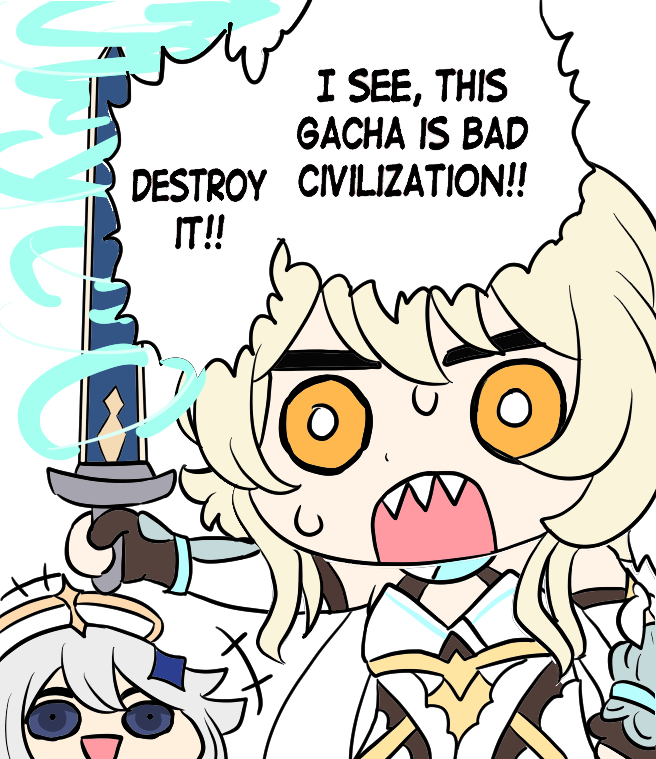
You might say these are too generous. I say I want more people to get good items, find interesting Pokémon, and encounter the hundred or so legendary/mythical Pokémon they would otherwise never encounter under the current rates. Gacha games can be good but, always remember, Gacha is bad civilization.
Problem 7: This Biome Map is Bad

Every ten floors, the biome the player explores changes. But rather than just having it be determined by pure unweighted RNG— the honest approach— it follows this cockamamie sequence that, as a seasonal flowchart producer, makes my shit steam.
This chart is just awful to look at, full of intersecting lines, and I think it is just badly devised on a structural level. By having the player go from similar biome to similar biome, it prevents them from finding a wider variety of types during long stretches of the game. Which community members should have learned by playing Pokémon games. Plus, by always having the player start in the same damn area, they will inevitably encounter some damn Pokémon a sickening amount of time.
Endless mode appears to follow RNG for its environments… and I think that should have been the case for the main game. Or, at the very least, make it impossible to do terrible loops like plains to metropolis to slum to construction site to power plant to factory to plains. That happened to me once, and I lost the run because I couldn’t find a good water type. A problem that never existed in any official Pokémon game. I could make a better flowchart, I could do it in under three hours, but I do not have time for that shit!
Problem 8: Where’s My Mouse Control?

Okay, this is a me thing, but when I am playing a menu-driven browser game, it just feels wrong to me when I need to use the keyboard for inputs. The game uses the mouse cursor to identify various UI elements, namely the rows of items the player and enemies carry. But not for selecting moves, or even opening up the system menu. Which… I think is just a weird and not great design decision. I know that this is meant to convey the control scheme of the real Pokémon games… but this is a 2024 browser game, and a mouse is a superior interface tool for clicking things. Fix your mess, dudes.
Problem 9: It’s a Live Game, and Could Be Improved or Impoverished

There are a LOT of things I think are wrong with PokéRogue… but it is still one of the best Pokémon fan games ever created. When it is good, it is a fantastic experience that captures an allure and speed that the main games have seldom been able to. And unlike them, it is designed to be replayed, over and over, with all killer, and no filler. With just a hearty number of changes and revisions… I genuinely believe this could be one of the best Pokémon fan games ever made. And there have been like 400 of those.
However, I do not trust the Pokémon community to actually understand what I have internalized as good game design. With a project like this, I can easily see this game getting popular with streamers who enjoy the randomness of this experience, and shift the developers’ perspective. Thus transforming this into a game good for content production. One that appeals to the values of competitive players, Tubers, and nuzlockers, rather than people who prefer to play the game in a ‘non-professional’ environment. …Assuming Nintendo doesn’t DMCA this game before that.
…I would have had the subtitle for this reference Roots Doarat Rat Revel, but nobody else remembers that Kamen Rider Gaim Deep Lore.
Unembraced Entities
(The Embracer Group Announces Disbandment)

…Wait, what? I’m a big fan of companies being broken up. It’s at least a good temporary solution to rampant monopolies dividing the world up into fiefdoms and suppressing workers humans under their insurmountable girth. But it’s very rare to see a company willingly splitting up into smaller entities.
Embracer has not had a good year. And while I prefer to blame the Saudis for bamboozling, the executives carry their share of the blame for… everything. The cancellation of various projects, the layoffs, and the closure of several studios. Clearly, their massive structure, their approach of gobbling up studio after studio and IP after IP, did not work. So Embracer Group is going to be broken up into three standalone entities.
Asmodee, a board game company Embracer bought for 2.75 billion Euros back in December 2021, will be spun off as its own entity once again. A move that really shows how this investment wasn’t a good idea long-term.
Coffee Stain & Friends will be a cluster of developers and publishers for mobile, consoles, and PC, including Coffee Stain, Ghost Ship, Tarsier, Tuxedo Labs, THQ Nordic, Amplifier Game Invest, Easybrain, Deca, CrazyLabs, and Cryptic. Basically their AA, indie, and mobile tier operations. (Indie refers to budget, not independence, blame the masses.)
Middle-earth Enterprises & Friends will be a cluster of AAA console and PC game developers, as well as the holding group for their valuable Lord of the Rings IP. It will contain the likes of Crystal Dynamics, Dambuster Studios, Eidos Montreal, Flying Wild Hog Studios, Tripwire, Vertigo Games, Warhorse Studios, 4A Games, Plaion (Deep Silver), Freemode, and Dark Horse. Also, I somehow failed to notice it was Middle-earth and not Middle Earth. Bloody English professors, making the language worse every ding dong day.
Now, I will be REALLY interested in seeing an exact breakdown of where everything goes after this closure. Hopefully a graphic designer who can make one nicely organized image filled with company logos. But the general ideas and structure of this operation… makes some sense. The board game developers should not be part of the same company as the video game developers, even though they would probably want to make board games using their IP.
It makes sense splitting up game developers into two tiers. AAA gaming takes so much longer and requires so much money that it can seem like a different world compared to AA, indie, and mobile tier development. Though, some of these allocations baffle me. Why is THQ Nordic part of Coffee Stain & Friends, especially since it’s basically a brand name now? Why is Dark Horse, a major comic publisher, and growing manga localizer, just lumped under Middle-earth Enterprises? And… why are they using this brilliant naming scheme in such a stupid context?
I’m sorry, I adore the naming scheme of adding “& Friends” to the end of a company name. Apple & Friends? Love it. Amazon & Friends? Perfect. Lockheed Martin & Friends? Cute! But here it just makes no sense. You should only use this term if there is an indisputable headliner, and several peripheral characters. For example, Garfield and Friends, a show I used to watch on library DVDs, correctly recognizes that Garfield is the headliner and U.S. Acres is not. Fred Flintstone and Friends? It was just the Flintstones and some other Hanna-Barbera shit! Thomas & Friends? That’s just the name of the series, because it’s all about the little blue engine that could, and did! Barney & Friends? Again, clearly identifiable titular protagonist, and the friends were just a bunch of children who played around with 90s icon!
These companies though? They’re not friends. They don’t even know each other! They aren’t part of the same literary universe! So that makes these companies veritable LIARS!
Joking aside, I still think it’s strange that Dark Horse and Middle-earth are not part of their own fourth entity, as that just makes sense to me. Comic companies tend to be big holders of IPs and do a lot of licensing, and while Dark Horse and Middle-earth don’t really go together seamlessly, there is at least some brand cohesion. Also, you could name the company after some reference to a black horse from the Middle-earth literary universe, or MELU.
Simultaneously, Crystal Dynamics, Dambuster Studios, Eidos Montreal, Flying Wild Hog Studios, Tripwire, Vertigo Games, Warhorse Studios, 4A Games, Plaion (Deep Silver), and Freemode sounds like a hodgepodge. But it’s consistently inconsistent enough to work. They just need a name. I’d call them Gathering of Developers, but I think that name is still owned by Take Two.
Regardless of my thoughts… this really will mark the end of an era for Embracer Group. A once mighty entity has now been broken up six ways. The independent Saber Interactive. Take Two’s Gearbox. The board game fiefdom of Asmodee. Coffee Stain’s AA empire. The hodgepodge of Dark Horse, Middle-earth, and their AAA studios. And a miserable little pile of corpses.
If you asked me a year ago, I would have never expected something like this to happen but… I think it might be better this way. Power has been redistributed, and while I really wish Gearbox stayed independent, at least Embracer is not the monolith it was previously.
Now if you’ll excuse me… I was going to make Verde Dusk & Friends LLC, but I gotta save up money for a Natalie.TF event this August.
Not Safe For The Powerful Puritans – Part III
(Pixiv Restricts R18 Works For All US and UK Residents)

FUCK!
You know, back in 2018, HuniePop developer Ryan Koons made a joke about how Steam’s guidelines at the time would lead to an Anime Titty Holocaust. That didn’t happen, Steam’s policies changed, and now it is a premiere location to buy anime porn around the world. …At least for the time being.
There is an ongoing war from credit card companies, state regulators, and pathetic puritans who want their backwards repressive morals to be mandated into law. They have already manipulated Patreon and Gumroad into restricting the types of content containing sex or nudity. They have already made it impossible for most non-Asian residents to buy works via DLSite without using buying points from a different website. Also known as the pachinko maneuver. And now they are threatening Pixiv who, in response, are preventing people in the United States or United Kingdom from viewing R18 works. Now, this is a problem with a very clear solution that they spell out in this announcement. The user just needs to set their location to a good country instead. Like Japan.
This is not going to stop. This is going to get worse. And there needs to be a greater backlash against shit like this. Otherwise, the internet could be restricted, creative expression could be at risk, and the endgame is not to make the internet a place devoid of sex. The goal is to make the internet advertiser friendly, to suppress anything that the powerful disagree with, and the endgame is, ultimately, the death of free speech.
This is happening in the background, and is being ignored by mainstream outlets, who do not report on it because their owners do not want the public to be aware. They want them to remain ignorant as things are stolen from them, as the powerful exert more control over their lives. The fact that this ACLU petition against this practice has not hit their 50,000 signature goal within a month is damn telling, as this affects so much, and the repercussions are so severe.
Then again, there has been an appalling lack of backlash to things like people needing to enter an ID in order to access porn sites. An idea that opens up so many opportunities for misuse and abuse that it’s frankly baffling that people do not see it for the grift it is.
When you require individual sites to collect ID information, you are basically asking for the information to be breached. Some have highlighted this as an obvious oversight on behalf of lawmakers… but no, this is an intentional decision. Because the end goal is to make people afraid of porn. Because if there are a lot of news stories about porn site data being compromised, and people’s ID information getting lost, then two things happen. One, people become more reluctant to give their data to porn sites. Two, governments have more reason to distrust and hate porn sites, as they suddenly need to help, say, thousands of people recover their compromised IDs.
If governments need to devote so many resources to helping people are porn leaks, then you know what happens? Complaints go up, more managers start to complain to their bosses about porn sites, and the governments suddenly become more receptive to… banning porn, because it costs them so much time and money. Time and money that would not be an issue… if they just accepted that middle schoolers might look at porn. You know. Something they have been doing for fucking decades. Before the internet. Back when they were chasing after porno mags that pedophiles left in the woods!
This is not about protection, it is not about safety. It is NEVER about safety. It is NEVER about the children. It is always about POWER. About CONTROL. About imposing traditionalist moral values and mandating them into law.
What’s the solution? I DON’T FUCKING KNOW!
The Game Industry Hates Games And Libraries Too
(ESA Refuses to Assist Libraries With Game Preservation)

Gosh, I hate the ESA. While I actually do think that the ESRB is a decent self-regulated ratings board who provides customers with SOME important information, that’s basically the only good thing they do. Everything else is just a way for them to push away at the government and consolidate corporate control. They do not actually care about gaming as an art form, and never have. For them, as with all corporations, all they care about is making money and hoarding IP.
The actual story here, as reported by Game Developer, is that there was a hearing at the United States Library of Congress Copyright Office about game preservation. Specifically about the possibility of allowing libraries to grant “remote access to archived games for video game researchers.” A lawyer of the Entertainment Software Association argued against this prospect, whose stance was that “[no] combination of limitations [ESA members] would support to provide remote access].”
This ESA lawyer was not receptive to any potential solution made during the call, fearing that any form of remote access would create a “free-to-play arcade.” With another lawyer on the call concluding that, no matter the proposal, it will “never be enough” for the ESA or their representatives. And I believe the reason is quite simple.
Because the ESA does not want the US government to touch the games industry, at all. Its stakeholders benefit from a lack of regulation, and prey on the ignorance of lawmakers. They want to control the industry in every facet.
Now, the ESA saw this article and offered a response to try to defend their position… but it’s all a crock of crap. They talk about how they are committed to preservation, but never illustrate how they are supporting it, or talk about efforts to preserve the medium. They emphasize that they are concerned around copyright protections, and present this as not being an issue with history or access, but rather them defending their copyright. Which is… not true. A lot of libraries use digital services to let people access books, movies, and music via services like Hoopa and Overdrive. However, those have not harmed the copyright of their works, and the creation of a smaller scale rendition of that similarly would not harm the copyright of video games. …So any concerns over copyright, to me, sound like a willful misreading in order to defend one’s position in exchange for monetary gain.
Similarly, I find the last line of their response to be extremely telling. “ESA and its member companies…actively support professional efforts to preserve video games, and do so in ways that do not jeopardize future economic opportunity for their creative works.” They support professional efforts… so long as it does not impact their record revenue. They do not want libraries to let people digitally rent games, as that poses an economic threat. And you know what I have to say to that? Bull. Fucking. Shit.
Find an example, pinpoint a single time, where libraries posed a threat to an industry. When libraries started getting CD collections during the 90s and 2000s, did that impact music sales? Noooo. When libraries started stocking DVDs in the 2000s, did that impact home video sales? Noooo. Have library digital rental services caused any industry to suffer over the past decade of their introduction? Noooo.
…Okay, the last one is a contentious issue, as libraries are getting bamboozled by various companies, who are overcharging them for digital rentals. A practice that should be made illegal, especially because they are forcing libraries to rent digital goods… that they rent to others. It’s ethically diabolical in my book, but you know what the worst thing is? If libraries need to pay more for digital goods, that’s costing The American Taxpayer more money. Do you— my mostly American audience— want your money to go to corporations who are overcharging libraries for goods that enrich the citizens of your community? If you do… WAKE THE FUCK UP, STUPID!
Tangent aside, the ESA is a slimy organization that wants to restrict power and prevent government oversight at all cost. It was founded to do that, and has gotten away with too much already. The ESA has willingly transformed gaming into a fucking casino where publishers have free rein to exploit children, the vulnerable, and the common person, disguising it as choice.
The hammer of oversight should be hanging over the games industry like The Sword of Damocles. And if the industry does not comply, then I say lower the blade, slice it up into cold cuts. Let its blood seep into the earth, nourishing those it cast aside and ground into the dirt through its relentless abuse. The games industry, as a corporate conglomerate, deserves neither quarrel nor sympathy, and at every turn, it will turn against its more devout supporters. The game players, the Gamers, and those who built this industry from nothing. For their only true stakeholders are the executives and investors who care not for games, but profit above all else.
And that is why the ESA, despite whatever they claim, is against preservation. Because it threatens the profits of its members.
Fight the power, fuck the system, make a personal archive. But never lose hope. Hope is absolute and a world without hope isn’t even a world at all.
Things can improve. Just this past week America scored three honking huge W’s. The FTC banning non-compete clauses, the FCC voted to restore net neutrality, and now airlines will need to pay you when they screw up. Systems can change, giants can be slain, it just requires dedication, focus, and a willingness to play as dirty as our enemies. Because a moral high ground doesn’t mean shit when the enemy wins.
Infogrames is Back Bay-Bee!
(Atari Relaunches Infogrames Brand After 20 Years Because I Don’t Know!)

Here’s a weird story that I’m covering because it’s weird. Also, we need a breather from the back-to-back negativity here. The modern incarnation of Atari has announced that they are reviving the Infogrames label. Now, I originally wrote a section about this where I completely failed to note the actual history of Infogrames, which is obscured, as there are so many companies with similar names who merged together or fell apart. Somebody really needs to split the Atari SA Wikipedia page into an Infogrames page.
Infogrames was originally a European game developer and publisher who kept things largely isolated to, well, Europe, and did not experience an international hit until their groundbreaking 1992 title, Alone in the Dark. Their business saw success, they bought acclaimed developers like Ocean Software, and come the late 90s and early 2000s, they had achieved such success that they were pushing out over a dozen titles a year. Their involvement might have just been as a distributor, or just as a publisher, but they kept putting out more titles, kept buying up more studios, and grew into basically the Embracer Group of their era. Right down to basing most of their operations in Europe.
And much like how THQ Nordic restructured to Embracer Group, Infogrames structured themselves into Atari way back in 2003. Over the next few years, the brand of Infogrames stopped being used, until basically going away in 2009… when the company formerly known as Infogrames started spiraling toward bankruptcy.
Since then, the modern incarnation of Atari has basically ignored their history as Infogrames, choosing to instead milk the Atari namesake with re-releases and reduxes. They bought up Digital Eclipse, MobyGames, and Nightdive Studios, while pushing their classic library as hard as ever with throwbacks and smaller niche projects… like last week’s premiere topic, Yar’s Rising.
Okay, but what is the value of the name Infogrames? Everybody who knows the name knows the company became Atari, and it has been two decades since the name was prominently used. Is there really that much nostalgia for Infogrames as a brand? Well, perhaps. As I said, the company was originally a European PC game publisher and developer, and in the US, they never had the best reputation. Their output during that era was mostly licensed titles, console ports, and region-specific releases. Which I think is best conveyed by their legendary promotional song, Infogrames Rocks My World!
That being said, I do not believe there is enough nostalgia to really warrant a revival of Infogrames like this, as I don’t think modern Atari quite understands its value. Which I think can be best portrayed with the boilerplate mission statements on Atari’s Infogrames page and the frankly bad logo they have for nu-Infogrames.
Infogrames had good logos. The rainbow shelled armadillo was very 80s and 90s. The late 90s abstract design is a work of graphic design beauty. The 2000s logo, while boringly black, does reflect the more adolescent era of gaming and retains a level of cursive classiness.
Maybe this will turn out to be a fine enough publishing branch… but Atari will need to avoid major missteps for a good decade before I trust them to tie their shoes.
Nintendo Hates You And Everyone Too
(Nintendo Removes All Nintendo-Related Uploads From Garry’s Mod)

Fucking hell Nintendo, you are just not going to let people have fun anymore, and will do whatever you can to lock down your IP, won’t you?
So, this story is pretty simple, so I’ll keep it short. Garry’s Mod, the popular, if not legendary, sandbox game that came out on Steam nearly 20 years ago, has seen a host of user-generated content over the years. A lot of which has included models ported from other games, or based on various popular characters. This naturally includes a lot of Nintendo games, as people, regardless of platforms, love Nintendo games.
Now, Garry’s Mod itself costs a few bucks, but none of the users can monetize their offerings. At least that’s not how it’s supposed to work. As such, there are plenty of reasons for IP holders to just let people have fun. Even if they are not paying them directly, interacting with an IP will increase their odds of monetarily engaging with it in the future. Nintendo has had this mentality for a good while, or was just willing to turn a blind eye to it. But this past week, they cracked the whip, and now the developer of Garry’s Mod is removing all Nintendo-related content from the game. A move that effectively destroys 20 years of creation, and makes it harder for this game’s dedicated playerbase to engage with Nintendo’s IP.
This is being done because, as part of Nintendo’s multimedia success, they have become more protective of their insanely valuable IPs, and are willing to burn whatever bridges they need to keep themselves free from any possible threats. And you already know what I have to say in response to this.
Fuck copyright.
Fuck Nintendo.
Fuck this whole damn industry.
Shit like this makes me so angry that I want to donate my Switch to a children’s hospital and surrender the Pokémon collection I spent hundreds of hours building. Just because of how much I HATE Nintendo’s practices.
I am too tuckered out from writing this XXL-sized Rundown to really go on a spiel about how private corporations make the world worse, so… here’s another photo of The Library.

Backup everything you care about while you still can!
Progress Report 2024-04-28

I had to walk over to my library to try and get a decent photo for the ESA section of this Rundown. While I was there, I took a few other photos, because my library is actually really nice! It’s always been, but over the past few years they’ve renovated things significantly, and it’s great to see. It was also pretty busy, at least 30 people around, more in the gated-off kids section when I visited it on Saturday morning. And that’s not counting the second floor. Pics (1, 2, 3, 4, 5, 6, 7, 8, 9, 10, 11, 12).
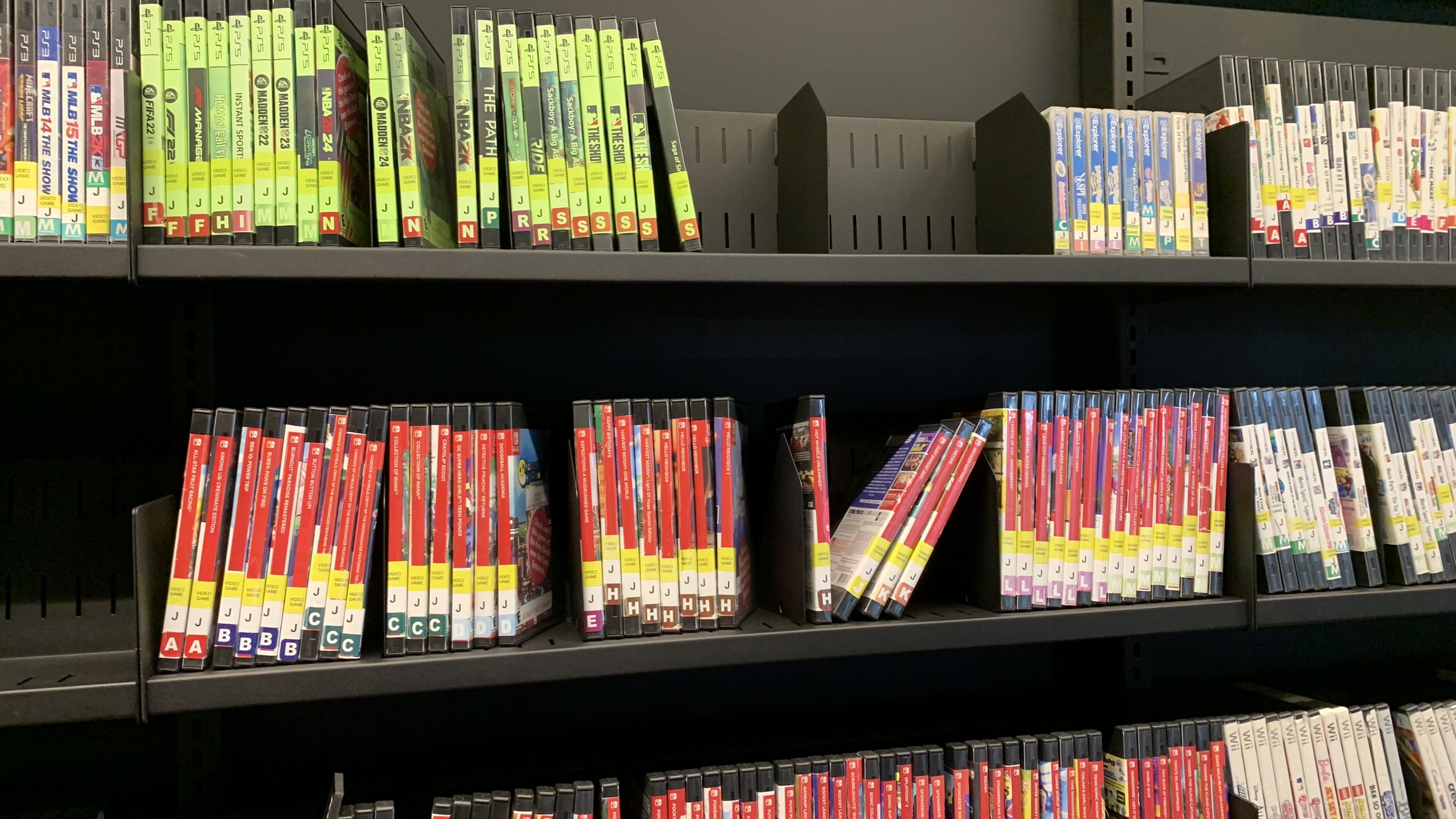
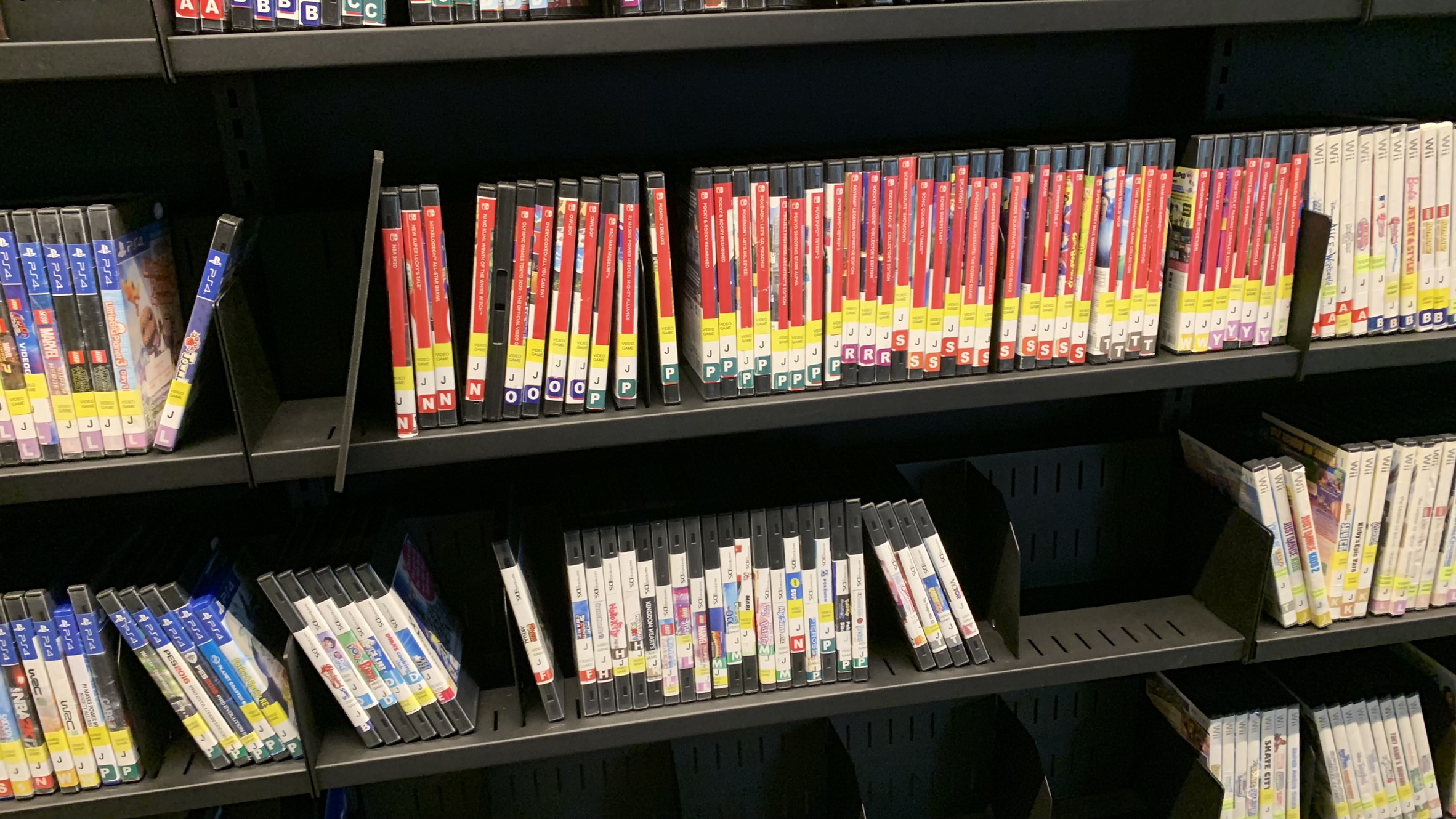









Also, as a reminder, if you get a library card, and are in the US, you can use services like Hoopla, Libby, Kanopy, and Overdrive to access a LOT of media for free. Sure, you cannot download them or whatever, but for a free service? That’s just fine. That, to me, is the reason why the game industry should absolutely support this initiative. Because it is not better than books or movies.
2024-04-21: Edited 25,000 words of VD2.0. I’m back, bay-bee! Wrote 1,300 word preamble.
2024-04-22: Wrote 1,700 words for the Rundown. Wrote 2,200 words for TSF Showcase. Read The Auto-Closet for the TSF Showcase. Edited 13,000 words for VD2.0. As the chicklets chortle, ‘we are SO back.’
2024-04-23: We are NOT back! I wound up going through SapphireFoxx stuff, watching the film-length series, Two Sexy Errors, writing 4,500 words on SapphireFoxx stuff and ripping a bunch of SapphireFoxx stuff for my records.
2024-04-24: Wrote 1,000 words for the SapphireFoxx bit. Wrote 2,000 words for the PokéRogue bit. Edited 15,000 words for VD2.0.
2024-04-25: Wrote 2,000 words for the PokéRogue bit. Edited this big fat 17,000 word Rundown.Also, I guess I forgot to count 2,000 words somewhere. Fuck it, I dunno! Edited 8,500 words of VD2.0 before getting fed up. Also, finished my fourth run of PokéRogue. Like a fool!
2024-04-26: Edited over 20,000 words of VD2.0 I’m at the 50,000 remaining work mark, and frankly, I’m sick of this shit!
2024-04-27: Edited over 26,000 words of VD2.0. ONE CHAPTER LEFT! And it’s the diary one!
Verde’s Doohickey 2.0: Sensational Summer Romp
Acts 1 and 2 Progress Report:
Current Word Count: 371,296
Estimated Word Count: 371,200
Words Edited: 352,893
Total Chapters: 33
Chapters Edited: 32
Header Images Made: 0
Days Until Deadline: 31
I am so close that I can almost taste the sweet release. Then it’s off to the Art Hell for me. Oh joy, oh rapture!
An epic rundown on the topic!
Kristen O’s 1994 story, seemingly the first to use the term autocloset, might owe something to an earlier body of ephemeral writing from the 1960s-90s, “prose, cartoon strips, photos, a combination of prose with cartoons or photos, and short poems” about cross-dressing and forced feminization in books and magazines then described as “transvestite fiction.” E.g. “The Male Transvestite’s Motivation in Fiction, Research, and Reality” (1963) that can be read here (archive.org/details/advancesinsexres0000unse/page/198/mode/2up). Specific story titles or publications weren’t identified, for whatever reason. The psych studies during that period appear to only address stuff that stops short of transformation. Whether TSF wasn’t much present, or the academics ignored it because it didn’t fit their theorizing, or what – who knows?
The way time travel seems sort of thrown in, I don’t know. Maybe author was taking some inspiration from other lit that mixed together time travel with SciFi sex changes like Robert Heinlein’s “All You Zombies” (1959)? And why Jack was choosing to stay in women’s clothing while building a male machine: maybe it wasn’t that he wanted to be converted back but wanted a machine that was equipped to operate on men’s parts, so that it could finish the job the female machine couldn’t do? Or because the female machine had given him feminine breasts, hips, ass, voice, cheekbones (and face?), and permanently depilated his face and body hair he was continuing to dress female because of all that until it could all be reversed just to be gender conforming rather than aim for an androgynous look or trying to get his female body to pass as male? But, again who knows – even if the story had such oddities or flaws in it, clearly it still had things that stuck with other creators over the decades. Probably even shows up in manga?
Also perhaps remarkable – apparently Kristen O’s only story, unless some other pseudonym had been adopted.
Sajah’s coming in with the MAD FACTS yet again!
The Auto-Closet’s creative decisions make it a very interesting topic to discuss, and I’m surprised to learn that this was Kristen O’s only story. There were a good amount of errors, but she had some creative spark, so I think this was just a pseudonym used for a more fetishistic story, as the writer wanted to protect their identity. Which also shrouds the story in some mystery, as it’s basically impossible to figure out who wrote it. The original author may have even passed away…
“Clothing-based transformations” are very common still in SapphireFoxx. Early examples in the “Classic Animations” section, include “You Take It, You Wear It” and the “Stealing From Sis” series. Maybe influenced by stories Sam had read of that kind, maybe partly it being easier for a beginning animator to show clothing changing shape rather than exposed body parts. Later examples include the recurring character Chris Young (Different Perspectives, Matchmaker, etc.) uses others’ clothing to transform his body prior to his learning other kinds of magic, and there’s a clothing manufacturer Ablecroft and clothing store IndyPanda that make clothing that can transform people. The SapphireFoxx Fandom Wiki covers a bunch of that stuff.
Libraries are great. My local one has gotten really into also having a “library of things” including garden tools, 3d printers, 8 and 16mm film to digital conversion devices and so on.
I am aware of some of the clothing transformation elements of SapphireFoxx’s work. I just didn’t feel the need to go into too much detail, as the topic was about auto closets, and it already went on for longer than I intended.
I just checked, and my local library does have 3D printers and an 8mm/16mm digital converter that can be used. Hell, they even have stuff like cameras, tripods, and editing suites you can rent out. I wouldn’t have thought to check that…
I didn’t think to ask if the library of things contains a genderswap ray gun, but maybe I should.
…Okay, now you’re just pitching ideas for TSF Series! XD
Ha, well, libraries and archives can make great settings sometimes.
Six years ago someone had posted in a Reddit group this page 128 of some book in Japanese: (pbs.twimg.com/media/GMWTtqzW0AAQkpw?format=jpg&name=medium). The content of text is fairly close to the blog by F_TSF (tsff.sakura.ne.jp/tsf2/), who it cites; that 2016 blog post, incidentally, mentions the author having read Doron 28 years ago! The book wasn’t identified on Reddit. I wonder if it might be よりぬきTSFのFのほん / Yorinuki tiesuefu no efu no hon キルタイムコミュニケーション, 2018 / Kirutaimukomyunikeshon, 2018. ISBN 9784799211397 . The translation of the book page is roughly as follows:
Due to printing plan considerations, there are about two pages of extra space, so I’d like to talk about the TSF genre. [Author: F (@F_TSF)]
What is “TSF”?
The term “TSF” is a coined term, meaning “Transsexual Fiction” which started being used on web communities around 2001 as an abbreviation. This term was proposed by Tsukihana-san, who creates TSF novels. Also, the “F” in TSF can be interpreted as “Fantasy,” and TSF is also a pun on “SF” (Science Fiction).
The term “Transsexual Fiction” is a Japanese-made English phrase, and its direct translation, “Fiction about gender transformation,” is not exactly the same in meaning. In other words, TSF means creations where characters change gender using methods like “gender transformation,” “body swapping,” “possession,” “skins,” or “reincarnation” to become the opposite gender. Before the term “TSF” was used (around 1999-2000), the abbreviation “TS,” which means “Transsexual,” was used in the same way as TSF. This usage was proposed by Mr. Yaezusa, the organizer of Yaezusa Gender Transformation Hall (now Yaezusa Media Research). Even now, many people use the term “TS” with the same meaning as TSF.
However, the term “Transsexual” originally refers to individuals who change their physical gender through hormone therapy or gender confirmation surgery in medical and sociological fields. Mr. Yaezusa seems to have borrowed this medical and sociological term.
After the term “TS” became widespread in creative works, to prevent confusion between the medical and sociological reality of TS and the creative TS, there was a movement to replace the term “TS” with “TSF in creative works, and many people in web communities agreed. In this way, the “F” in TSF was added to zone it with the real TS. Also, TSF is interpreted as representing “creations about TS using unrealistic methods,” and many people interpret that “creations about realistic gender reassignment surgery” are not included in TSF.
I’ve seen opinions interpreting the “F” in TSF as “Female” (woman), but as mentioned earlier, this is not historically accurate. Additionally, if the “F” in TSF were interpreted as “Female,” the meaning of zoning with real TS would be lost, so I consider it undesirable as an author. Also, TSF is a term used for all ages, not just for adults.
Difference from “Feminization” as a Female-Oriented Genre
The term “Feminization” was proposed as an alternative to TS/TSF, but around 2000, the term “Feminization” was already used in female-oriented genres to represent feminization, so the term TS/TSF was used as an alternative.
Feminization in female-oriented genres mainly focuses on BL as coupling.
Oh, I see now. It’s not from that book but a page from a doujinshi by F_TSF titled 俺がオタクの恋人になるなんて For Me to Become an Otaku’s Girlfriend (2014). Doujinshi as I understand it are self-published, so unfortunately wouldn’t be able to cite it for WP. It went on for another page, again following the blog post’s text. The following machine translation seems to have reversed what TGComics and Fictionmania corresponded to; CD seems more common on the latter:
It’s talking about a phenomenon where one of the male characters in a pair is changed to a female character, often referred to as “forced feminization,” particularly in the context of BL (Boys Love) and yaoi fandoms. In both original and derivative works, it’s common for creators to alter the gender of one of the male characters to female, making it seem as though they were originally female (referred to as “innate feminization”).
In addition to innate feminization, there’s also a form of feminization found in works targeted towards female audiences, regardless of whether they are original or derivative works, where one of the male characters undergoes a gender transformation within the story (“acquired feminization”). While innate feminization is not considered part of TSF (Transgender Transformation), acquired feminization can be seen as a subset of TSF. Moreover, there are many women who enjoy transforming male characters into females without any connection to BL.
However, works that combine BL and TSF, where a male character who has undergone TSF enters into a romantic relationship with another male character who has not, are considered only a part of the TSF genre, and preferences for such works can vary even among TSF enthusiasts.
The term “TSF creation” may also encompass works involving cross-dressing or methods like body swapping and spiritual transference, where a male character becomes female. In English-speaking circles, TG Comics represent the former, while Fictionmania represents the latter. Therefore, the author believes that there are differences between TGFiction and TSF, particularly in the aspects that TGFiction often deals with more realistic TS/TG scenarios and may involve cross-dressing.
In Japan, TSF has strong ties to otaku culture, such as anime and manga, while TG Fiction in English-speaking countries is more closely related to LGBT culture, with authors being more likely to be TS/TG themselves compared to Japan.
The text also discusses the distinction between TG Fiction and TS/TSF. TG, an abbreviation for Transgender, is a medical and sociological term indicating a mismatch between gender identity and biological sex. TG encompasses a broad range of concepts, including transsexualism and cross-dressing. In English-speaking communities, TG Fiction can refer to creative works involving gender transformation, regardless of whether the methods used are realistic or fictional.
…Jeepers, your rigor and dedication continue to impress me.
Looking forward to that article! :D
I don’t know much about how these terms all came to be, but I just wanted to mention a small point on the terminology that gets a bit lost when translating certain words into English. Especially when they’re usually written in Kanji.
One term that is used very frequently instead of TSF is “女体化” : nyotaika. While usually translated to “feminization”, this term litterally means woman “女” body “体” change/becoming “化”. It stands in contrast to the word most Japanese speakers would use when expressing the concept of feminization : “女性化”/”joseika”. Joseika meaning woman “女” sex/nature “性” change “化” (or female “女性” change/becoming”化”). Joseika is also used for actual medical transition.
The term “nyotaika” specifically refers to a change of body, implying that there isn’t necessarily in the “nature” of the person. Additionally, reading the character “女” as “nyo” is pretty rare (as it’s usually read as “onna”, “jo” or “me”), thus adding to the specificity of the term nyotaika, as specifically “gender-bent to female”.
The exact same logic holds true for the male variants: “男体化”/nantaika and “男性化”/danseika. Both of these terms are however much less common.
As with a lot of cultures, there’s a lack of terms to describe the concept of “cross-sex” generally, and people haven’t really found a term in Kanji that would cleanly group concepts like “nyotaika” and “nantaika” together.
At least this is my current understanding of it. I might be wrong.
Thanks! I’d just been using ChatGPT 3.5 that provides a relatively smooth-reading translation (for anything not explicit), but maybe I’ll pick up some terms myself along the way. For anything explicit, I’ve had to rely on Google Translate, which often does not read so smoothly in translation. I’d found this interesting, the person credited with creating the term TSF on what they read to help produce erotica (and also the mention of Comiket, the doujin fan convention):
Episode 2: “TSF Reference Books”
Hello, it’s 月華 Gekka again.
This marks the second installment following last year’s. Moving forward, I plan to continue at the pace of one per month. Well, although this is being published at the beginning of the year, I’m actually writing this on December 30th, right at the end of the year. Since I just got back from Comiket and did some cleaning around my room, I thought I’d take this opportunity to introduce the reference books I use when writing TSF works.
While information about TSF works themselves is readily available on platforms like the TS-WEEK bulletin board, there hasn’t been much discussion about reference materials for creating these works. So, I hope this serves as a helpful resource for fellow writers.
When it comes to writing TSF, understanding how women think and feel is crucial. First off, there’s Mika Kono’s “Otoko ga Shiritai Onna no Karada” (“What Men Want to Know About Women’s Bodies”).
This book, published by Kodansha in their Bluebacks series, is easily accessible and you’ve probably seen or even picked it up yourself. As the title suggests, it covers the differences between male and female bodies, as well as topics like female genitalia, menstruation, sex, and pregnancy. Since the author is an obstetrician and gynecologist, the book provides insights into gender differences from a physiological standpoint. Incorporating knowledge from this book into TSF works can add depth and credibility to the storytelling.
For understanding the psychological differences between men and women, there’s Francesco Alberoni’s “Eroticism.” This book, available in the Chuko Bunko series, should be relatively easy to find.
While I just recently purchased it and haven’t read it all yet, it focuses on the differences in how men and women experience things. Quotes like “Women want to bask in the afterglow and savor the moment, while men want to wrap things up quickly after reaching ecstasy,” highlight the disparities in emotional responses between genders. This book can be useful for emphasizing the psychological aspects of TSF.
As a compilation of survey results from women about their experiences, there’s the “More Report” compiled by the More Report Team. While it’s published in the Shueisha Bunko series, it might be out of print.
The content consists of survey responses from readers of the women’s magazine “More” on topics like orgasm sensations and masturbation techniques. Many of the responses can serve as valuable references for TSF descriptions.
The “More Report” is based on the “Hite Report,” originally created in the United States. It’s been republished in Japan as “Orgasm Power” by Shobunsha’s Golden Bunko series. It was released in April 2000, so you might still find it in bookstores. However, if the first edition sells out, there might not be reprints, so if you’re interested, it’s best to get it sooner rather than later.
That covers the main reference books. In addition, there’s “Futari Ecchi” by Katsu Aki, which I often refer to when writing. While typical erotic media tends to be biased towards the male perspective, this book depicts the perspectives of both the protagonist, Makoto, and his wife, Yura, making it useful for TSF. Additionally, I use it as a reference for writing erotic scenes, particularly for descriptions of sexual positions, as it contains a variety of them, making it quite practical.
While I could write based on my own experiences, when it comes to descriptions, it’s necessary to have an objective perspective. As for having someone who can help try out various positions and provide inspiration… Well, that’s something I currently lack.
(月華 Gekka)
TS-Week 1(45). January 21, 2001. p2.
(web.archive.org/web/20010307021908/http://momiji.sakura.ne.jp:80/~tsweek/20010121/tsweek2p.shtml)
Calling persistent progression a hallmark of the “roguelike” genre (rather than roguelite/roguelike-like) is an easy way to get annoying nerds on the internet very annoyed at you
Let them get annoyed!
But in all seriousness, I understand the desire to differentiate how Rogue a game is, but most people would not even pick up the visual or phonetic difference between roguelike and roguelite. They look the same, sound the same, and trying to differentiate them is difficult, when people want to be able to quickly convey what a game is like and use tagging systems to find games similar to ones they already like.
Every roguelike game I have played, which might be roguelites based on some definitions, has had persistent progression, and it is something I expect to see, because I want to see it, because I like it.
Wow, that was quite the Rundown! Lots of interesting things to think about, but I have to say that the whole Auto-Closet genre discussion brought a whole bunch of memories from way back. I remember there being tons of stories on FictionMania back in the day with similar concepts, though the one that I recall most vividly is “The Cheerleader Transformation Machine”. An absolutely wild story that is well over a decade old, though perhaps not strictly an Auto-Closet story? Or at least a very different style of machine than the “robot arms” type.
I’m glad you enjoyed it. The Cheerleader Transformation Machine was published in 2011, which was around when I moved past Fictionmania, so I never checked it out. But I’ll add it to my list of things to maybe possibly check out. ^^
CTM is perhaps on the wordier side for Fictionmania (part 1, 35,364 words – October 24, 2011; part 2, 44,406 words – December 18, 2012; part 3, 47,200 words – October 21, 2013) , with the intention of another that would conclude it all, but which never manifested over the past eleven years. I did a quick skim of the first part where it describes the machine. It could go into a broad category of transformation devices but differs from the Auto-Closet in a number of ways. It’s a one-of-a-kind invention somehow bankrolled by a high school cheer instructor and built by “the college’s top physics professor” just for her that is something like a cross between an observation booth and a character generation screen, with exterior adjustment settings for a human operator.
Rather than containing a user’s wardrobe, it can make clothing out of nothing. It seems to require entering and exiting it more than once to do a sex change. However, it can age regress and also give people new skills, change their memory, personality, politics, and religion and even change reality for even those people outside of the machine (with respect to their memories of the people who do go in the machine) – pretty much sorcery in that respect.
The reviews of the second and third parts from readers who had stuck with it were pretty favorable, they got invested in it.
Having just coincidentally learned of another Fictionmania story, I have to wonder if the CTM doesn’t owe more to it (or just a case of someone independently having a similar idea: certainly possible). ElrodW’s Morphic Adaptation Unit, one of the shared universes there with 148 stories (plus at least one comic on tgcomics, Fun with Units by Seer Coltz from 2011-2013). The first story might’ve been “Morphic Adaptation Unit: Sam’s Revenge” on May 21, 2001. Like the CTM, it’s not room-sized, it likewise doesn’t have robotic arms, and can similarly make changes to a person’s mind too. The MAU is alien tech that can shrink down to a small cube when it is not its full booth size and can make radical changes such as changing a person into a centaur or succubus, or even make one person into more than one person. Broadly similar in that they’re transformation machines one walks into, but different in a lot of the details. A number of ElrodW’s early MAU stories are set in the Trek universe (e.g. MAU: Trekkin’ Along) and I wouldn’t be surprised if replicators and holodecks had been part of the inspiration.
Very interesting; I’d never heard of the MAU stories before! I’ll have to give them a look sometime.