

This Week’s Topics:
- Rundown Preamble Ramble: Always Four Years Behind…
- TSF Showcase 2024-16 Futaba-kun Change! by Hiroshi Aro
- Re;Yar’S’ Rising: Revengeance – Recharged (Natalie Rambles About the History of the Yars’ Revenge Series)
Rundown Preamble Ramble:
Always Four Years Behind…
I just finished getting through wave one of the 2023 tax season. As such, I was feeling reflective this past week and started thinking about my whole life schedule, and feeling bad about… what’s probably my biggest regret in my life.
I have been writing stuff for my own personal website, or blogging if you prefer, ever since January 1, 2012. That’s when I launched my first website, a BlogSpot called The Breaded Rump, which was a play on the term Asperger’s, or ass-burgers, with ass becoming rump and burgers becoming bread. Because bread’s hilarious.

…Anyway, I abandoned that BlogSpot on May 25, 2012 when I launched Nigmabox on WordPress. A site that I later reformatted as NigmaBox, then Nigma Box, and then finally Natalie.TF on November 30, 2022. Meaning we’re almost at the 12th anniversary of this site, where I have NOTHING planned for you people! Well, except Verde’s Doohickey 2.0. But that’s a coincidence!
However, I did not launch The Breaded Rump until I was 17-years-old. Which, in the world of internet creators… is really bloody late to start doing things. If you look around at prominent or semi-prominent creators who are within the age range of… let’s just say 21 to 34, they typically have the same general background. They got into online media creation during their teenage years, when they were in high school, possibly even middle school, and they just kept on making stuff. They probably rebranded, pivoted to a new platform or medium, but they have a history where they learned their craft. Where they developed their creative muscles, learned skills, made mistakes, and laid a foundation for them to build upon
Now, I actually do have some history with online media creation prior to starting up The Breaded Rump. In August 2008, at age 13, I created fan fiction on fanfiction.net— because I wouldn’t know what AO3 is for a good 12 years. The fanfic, which I reposted in Natalie Rambles About Her Childhood Fan Fiction, was very bad, and nobody should have read it. However, it got some comments, some feedback, and I got some encouragement from THE Caleb Jones, one of the only TSF/TG writers I knew by name at the time. And he said the following:
“1st 2 chapters were good but the third read like you decided to end the story before it got started. What happened to the 1 week they had to wait for? But I give you credit for not leaving the story unfinished. Next time take a few extra paragraphs to wrap things up without changing the rules of your storyline. And keep writing! You obviously have the talent to get a story started. It will be interesting to see you run with a story for a bit longer than this one.”
I had encouragement from the best source I could imagine or hope for… and I just did nothing with it. It would be four years before I tried seriously writing another story, and that wound up being Intertoids. A nonsensical bastardization of fan fiction, inspired by the manic harassing ramblings of Jamese Stephany Sterling’s Podtoid. The story was raw creative ore, chock full of ideas that I desperately needed to expel from my body, and aside from the parts that were shit, i.e. the writing, I still love it. Stick a dick into a horse and possess it to go third-person! Skyrim style! …I promise that makes complete sense in context.
This unleashed the creative genie inside me and from then on, I have consistently been pursuing fiction projects in some way, shape, or form. Sure, my progress might have been slow, but I’ve written 10 novellas, 7 novels, and 26 short stories. Even discarding the novellas, because I’m not proud of them, that’s still over a million words, and I’m going to be adding an extra 370,000 to that over the next few months!
In the past 12 years, I like to think that I’ve become at least an alright writer. I have my failings, my shortcomings, yet I have learned WAY more than I ever would have if I didn’t pursue this hobby. …However, I sometimes cannot help but wonder how much better I would be if I spent those pivotal four years writing more in my spare time. I’m willing to cut myself some slack for middle school, as I was not in a good place mentally during middle school, for reasons I detailed here. But freshman, sophomore, and the first half of junior year? I have no good excuse.
You see, I managed to min-max my school schedule so that, aside from studying and project-based work, I barely did any homework at home. I had a designated study hall period every day, for all of high school, ate my lunch during homeroom so I could spend my lunch period in the school library, and had alternating lab days for science classes. I had so much free time I would spend my excess time reading books. You know, books about kids running away from Nazis in the Holocaust, books about kids with schizophrenia, military propaganda from a relentless homophobe, The Hunger Games, Dave Barry Talks Back, and Ready Player One. The usual teen shit.
So, what did I do when I was home? Play Xbox and DS, watch That Guy With The Glasses videos, check Destructoid, watch Let’s Plays, eat ‘healthy’ snacks, do the dishes, look up TG stuff, and masturbate to TG stuff so I could sleep good. Also, while I seldom ever did homework, I did most of my oddball school projects at home. Essays, research papers, filming gameplay of Portal for my physics class, interviewing my great grandma about her father who immigrated from Poland, casual plagiarism. The usual school shit.
Now, I had a fun time as a teenager… but I also really wish I tried making things of my own back then. There was nothing stopping me from creating an anonymous blog where I wrote my own shitty TG stories, or talked about video games, but I was too much of a chicken shit to do that. I had precious little confidence in a lot of things back then. I had just gotten freed from remedial English, so I thought I was just a bad writer. I mean, I was, but the best way to get better at something is to do it, and it took me until I was 17 to figure that out!
Admittedly, that time wasn’t wasted. I played a wide variety of games during those years, laying a foundation that I would build upon by reviewing hundreds of games, increasing my understanding of the medium. I learned a lot about how to write convincing dialogue and speech-like writing just by listening to people talk and imitating what I heard, transforming and mixing it into whatever passes as my signature style. And LPs allowed me to vicariously experience even more games. But… I really wish that I was more proactive and started writing about stuff online sooner, as I cannot convince myself that I wouldn’t be a better writer at this moment in time.
…Actually, no, I’m suppressing the deeper reason why I shied away from making things as a teen. Basically, I thought I was going to die after high school, as I believed I was too much of a mess, fuck up, and incompetent at life skills to do something beyond high school. I was too asocial to work a retail job. I was too terrified of strangers and new situations to… walk into a bloody Panera I’d never been into and meet someone I’d never met. And my reaction to bad news was to physically abuse myself, by bashing my head into a wall, or vigorously scratching my person.
I was not a full-blown, needs to be kept in their own classroom, special needs kid. …But I was a special needs kid, and I had no idea what special needs kids did as adults. I thought I had no future, so I was not concerned with the future. So I didn’t bother making things, because why should I care? I’m gonna die anyway! It took until I was 17— when my brain had gained more hamburgian density— that I started going against this self-indulgent and destructive mindset and started trying to make things.
…Also, for context, I was a good student. I maintained a 3.5 or higher GPA ever since 7th grade. I was in the top 25% of my class. And if I wanted to be higher than that, I just had to take more Honors or AP classes and do more homework.
Only when I believed I had some future did I pursue creative ventures and creating things as a hobby. I know there is a good reason why I was so disinterested in doing that early on… but fuck. I could have broken so many more bad habits so much faster if I started writing earlier on.
Now, this isn’t the end of the world for me, as I know that, unlike some people, I have time. And now, I have focus. I have dedication. I know what I want to create in my lifetime, and I have a LIST! …But it boils down to 12 novels, 2 visual novels, and a series of ~150 short stories. So far, I’ve done 7 novels, have not even installed Ren’py, and written 26 short stories. And I have about 30 years to do that. Or however long I have left to live.
Do I think I can do it, even having lost those four productive years? Eh, probably. I just need to keep the scope under control. Stick to a schedule, stop pursuing side ventures like game reviews, decrease the scope of Rundowns, and turn TSF Showcase into a ‘once in a while’ thing instead of a weekly segment. Because while I love that shit, I don’t love the idea of dying with unfinished business.
Also, I don’t particularly care about amassing a following or anything like that. I’m more of the Henry Darger mindset. Where I create for the sake of creating, because I like making stuff and I have stories I wanna tell that help ME! …If my lifetime of written works could outmatch Darger in terms of wordcount, that’d make mama feel real corpulent. Real stuffed to the gills where the eyes can’t escape! (This is a weird ResetEra reference that nobody should understand.)
…However, I might want to avoid writing when I get into my 70s. I worry about cognitive decline during that age, and… well, my boss and mother aren’t inspiring confidence. My mother is growing more paranoid and manic, while my boss’s verbal skills are going to shit. So maybe I’ll need to go the premature route and avoid a proper retirement, as the current system is kinda broken when it comes to that.
If I get to retirement age, marry someone younger than me, like in their 20s, fresh outta college, live with them for a year or two, and then die… they get all my stuff. My retirement accounts, social security, my property, all of it! And life insurance proceeds aren’t taxable! So if I want to heavily benefit the life of a person who hasn’t been born yet, the moral thing would be for me to marry them, live with them, and then kill myself while they are at work. And in a good, effective way. Like… jumping off a five story building! That’s messy, but all it requires is a hop, skip, and a jump before I’m off to The Next Dimension!
Akumako: “…You are such a bitch sometimes you know that? You keep going on and on about suicide, but you’re too much of a faggot-ass-bitch-ass-fuck-ass-cunt-ass-pussy to make like a real G and kill yourself.”
Maybe… but maybe I can steel myself for death in the next 40 years! You don’t know that! Senior suicide is the suicide of justice!
Akumako: “Sometimes this rotting cunt forgets what she’s writing. If she had a character in a story say that, there’d be plausible deniability, but here… how is someone supposed to read this?”
Don’t know, don’t care, but life insurance is a damn good incentive to kill yourself… Assuming the policy covers it! And that’s the straight dope!
TSF Showcase 2024-16
Futaba-kun Change! by Hiroshi Aro

My busy season is finally over, so now it’s time to get into something BIG! …But not necessarily obscure. In fact, this is probably in the top ten of the most well-known TSF manga out there. Futaba-kun Change! A comedy series following titular protagonist Futaba Shimeru after he develops a condition where his body switches sex when he’s sufficiently excited or stressed. This gives way to dual identity shenanigans, overzealous absurdist hi-jinks, a fair bit of erotic mishaps for good measure… and a level of unhinged insanity that I seldom see.
Despite knowing about it for… 15 years I, somehow, never actually read the whole thing through , so I went into this comic with two burning questions. Is Futaba-Kun Change! a good manga, and is it a good TSF manga? …To destroy the tension, I think it’s a great manga, and a slightly underwhelming TSF manga. But before getting into why, there’s a surprising amount of backstory that I found while prepping this showcase.
Also, the showcase itself wound up being WAY too big— surpassing 10,000 words— so I broke it down into sections, just to make it a bit easier to read.
The History and Translations of Futaba-kun Change!

Futaba-kun Change! ran from 1990 to 1997 in various Shonen Jump imprints— meaning it must have had some following, or perhaps it was just coasting off of the popularity of Weekly Shōnen Sunday’s Ranma ½. A series that I’ve always seen Futaba-kun compared to, often deriding it as a rip-off. This factoid is supported by a quote from an unspecified issue of Animeria where Hiroshi Aro claimed it was ‘his version of Ramna ½.’ claim that makes sense on a surface level, though the actual contents and general tone of the series are considerably different. It’s not really a rip-off or a clone, as much as a different creator, with his own strengths, tackling a similar idea in the same (then) burgeoning genre.
Personally, I find the more interesting comparison to be in the text itself. In the sixth volume, Aro claims Futaba-Kun Change! is an homage to Boku no Shotaiken [My First Time] by Yuzuki Hikaru. One of the first TSF comics ever created, a comic I highly recommend, and a historical relic that was only translated into English last year by Natalie.TF all-star Charishalo. The works are definitely different, but I can see a clear overlap with their absurdist madcap comedy.

Speaking of shared influence, Hiroshi Aro was mentored by Osamu Akimoto, the creator of the legendary KochiKame: Tokyo Beat Cops and the dope globe-trotting TSF comedy spy manga Mr. Clice. I don’t know if Akimoto was inspired by Boku no Shotaiken, but… there’s a pretty good chance. I mean, both of them involve a guy getting a brain transplant into a female body after a terrible accident.
It’s stuff like this that makes me wonder just how many degrees of separation are between any given historically significant TSF works…
Aside from the Ranma connection, Futaba-kun Change! is also somewhat well-known in the west, as it was localized by the short-lived Studio Ironcat. An American manga publisher who released all eight volumes of Futaba-kun Change! as 48 comic issues from July 1998 to July 2002. Now, if I were a manga historian, I would be able to spout some insights about Studio Ironcat, but I’m not.

Everything I was able to learn from ANN articles, an OtakuWorld page, and a spotty Wikipedia article made it sound like it’s something deserving of an hour-long video essay. They started with good intentions, had a good thing going, but company heads tore things into pieces. They stopped operations in early 2003, but at least they got some things published.
This actually put the English rights for Futaba-kun Change! In limbo for a few years, but it was eventually picked up by Creek & River. A Japanese contracting and freelance hiring company whose operations mystify me. I originally thought they were a game developer after seeing their names in the credits of recent Pokémon games, but it turns out they do a bit of everything. Back in 2015, they launched an initiative to localize 11 Japanese manga series digitally, and Futaba-kun Change! was one of the series. However, this was not the launch of a new publishing initiative. Oh no.

Based on various Amazon listings, they published these titles from December 2014 to June 2015, then released three volumes of a twelfth series, Sayonara September, in August. After that, they were done. They haven’t published an English language comic in almost nine years, and they also took down their library from BookWalker a while back. Which pissed me off, because I actually bought their releases of Futaba-kun Change! on BookWalker, before I realized BookWalker sucked. Every DRM-based comic distributor sucks. Because when the works are delisted, you get nothing!
Anyway, I bring this up for historical purposes, because I think it’s an interesting oddity— that this comic received two official localizations. But also because I’m going to be showing excerpts from the original Studio Ironcat version. Which mirrors pages and is meant to be read from left to right, like a western comic, as was the style at the time. Ironcat actually did an admirable job considering the standards of the era, with a translation that seems both accurate and respectful. While Creek & River were… just really cheap and lazy.

The Ironcat version— which you can still find on MangaDex and other sites— redoes the SFX text, uses a quality comic font, and the script adds a lot of character to the cast. It contains some cool little extras, including a few exclusive gag comics from Aro and pages highlighting assistant artists who worked on this series. Hell, it even has proper credits for the assistants who worked on this comic, which is a feature that I don’t think I’ve ever seen, but should be the industry standard.
It also has some questionable quirks with its distribution, as it was released as 30-ish page issues instead of 180-ish page volumes. So certain chapters are chopped up and the 48 full-color covers often don’t represent the story featured within them. They also decided to give female Futaba blonde hair for about half of the series’ run… despite using green hair on the original cover. It’s weird, but I can forgive it. There were no rules in the 90s.

Meanwhile, the 2015 Creek & River version features higher quality scans, but does not redo the SFX, uses a font that would be frowned upon by scanlators circa… 2009, and reads like it was written by a scanlator from 2006. It’s acceptable as a fan translation, but the best thing I can say is… just that. It’s better than nothing, better than a machine translation, but as an official product? It’s disgraceful to the original work. I did a side-by-side comparison for volume 1 and half of volume 3, and it was a stream of constant disappointment.
Also, you know what I said earlier, about how Aro cited Boku no Shotaiken as an inspiration? That page does not exist in the Creek & River version. Meaning that Creek & River effectively erased a piece of TSF history that could have easily gone unnoticed. However, I will begrudgingly say this translation gets two things better than the Ironcat version. It properly distinguishes the difference between sex and gender, and it avoids using a slur I’ll get to way later.

Beyond that though? Avoid it at all costs. I want to support the official release in almost every circumstance, but that comes with the caveat that the original work is respected. It always boggles the mind how big companies care so much less for work than individuals, but I guess that’s capitalism for you! Everything is just sludge, value is monetary, and artistry is a needless expenditure.
Futaba-kun Change! Showcase – Part 1

With that taken care of, let’s actually go through the comic. It’s eight volumes long, about 1,500 pages, so we’re in for the long haul! I’d apologize, but somebody has to do a deep dive into Futaba-kun Change!, and it may as well be me!
The story starts in Komatane high school, where Futaba Shimeru, a typical teenage boy, is staring at his crush, Misaki Shima, during a lecture. After class, Futaba gets into a tussle with one of his buddies from the wrestling club where, upon performing a backdrop, he gets a face full of Misaki’s panties. Because if you want to launch a successful romantic comedy manga in 1990, a scene like that is damn near obligatory.
Typically a heroine like Misaki would react to this with disgust, but she actually has a crush on Futaba, and even engaged in a superstitious ritual to get him to notice her. Still, Futaba doesn’t know this and is left hanging out with his buddies at the wrestling club. Consisting of two gag characters named Takeru and Splat Chima and the team captain, the brick-like Yossher Motomura. Motomura, being a good friend, hands Futaba a porno magazine to help strengthen the bonds of the wrestling team. Rather than just take this home, or beat off in the woods like a normal person, Futaba decides to check it out in the school restroom.

Futaba cracks open the magazine, his mind gets racing, and as his body grows all hot and excited, he passes out. When he comes to, he has undergone his first transformation into his female form. His plain protagonist black hair has shaped itself into a stylish green perm, his muscular wrestler build has become slim, and he got a bust that will go on to be the envy of the girls at school. Right as he is coming to terms with this through a thorough revelation scene that I’m certain inspired many TSF artists, his wrestling buddies barge into the school restroom. Futaba panics, does a sick grab, and bursts out a window, running through the sports field with no pants on and quickly becoming the talk of the school.
After sleeping in the infirmary and turning back to normal, Futaba heads home, wondering if this was all some bizarre dream spurred by his first sight of a naked woman. But after unwittingly transforming again, Futaba attracts the attention of his family. Including his older sister Futana, his partially unnamed father, and his unseen mother. They explain that they come from a clan with a ‘genetic composition’ that causes them to switch sexes when excited or stressed. Something that you’d think Futaba would have gotten a briefing on before they were… however old they are, but no. Instead, he is given this bombshell all at once, and learns that his father is the one who gave birth to him. A factoid that, predictably, breaks Futaba’s mind just a little bit.

Futaba is left frazzled and disheartened by this revelation. While he is a growing boy interested in girls, he has his eyes set on Misaki above all others and is not interested in the more perverse powers he has access to. He’s just worried about being outed as some unlovable genetic anomaly to others. Sadly, he cannot just suppress this part of himself after his big splash at school. He’s the talk of the halls and the wrestling term is determined to recruit this mysterious green-haired girl to their side. But first they need to find her, and the first idea that comes to their mind is to… tie Futaba to a rope and fling him through classrooms to find this girl.
This is the first instance where Futaba-kun Change! shows off how utterly unhinged it is. The wrestling team throws Futaba off a roof, he crashes through a window, rolls across desks, lands in the cafeteria where he rides a catering cart through the halls, down the stairs, and out the second story window. There, he clashes with Misaki, knocks her into an equipment shed, and seals it shut from the impact. It makes no goldarn sense, but I love it. It is an amazing encapsulation of the frantic, chaotic energy that defines so much of what I adore about 70s to 90s manga. A confidence and commitment to cartoonish farce, because it’s more fun than anything realistic.

Sealed in the dark storage shed, unable to see each other’s face, Futaba and Misaki share a moment together, each trying to ignore the romantic undertones of the situation, and too timid to make the first move. Which brings up something about Futaba and Misaki’s relationship that I should acknowledge now. They’re both awkward dorks when it comes to love, too scared of rejection for their own good, and too paranoid to believe the other party loves them back. Normally I’m not a fan of relationships like this, but here, it works for two reasons. One, they are stupid about romance in the exact same way. They routinely freak out about the same situation for different reasons, have parallel eccentricities, and ultimately feel like they are perfect for each other. Two, they actually get together later, so this all has a point, and isn’t just the writer jerking the audience around for a cheap thrill..
With tensions high, Futaba transforms again, flees the shed at the first sign of escape, and there’s another mad chase for the mysterious green-haired cutie. This one involves an expected shower scene, because you need to have at least one of those, and ends with Misaki and female Futaba, or rather Futaba-chan, meeting for the first time. Misaki just thinks Futaba-chan is a weird girl who got herself into trouble, so she decides to share a bed with her while the wrestling team scours the infirmary again, thinking nothing of it, as they’re both girls… right?

The next chapter sees the first, and one of the few, scenes of Futaba really exploring their female body. Bathing and feeling over his transformed body, getting dressed in lingerie— meaning female underwear— and getting a crash course in femininity from big sis Futana, along with her old uniform. I actually really like this segment but wish it were more in-depth, as Futaba-kun Change! is doing something far different from most other ‘back-and-forth’ TSF stories. Futaba is not just some isolated oddity, they’re part of a family lineage of sex switchers and Futaba could be given a lot of support, wisdom, and general advice. There is a great opportunity to tell a more introspective and nuanced TSF story here… but this is a 90s comedy series, so… screw that!
This comedic focus is made plainly obvious with the introduction of the next few recurring characters. President Hiroin is a tiny man with a giant spherical head who should not exist in a universe outside of 70s gag manga, but has defied the shackles of reality to appear here. Justice Maker is a traditional Japanese hero who bears a slight resemblance to President Hiroin and defends Komatane high school when evil is afoot, wearing a different costume with every appearance. And Futaba’s homeroom teacher, Mr. Sabuyama. His name is a play on a “popular gay magazine,” he hates women, and he bears a strong affection for Futaba-kun. He’s a gay stereotype and a pedophile. That’s his schtick. And that’s something you sometimes run into when digging through 20th century media.

Following assorted shenanigans, Futaba-chan is introduced to their class, where they quickly become the center of attention for every boy in class. Not sure how to deal with dozens of people asking twenty questions each, Futaba-chan panics, only to be saved by Misaki, who takes them to the bathroom. There, Futaba accidentally transforms back into a boy while in a stall, and we get one of the first of what will become a recurring scene in this series. Relationship juggling with Misaki.
Throughout the series, Futaba’s transformation is used to give him access to two identities, to juggle for the majority of the comic’s duration, each of which form different relationships. But the main relationship is a pseudo-love triangle between the Futabas and Misaki. Where Futaba-chan is friends with Misaki, Futaba-kun and Misaki are unspoken lovers, and Misaki keeps trying to figure out the relationship between Futaba-chan and Futaba-kun. If they are lovers, related, secret friends, or just two people with the same name attending the same school. It’s something that could get annoying if it remained unchanged or unaddressed for the entire run. But, like I said earlier, that’s not the case here.

Ultimately, Futaba is then saved by Justice Maker, who reveals that the school is actually equipped with secret rooms specifically for inconspicuous wardrobe changes. A handy dandy plot point that… makes sense, as how else would Justice Maker uphold his flawless secret identity? Also, I’m guessing Futana used these a lot back when she attended this school a few years ago, for reasons I’ll get to in a bit.
After establishing a central element for the rest of the series, Futaba and Misaki then have folk dancing. A prime opportunity for the two to get closer and for Futaba to get the ‘ka-girl jitters.’ …But the creative team wanted to make this extra exciting. So they had the former mercenary gym teacher, Mr. Strike, plant land mines all around the dance area, to blow up any students who date step out of line. But they’re weak land mines, so there definitely weren’t any fatalities.
Moving into the second volume— I said this would be a long one— things shift away from Futaba in order to shine a light on his sister, Futana, and what her life is like as a seasoned Shimeru sex switcher. In short, she is the ideal TSF playgirl/playboy. Futana is a college girl who coasts through her classes, doing as little work as possible, and dedicates her life to four things. Sex, partying, scamming, and being a relentless sexual predator.

She starts her marquee chapter by curling up into Futaba’s bed, naked, kissing him, and barfing into his mouth, because he’s just a toilet to her. After nursing her hangover, she goes out to the city, looking like a classy business lady who takes no guff, hunting for women she can seduce and screw. She ducks into restrooms to transform, and even when she gets caught, she has enough suave and dominance in her male form to turn any woman into putty in her hands.
She tries a few targets, only for them to get swept away by a rival playboy, and Futana decides that this simply cannot stand, so she starts scheming revenge. She makes herself look demure, gets the rival playboy to take her out for dinner, and not only uses this as an opportunity to stuff her face, she turns into a man at the love hotel and beats the shit out of the playboy.
That would be one thing but Futana, woman of many faces, then reverts back to her girl form and begs the playboy to save her from the ‘stalker’ who beat him up. She has him take her to his family’s cottage outside of the city. They arrive there, sleep, and come morning, Futana turns back into a man and… presumably rapes him so much that he develops gynephobia. And when hearing about this the next day, all she can say is that “he must’ve gotten involved with a really nasty bitch.”

Futana is not only a self proclaimed nasty bitch, she’s a bloody menace! And she only gets worse as the series goes on. From molesting high schoolers to chronically abusing her fiancé who desperately wants to love her, to her continued sexual harassment of Futana. She is a creature of pleasure, one who uses her genetic gift as a tool to live life to the fullest, and acts like she is the protagonist of the universe. …And I kind of wish that she was, because she is so good in her role. Her life is a power fantasy, and she knows it. I want to see her go on a bender so extreme, so destructive, that it would make the creator of Skinsuit Ellie shake in horror. I want to see her commit sexual war crimes! Instead, we’re stuck with damn Futaba who… I probably should talk about as a character a bit more.
Futaba, as a character, tends to play the straight man, or straight woman, next to the absurd situations he regularly finds himself in. He is presented as a normal relatable person who just wants to live a simple life, get Misaki as his girlfriend, and avoid conflict. He’s a strong person who will do anything for those he cares about, has a sense of justice, and is also surprisingly buff for a… 16-year-old? He’s awkward, bad with romance, and a bit of a worrywart… but all of those are pretty boilerplate teenage manga protagonist traits.

Okay, okay, but what about the transformation angle? How does Futaba deal with that? Well, he doesn’t necessarily see it as a boon or a way to improve his life, and aside from a few instances, rarely ever takes advantage of it for personal gain. He learns to accept it as part of himself, gets used to it, yet still views himself as a boy and never takes a plunge deeper into the ‘girl world’ without someone else urging him.
Futana makes him attend school as a girl for the first time. Futaba-chan eventually gets involved in extracurriculars because his peers want him to. Futaba uses the Futaba-chan persona to get closer to Misaki, yet would prefer to get this close as himself. And even when taking on a new venture later on, he only does it because his mom told him. Even when he has ample reason to enjoy this new part of his life, there is a lack of little, impactful, moments that emphasize Futaba’s enjoyment of things. There are scraps that could be used to piece together… but it’s clear this wasn’t a focus of Aro and his team. For better or worse, they prioritized comedy and craziness above all else.
Futaba-kun Change! Showcase – Part 2

Anyway, volume 2 really begins— yes, I spent seven paragraphs on one chapter— with a multi-chapter storyline. Futaba heads to the local department store to get some girl clothes, where he runs into Misaki, who offers to help him do some shopping. They head to a lingerie store, Misaki measures Futaba, gets jealous of his bust, and Futaba deals with the latent awkwardness of being a boy-minded female-bodied person in a female only place. But before things could billow toward the staple fashion show, the wild nature of Futaba-kun Change! pivots things into a new direction with the introduction of a bit character. She doesn’t have a name, but I’m going to call her Tabako. …Because she likes tobacco.
Tabako is a store attendant who, in true 90s Japan fashion, is constantly smoking, causing the white lingerie around her to turn beige from cigarette smoke. I’d call this farfetched, but as a kid who grew up in a smoker’s household, it’s not. That crap turned everything white into something yellow. Tabako ‘tries’ to help Futaba and Misaki find some good underwear, only to undergo withdrawals after a few minutes. She takes her smoke break outside the store, going through a single cigarette with each drag and, like a typical smoker, throws her butts into a panty display, causing a fire!

The alarms go blaring, people start evacuating, but the sprinkler system doesn’t go off as the flames worsen and spread across the entire mall. With Futaba in a changing room, his body reverted back to being a boy, and Misaki in the bathroom, they are left in a deadly situation. It is an insane level of escalation for the first proper storyline, and whenever the reader is led to believe it might get serious, something comes around to shatter the tension.
How do Futaba and Misaki protect themselves from the smoke? By breathing through panties. Rather than be upset by this, Tabako acts like this is just another Tuesday as she turns on the emergency sprinkler system, powered by peeing baby statues. And rather than just depict the firefighters doing their job all normal like, the honorary fire chief, acclaimed actress Kahoru Ioka, is put in charge, and is psyched to play fireman for real! She undermines the actual fire chief, views this entire thing as a promotional exercise, and takes charge, only to embark on insane maneuvers that, somehow, kind of work.

Every few pages, the story pivots, zigs, and comes up with some new way to zag into an unseen direction. Such as introducing a fire fighting cyborg with a monkey brain, Sarubrain, who is too much of a coward to do his job. So Kahoru throws him at a water tower, causing it to roll down the building, into the stairwell, and send Futaba running out of the building, like he’s Indiana Jones. Merely describing it utterly fails to capture the manic energy of actually reading it. Also, Tabako just stays in the building until the fire goes out. Because, like a true smoker, she can breathe smoke.
After escaping a burning building Futaba learns that Kahoru Ioka is actually his father’s female alternate persona. A move that threw me for a loop for a moment as, Kahoru Ioka has dark hair and their male form has light hair, implying that their female form is their default. Meaning that they’re someone so gender fluid they live as both a man and a woman throughout a given day. It’s simultaneously an exhausting sounding prospect… but also a fascinating one that, much like with Futana, would make for an interesting story in and of itself. Unfortunately, nobody has had the audacity or gonads required to attempt a story about someone who works as an eccentric beautiful actress by day, but is a silver-haired family man by night. Also, as a reminder, Futaba’s mother and, presumably, biological father never shows up.

All this excitement has turned Futaba-chan into an even bigger talk across this slice of Tokyo, and garnered the attention of the first rival character, Takane Hiroin. A veritable ojou-sama with two sunglasses wearing goons at her beck and call who wishes to be the most popular girl at her father’s high school. She’s got poise, a delectable laugh, and an alter ego that looks straight outta Yatterman. Evil Mistress X! Or Dark Mistress Queen X. Or Mistress of the Dark, Queen X. Or just Queen X. This can be said for many characters in this story, but whenever she comes on page, I always perk up, as I knew she would get up to some absurd mischief of some manner. And she never disappoints!
She makes her grand entrance riding a horse costume stuffed with her two minions, barging into the classroom and stealing Futaba-chan. Only for Justice Maker to make his grand return and introduce the next arc of the story. The tournament arc! Where the winner shall claim Futaba-chan as a member of their club. Why doesn’t Futaba-chan just object to this and say they’re not a prize to win? Because that’d be dull, and the creative team had some killer ideas for this tournament arc.

There’s a sumo wrestler who can fire deadly energy blasts from his hands at the speed of sound. A mangaka who has a giant inkwell he uses to slather the wrestling ring in ink, allowing him to sink into the ink and catch Futaba from behind. A tag team featuring a home ec ninja who calls herself the “kitchen knife kamikazee” and a “spice magician” who wears a gasmask. A vampire venus flytrap controlled by a dandy gentleman. And a special effects guy who transforms his opponent into Mecha Ghidorah using only piano wire. If I sound insane in reciting this, that’s because I am being accurate.
However, that is all arguably secondary next to the crowds, as these are the best crowds I have ever seen in a comic, ever. This applies to the entire comic, as the crowds are consistently an assortment of random designs and references to other manga, anime, and game series. You can tell Aro just told his assistants to draw whatever, and they make every one of them worth looking at and worth savoring. Because you never know what they’re going to throw in there! Sadly, the most I could spot were a few Street Fighter and Tenchi characters, as I’m not as versed in 90s manga as I ought to be.

I won’t go over the beat by beat of this section in detail, but it has some of the best moments in the entire series. The Futaba versus Misaki fight really does a great job of illustrating their relationship as both are so reluctant to actually hurt each other, and Futaba is terrified of transforming on stage. Misaki in general gets a lot of time to shine and show her moves as a fighter, which I appreciate. She’s not a fighter, though she’s crafty and manages to hold her own… unless her opponent cheats, in which case she is home to the most suggestive moment in the entire series. And that’s saying something. It’s a glorious display of dope comedy action that feels like it goes on for longer than it actually does, in the best way.
Following that story arc, the Futaba-kun Change! sees a few more one-off chapters. One where Futaba-chan goes to Misaki’s home after school, giving the two more time to bond with each other and support the idea that these two would make a good couple. Though, there is a slight conflict as Futaba just chipped a tooth and Misaki is the queen of sugar. Someone who packs a painful amount of sweetness into everything she makes. It’s a weird play on the whole ‘love interest who’s a bad cook’ schtick that only gets more absurd as the story goes on. She is so good at packing sugar into things, and has such an inhuman tolerance for the stuff, that she literally secretes sweetness.

This chapter is also the introduction of the… peculiar approach Futaba-kun Change! takes to chibi reactions and deformities. Throughout the manga, characters frequently and seamlessly shift from detailed humanoid forms to the typical tiny little expressive gremlins for exaggerated effect. A tried-and-true element of Japanese comics and animation. However, Aro and his assistants decided to add some unique features to this deformation process.
Giant ‘cartoon clown bird feet.’ Mouths with lips so exaggeratedly elongated they look like birds. Limbs that detach from bodies, like a plastic doll, when sufficiently scared. An iconic exaggerated cat yelp that should be emulated because it’s both adorable and horrific. And these big circular hands, used sometimes for cartoon violence. Not all of these features appear in every chibi reaction, though they are consistent enough that they give this comic a style all its own. …And one that I would just adore to see adapted by other artists, as something about it seems so deeply correct. I wish I had a 3D avatar of one of these weird duck gremlins. Or an 80 centimeter tall statue.

Next chapter is the train molestation chapter. A concept that is all over hentai comics, has become semi-common across TSF hentai for a good while, and I don’t particularly care for it. It can be used well, but it’s exhibitionist molestation, so it’s an uphill battle. Which is why it’s actually impressive that this chapter mostly works.
It starts with Misaki getting felt up by a figure later revealed to be Futana. Follows up with a scene where Futaba-kun is being comedically jostled across the train as he is flung from woman to woman, who righteously beat his ass for his unintended perversion. Followed by a scene where Futaba-chan is subjected to molestation, but rather than show the act itself, the comic instead focuses on Futaba’s reaction.
The shock of being suddenly touched, the mixture of pride and embarrassment for being touched like that, and being made painfully aware that he’s a woman. You can still tell this was written by a man in the 90s, but there’s at least a kernel of something there. …And then Futaba gets jostled around the train again, this time getting wrapped up in the bag rack. Which is more funny than anything, thanks to the inclusion of the cartoonish crowd, featuring… Bert from Sesame Street?

Following another cute communication mishap chapter where Futaba-chan takes Misaki to his house, the next story arc begins with the introduction of two new rivals. Anzu and Karin! A pair of tough girls who want revenge on the person who defeated their sumo wrestler brother and… are just so delightfully stupid. Karin hates using her brain and Anzu doesn’t know how to use hers. They ask for answers before asking questions, are the most prone to super deformation of any characters in the cast, and dish out so much slapstick they’d be right at home in a classic cartoon.
Futaba-kun and Misaki battle them in a tag-team fight that reprises the mixture of tension and cartoonish absurdity from the tournament arc. With Anzu and Karin being so stupid that they forget to do things like stand while kicking and get distracted by even the mention of food. However, when they do focus, they leave Misaki bloodied and put Futaba in a bind, needing to use all his brain cells against the cumulative two brain cells of these sisters to overpower them. It’s far more comedy than action, though there is enough tension and follow-through to make things feel engaging, right until the… fetish awakening conclusion.

After the fight is over though, Misaki is left in a pool of her own blood, her wounds reopened and the school nurse needing to perform a blood transfusion to keep her going. Futaba naturally volunteers in a move that seems like yet another loving gesture… but if the reader remembers the venus flytrap battle, they’ll realize the next bit was foreshadowed. Futaba, as part of his genetic condition, has unique blood as part of his genetic condition. So naturally, a blood transfusion would have certain… repercussions.
When Misaki wakes up, she is shocked to see that her body has transformed into that of a man. While her hair and face are unchanged, the artists didn’t skimp on making her male form… really hot. She was a sporty and fit girl, sweet tooth notwithstanding, and her male form is complete with broad shoulders, pecs, and defined musculature. It’s similar to Futaba-kun’s wrestler body, but depicted with what I could best describe as a feminine eye, meant to capture how Misaki views this body.

Honestly, this section of the comic hits every note that I would want it to. Misaki is understandably thrown through a loop-de-loop by all this, the artwork takes great time to emphasize the maleness of her body through brief somber moments spliced with exaggerated reactions. It treats Misaki as the main character, it’s not afraid or sheepish to show anything— except for a penis. And by making this an incomplete transformation, Misaki needs to suppress her more male parts, stuff her bra, and try to pass as female. Staple TSF elements that are otherwise absent in this comic.
Fortunately, rather than just be another one-off chapter, it leads into its own storyline, with Misaki switching between male and female forms against her will. It is a fine mess and, right in the middle of it, she gets her own stalker. Sheena O’Oka. A frizzy-haired misandrist who wants her so badly that she’ll chloroform her, even though that causes brain and organ damage! She’s an okay character in a sea of great ones, and I think Aro realized this. The plot gradually shifts away from Misaki being pursued, and assaulted, in favor of exploring the realization by the school nurse, who Misaki confides in.

The nurse, Miki Kojiro, is a mad scientist who previously showed up during the tournament arc and fully comprehends the power of this discovery. Something that could be used to synthesize a sex switching drug could, in her mind, “create a world without any gender inequality.” But her twin sister, Maki, who created the venus flytrap monster, views this as a way to get rich. With their incompatible ideologies clashing— equality versus capitalism— they do what all great powers do… and have a kaiju battle!
Armed with a muscle exosuit and a giant venus flytrap, the two clash their way through the school, duking it out over who will get to claim Futaba and his special blood, while arguing about his origin. With capitalist Maki rightfully deducing that Futaba-kun and Futaba-chan are the same person, aiming to expose the truth and experiment on him. But right when Futaba thinks that his goose is cooked Justice Maker barges in, donning a wig and mask that make him the spitting image of Futaba-chan. With the dual identity theory disproved, the two overpowered scientists go back to destroying the school and beating the crap out of each other. Maintaining the status quo as the story reaches its 50% mark.

As an intermission, something I’m not emphasizing, for the sake of ‘brevity’ is that Futaba and Misaki are seriously crazy about each other, and will do just about anything for one another. They are both too timid to let the other one know, but their relationship does progress as they spend time together. The love triangle of Futaba-kun, Futaba-chan, and Misaki gets stronger, thicker, with every chapter centered around their relationship, making not only the characters feel slightly more developed, but strengthening their connections. It’s a though line of character and progression that gives this hyperbolic nonsense some needed weight.
Futaba-kun Change! Showcase – Part 3

Moving onto volume 5, there are a lot of short one-off chapters that exist mostly as vessels for silly nonsense that the creators thought would be fun. Also, Misaki’s transformations have gone away for the time being and the story goes back to its status quo. That’s pretty lame to me, though I suppose it makes sense. It doesn’t take that long for a human body to replace donated blood.
These minor chapters include one about a bunch of panty photographers trying to expose Futaba-chan as a reprehensible boxers-wearer. The obligatory onsen vacation chapter, which is most notable for kicking off a subplot involving the wrestling captain Yossher Motomura, developing a mahjong debt with the Kansai capitalist, Negiri Shusendou. She’s Misaki’s designated friend character, whose schtick centers around her desire to profit off of everything, but she doesn’t play a big role until later. A chapter where Futaba finds an egg in his bed, thinks he actually lays eggs due to his weird biology, and tries to protect it while going to school. …Except it turns out it was just a hard-boiled chicken egg Futana left in his bed when she was having a late night snack in her brother’s room. The egg chapter has amazing key art, but is the worst chapter in the entire series.

Fourth is the menstruation chapter. …Yes really, they did that. Futaba wakes up unable to change out of Futaba-chan. He explains this to Futana who, rather than help her younger sibling, leaves them to go to school and find out what it’s like when a Shimeru starts flowing. He’s irritated, stinky, starts bleeding, and is relentlessly assaulted by hordes of men who want to make love to him. He is thrown for a loop until Misaki finally helps him out, gives him pads, and shows him the ropes. Because she loves Futaba at least five times more than his entire family does.
Like everything else, this chapter is mostly played for comedy and absurdity, but I cannot help but find the deep lore ramifications of this to be fascinating. The Shimerus must stay as a woman while menstruating, meaning they must live a good… fifth of their adult lives as female no matter what. Their bodies will just transform against their will, and the only time they have to use their female form is during the singular worst time. I get why this is the case, as Aro is trying to accommodate an experience that the overwhelming majority of women go through, but this is a damn fantasy. If I can believe that anime titties never sag or that Futaba can go from boy to girl in five seconds, I can buy that he can reabsorb old womb-lining. …Like a dog.

The next story arc centers around Kahoru recruiting Futaba-chan to be their apprentice in the world of superstardom. Futaba is reluctant to do so, but Negiri currently has Futaba-chan in a life debt via the wrestling club, so he doesn’t have much choice. Slavery’s been illegal in Japan since 1590, but I guess in capitalist Kansai, debt peonage is alive and well. Just like in modern America! To start her career, she needs to partake in a competition with other amateur teenage girls to star in a… commercial promoting an amusement park called Great Land. …Which uses the old Walmart logo for some reason.
Rather than focus on the competition itself and Futaba fumbling their way to success— like in Boku Tamasaburo, a story that most likely inspired Futaba-kun Change!— the chapter instead focuses on backstage sabotage. Takane Hiroin barges in to expose Futaba-chan to the other girls and they retaliate with an all-out assault… that horrifically backfires. They put glue in his hairspray, but Takane uses it instead and loses her precious ponytail. They ruin his swimsuit, but he improvises with the hottest swimsuit in the group. They slip laxatives into his tea, but all the girls, except for Futaba-chan, shit themselves on stage, in front of thousands of people. No, I’m not kidding.

After this, Futaba’s face is on 25 meter tall posters and, as he is strutting down the streets, dressed like a French model, Futaba concludes that, for the first time, he’s happy as a girl. I’d say this is the start of a turning point for gender fluid Futaba, but that’s sadly not the case. Instead, we get yet another rival character with Katari Kara. A burgeoning idol who Futaba-chan indirectly made expose herself— in addition to shitting herself— on national television. She looks like a doll, bites like a tiger, and tries hard… only for things to blow up in her face in a comedic manner.
When Futaba is filming a sci-fi movie at the Great Land amusement park, Katari uses the power of dynamite to… blow up a good chunk of the amusement park, nearly killing herself in the process. And when they are in a swimming, water sliding, and climbing challenge between various other celebrities— I don’t get it either— she tries, and fails, to get a leg up against Futaba-chan. All until, finally, she reaches the top of the OSHA violating floating tower, claiming the spot as the top idol… before getting zapped by lightning. I’m breezing through it, but it’s the same hectic comedy that one would expect, and even finds time for more Futaba and Misaki relationship building.

This is followed by what I call the revelations arc. It begins with a school festival, complete with the expected insanities and battle spectacles of this series. Such as a barbed wire wrestling match that ends with the ring blowing up. However, it’s mostly a turning point in the relationship between Misaki and Futaba-chan. Disguised as a fortune teller, Takane makes Misaki superstitious of her relationship and, in all fairness, she has reason to be. Futaba-chan and Misaki are best buds at this point. Futaba-chan is incredibly defensive of Misaki, protecting her from creeps and the like. While Futaba-kun gets so excited around her that he has to remain distant, lest he transforms at a bad time.
With Misaki’s mind buzzing with FUD, she thinks back on this messy situation, rubbing her sugar-filled brain cells together as she tries to work out why things just don’t add up in this relationship triangle. As she delves through this, Futana starts teaching at Komatane as a student teacher, though she doesn’t do any teaching. Really, it’s just a thinly veiled way to get Futana at the school setting, so she can have another encounter with Misaki.

Misaki is thoroughly confused, theorizing that Futaba-kun and Futaba-chan are the same person, and thinks it will be easier to ask Futana than offense either Futaba. However, it’s already been established that Futana is a sexual child predator, so you can imagine what her thought process here is.
After Futana pins down Misaki in one of the many secret rooms, Futaba comes barging in, transforming from girl to boy… and immediately fainting as he realizes he just let his secret slip. After a titillating dream sequence, Futaba wakes up to see Futana has stripped both him and Misaki, and urges the two to fuck while she watches. Futaba rightfully kicks Futana out using his giant cartoon duck clown feet, sending her out on her own B-plot. One where, disguised as her handsome green-haired playboy alter-ego, she hosts a school beauty pageant in order to find her next girl to do crimes to.
…Actually reciting things verbatim really makes Futana seem like the worst type of person, and she kinda is. But I need to once again emphasize that this is all done for chortles and hahas. It’s an almost 30 year old story, and despite her attempts, Futana always gets some flavor of comeuppance. She gets scratched, punched, and you just know she’s a deeply empty person with a chronic sex addiction. Also, she gets a pass because she’s pretty and not an overt creep about things. Pretty people get tried better when it comes to rape charges. That’s a fact, yo.

After Misaki wakes up and dresses herself, Futaba explains everything. That he and Futaba-chan are the same person, and he has been lying to her all this time. The girl she confided her feelings in, who she shared a bath with at the onsen, who has seen her naked multiple times, was just the boy she loved in disguise. This breaks Misaki’s heart, breaks her trust, and she storms out, proclaiming her hatred for Futaba.
This sends Futaba into a spiraling depression. He does not know how to mend things with Misaki, cannot focus on anything but her, and Misaki’s in the same boat. The entire story, up until this point, has made it clear just how perfect these two goofballs are for each other, and it’s upsetting seeing this rift build up between them. Futaba eventually happens upon his father begging for forgiveness with his mother— over something that will be important in just a bit— and is given a pep talk. If one has made a mistake and hurt someone they care about, then the best thing to do is relentlessly apologize. …That’s not the best advice, yet Futaba takes it to heart.

Misaki downs a couple beer steins of honey with Negiri, who urges Misaki to be a bit more empathetic to Futaba. After all, what would she do in that situation? Well, Misaki actually knows, as her body became male two volumes ago, and she hid it from everybody, just like Futaba did with his transformation. Right as she reaches this conclusion, and gets over her initial spite, it starts raining outside, and Misaki sees Futaba waiting outside of her house… his head shaved.
I don’t know much about real Japanese culture, but I do know that shaving one’s head can be seen as a form of penance. At least based on that widely circulated story about an AKB48 member shaving her head a decade ago. Anyway, Misaki is receptive to Futaba’s action, and while she hasn’t fully forgiven him, the two are at least on speaking terms again. This fallout has enough tension, length, and build up to feel like a grounded break-up, and feels in line with their characters and age built up to this point. Which isn’t always the case with romance stories. It’s a satisfying conclusion, breaks the status quo, and brings volume 6 to a triumphant close.
Futaba-kun Change! Showcase – Part 4

Volume 7 is where things start getting extra wild. Volume 6 ended with a cliffhanger, stating that Futaba had a fiancé his parents engaged him to 14 years ago, in a move that is plainly lifted from Ranma Saotome’s numerous fiancés. I’d criticize this, citing how bizarre and wrong arranged marriages are, regardless of cultural standards. But they make for great drama and easy quality storytelling. It introduces a new love interest that the writers can play around with and breaks the status quo by adding a new conflict. Really, it all depends on how good the love interest is as a character, and how well they are used by the writers. And I love the little freak Futaba got sacked with.
Kurin Shimeru is a two-foot-tall girl from the traditionalist and high-ranking family Shimeru clan of… Shimeru Island. She makes a splash with her debut, being this haughty little gremlin so used to her own way she barely sees Futaba or Misaki as people. Though, she’s also a bit of a country bumpkin, not really understanding parts of modern society or the world around her, or what other people are capable of. She is too ignorant to ever seem malicious, and is rendered so cartoonishly that I cannot help but love her.

Futaba and Misaki go to the airport to greet her, but rather than have Futaba deal with her, the comic makes the bold decision to pair her with Misaki while Futaba goes off to perform his idol duties. This is where we get another complexity into this love quadrangle, as it turns out Kurin is a devout fan of Futaba-chan, buying three copies of everything with their face on it. A concept that could be used for great hijinks, having Futaba date two girls under two different identities, though that’s not quite what we got here. She figures out a few chapters later, which is a bit of a let-down, as that idea at least had potential for one good double date chapter.
Also, as a Shimeru, Kurin naturally has the ability to transform. Except rather than just changing the base body type and hairstyle, she grows three times as tall, becoming a bishonen stud… who is also the most cartoonish character of them all. Male Kurin is more bird than human and is able to devour the equivalent of a small child in a single bite as their mouth expands to horrific extremes. And they are always eating, as they have a three dimensional— maybe four dimensional— stomach that cannot be satisfied! This naturally begs the question of how they pay for food, and the simple answer is that they don’t. Male Kurin is so hot, exudes such powerful pheromones that all women who they speak to swoon and allow them to eat for free. It’s a basic joke, but it’s funny every time.

Next chapter… goes back to the mad scientist sisters, Maki and Miki, as they reveal they have a third sister, one more crazy than both of them combined! Yuki Kojiro. A girl who got her doctorate at age 10 and has spent the past decade in cryostasis, meaning she’s still biologically a child, and takes up reigns as the physics teacher at Komatane. She abuses her students with a jet-powered paper fan, and also her co-workers. She also has a thing for bishonens, so she naturally abducts and imprisons male Kurin using a two-dimensional black hole on a stick. …Yes, that is one of the first things that happens as Kurin attends Komatane high school,
This gives way to a rescue mission where Miki gives Futaba her muscle suit, meaning we get more muscle growth fodder, as Futaba infiltrates Yuki’s underground lab. …Which she just has, because shut up! Except by the time Futaba gets into the lab, Kurin already went back to their girl mode, and Yuki wants nothing to do with this shorty. Also, Futaba is still bald, but has taken up wearing and carrying around two wigs while his hair grows back. Just in case you think this chapter didn’t have enough weirdness going on.

The next few chapters, similarly, kind of bleed together into a manic blur of cool, weird stuff. There’s a frantic rush throughout the school as Futaba-chan needs to sign a stack of autographs as part of the debt peonage imposed by Negiri. Which is broke up with antics involving Kurin, Yuki, and swarms of other students, all while Misaki plays the role of babysitter between Futaba and Kurin. It’s just raw madcap insanity that makes more sense while reading it than it does when looking at things from afar.
The chapter after that reprises Futaba-chan’s actress career by seeing Negiri cast her into a kissing-centri drama. This leads to a subplot where people audition to be with Futaba by kissing each other, because that’s exactly how the Japanese entertainment industry works! You’d expect Kurin or Misaki to win, but instead there’s another new character in the form of Ikuya Maku. He’s a pretty face, not much else. I would’ve just replaced him with a fully transformed Misaki after she drank more of Futaba’s blood, but nobody asked what I think would be cool!

I want to love it… but volume 7 was a messy stew of ideas that needed more refining. It has great creative energy, yet struggles to manifest it into a more cohesive or balanced form. A problem that I am all too familiar with, and doesn’t get easier even when you’re aware of it. And I think the best way to represent that is… how the relationship between Futaba and Misaki shifts.
Futaba basically confesses to Misaki partway through the volume and kisses her all night long, basically undermining the whole love triangle by presenting the OTP. Just 25 pages later, it doubles down on this dynamic and… implies that they have sex in the infirmary. Then, less than 20 pages later, Futaba-chan gets in a suggestive situation, like your typical anime girl, and Misaki views this as a breach of trust. …Only to forgive Futaba 15 pages later. It just feels like the creators were running out of steam, losing sight of what they wanted, and that applies for the first two chapters of volume 8.

The first is a Christmas special where Futaba needs to balance work, studying for finals, and Misaki ahead of a Christmas party, just barely making everything work out in the end. Also, we learn that Kurin creates lunches for Futaba every day, since Misaki’s would make him a diabetic in a week. Kurin has been present, though not really involved in the past few chapters, taking more of a backseat role. Being kind to Futaba, while recognizing that… she doesn’t have much of a shot with him. Still, she tries, spending her free time making things for him, such as a sweater… with a pouch so he can carry her female form. It’s a bit infantilizing, though sweet all the same.
The second is a Valentine’s day special, which is noteworthy as it gives Futaba-chan another girl thing to do, giving chocolate to all the boys… only to not show that. Instead, the focus is put on sugar queen Misaki as she prepares chocolates so dense, so overbearingly high in calories, they cause a chemical reaction and set themselves on fire. …Yeah, that’s about it. It’s a short chapter.

The final arc of Futaba-kun Change! sees Futaba’s entire class get into a plane crash during their class trip, where they land near Shimeru island. A moving island that does not appear on any map and is the homeland for the Shimeru clan of sex switchers. Finally, in her home turf, Kurin uses this to expedite her marriage to Futaba, rushing through the customs, forcing her parents to comply, and holding Futaba prisoner for their wedding the next morning.
Futaba-chan is in chains, a prisoner, doomed to be wed against his will, by obligation instead of love. In this dismal time Misaki comes barging in, dynamite in tow, and she takes Futaba to an isolated cave system to escape. Once there… they realize that Kuring switched back to her girl mode and tagged along. She calls for her people to come find them, Misaki prepared to detonate the dynamite on her head so she can die together with Futaba, but right before the suicide pact can be complete… SHIT GETS REAL!

It turns out that Shimeru island is actually a spaceship and, after hearing the pass phrase, it emerges from the Earth, venturing into the depths of space. Futaba, Misaki, and Kurin awaken in this spaceship, where its computer reveals all. The Shimeru clan are actually a race of aliens who crash landed on Earth 12,000 years ago and the spaceship disguised itself as a moving island, spending 4,000 years undergoing microscopic repairs. It took so long that the Shimeru clan forgot about the spaceship’s existence and it laid there, dormant and lonely, until these three teenagers woke it from its slumber. Fully functioning again, the spaceship is now taking these three across the stars to its homeworld.
During this voyage, Kurin starts getting racist, going on about how Futaba will need to marry her if they are going to be on the alien homeworld, as she would be the alien! …Only for the computer to reveal that Misaki carries some of this clan’s blood, making her a member of the alien race. I would call this bullcrap… but this was actually foreshadowed from the very first chapter. Because her name is Misaki Shima, which contains the first two syllables of Shimeru.

Also, you remember how I said the Creek & River translation removed a slur? If you don’t, I understand. That was a long while ago, but this is where it comes up. The Ironcat translation refers to the Shimeru clan’s race as Shemales. …Because shemale and shimeru sound the same when spoken in Japanese, and that’s probably what Aro had intended when they wrote the first chapter in 1990. Back before that word was seen as a slur. The 2015 Creek & River translation instead calls them Shimerians, which is a pretty lame name, but it’s better than a slur.
This sends Kurin off the edge, sobbing as she confesses how hard she tried to earn Futaba’s heart. How she tried to evolve past her bad attitude, give Futaba space, and work so hard her hands were literally left bloody and brushed. It sends their relationship into a tizzy, but before they can explore this new burgeoning shift in their relationship… they make it to the WORLD RING!

The Shimerians were a society so advanced they tore apart their solar system, and surrounding solar systems, to create a ring of space ivy as thick as a planet. And on this ivy, they created leaves containing hundreds of worlds the size of contents, all sealed in massive domes, rotating around the sun to simulate a day-night cycle. It is an utterly wild sci-fi concept that depicts a civilization so advanced their exploits seem indistinguishable from fantasy.
However, when the spaceship examines this ring, it discovers that it has long since been severed. Every single civilization in this expansive system has been destroyed. Cities were left abandoned or shattered, doomed to forever float in the recesses of space. Over 300 billion lives, if not more, are just gone, with no trace of them remaining. No words alluding to their escape.

When confronted with this… mind shattering revelation, Futaba panics, has a revelation about his life and how lucky he is to have two beautiful women who care for him. He vows to become someone worthy of their affection, promising to grow up into someone worthy of their love. Misaki and Kurin agree on a truce at this news and, upon learning this fate of a world they never knew, they chart a course back to Earth.
Upon arriving, they realize that time dilation is a thing and while this was only a few hours for them, eight years have passed on Earth. After the loss of Shimeru island, everybody on it was left stranded in the sea, where they were eventually rescued by a ship. Presumably the rescue ship that was sent after the plane crash. With no homeland to call their own, the Shimeru clan revealed their secret to the world… where they caused a commotion, spread out over their walks of life, and were implicitly accepted by the world at large. Especially Futana, who became the world’s number one playboy.

Meaning that… oh shit, Futana doom this world like Junta Momonari from DNA²? Because she is The Mega-Playboy and her kin could spawn 100 kids each generation, no problem. …That series technically has a TSF episode, so I’m calling that reference fair game. It’s just barely on topic!
With this brave new world before them, and humanity now having access to a spaceship loaded with knowledge of a lost people, a now successful adult Negiri urges Futaba to make a comeback. And with a flakey agreement, the series comes to a close.
…Well, not quite. The final fourth of volume 8 is dedicated to shorter skits and chapters that arguably should have been interspersed with the rest of the comic. They’re fun gags that add more to various characters, and one excellent chapter featuring Futana and her fiancé, Misao, who’s a masochist. However, reading these did help me reach a conclusion I had been bubbling toward for a few hours at that point.
Futaba-kun Change! Showcase – Finale

Futaba-kun Change! is a glorious manga, filled with oodles of fun characters, a smorgasbord of antics, and an overabundance of energy packed into nearly every page. I adore the series, will likely be picking away bits and pieces of influence from it for years if not decades, and… it is one of my favorite manga series of all time. However… it has two major flaws.
The first is what I’m going to call focus and structure. While Futaba-kun Change! has no shortage of fun ideas, the distribution and depth of these concepts can often lead something to be desired. Many characters come and go without much care or thought or expansion, while others go on weirdly prolonged hiatuses, like the author forgot about them.

While it is a very lengthy story, jam-packed with ideas, it also crafts a world rife for supplemental exploration and additions. Making it one of the only manga I have read where I wish it received an anime adaptation. Not so I could see and hear these characters in a whole new way, but so that I could see more creators adding to its cast and storylines. It does not really fail in its execution of anything, as much as fumble with the pacing, distribution, and expansion of ideas. Thus making it a respectably long and fulfilling manga… that I wish was bigger and fuller.
The second is… in its execution as a TSF story. Despite being the central premise, and despite taking inspiration from a series that did this very well, Futaba-kun Change! isn’t a great TSF comic. As I discussed earlier, Futaba uses his female form to get closer to Misaki and appease Kahoru. He neither enjoys it or hates it, and his thoughts on it barely develop, despite getting more comfortable presenting as a woman. He’s more… ambivalent toward it.

You typically don’t want ambivalent characters unless that is the point, as characters are more appealing when they have extreme emotions, big reactions, and give passionate performances. Which the comic does in spades… except when it comes to Futaba’s transformation. Futana makes better use of her transformation than Futaba. Kahoru makes better use of it. And Misaki’s transformation dilemma hits more marks on my metaphorical TSF checklist than Futaba’s does… throughout the entire series.
Instead, the reader needs to look in between the lines, read the mood rather than the text, and insinuate Futaba’s unprojected feelings for this to really feel like a thorough TSF story. Now, this could have been addressed with… two or three chapters that delved more into Futaba going out and about, taking advantage of his pretty girl privilege, and flaunting it for his own gain. But instead… we got stuff like that egg chapter.

I highlight these as problems… because I love everything else about this comic. The artwork, the characters, the general weirdness, and the madcap nature of its unparalleled insanity. It is a comic that strongly resonates with me, where I love the vast majority of what it does, and the worst thing I could say about it is… that it left me wanting for more.
…Actually, I spent almost 24 hours on this segment between reading, writing, editing, and grabbing screencaps, so… maybe I shouldn’t ask for more.
Re;Yar’S’ Rising: Revengeance – Recharged
(Natalie Rambles About the History of the Yars’ Revenge Series)
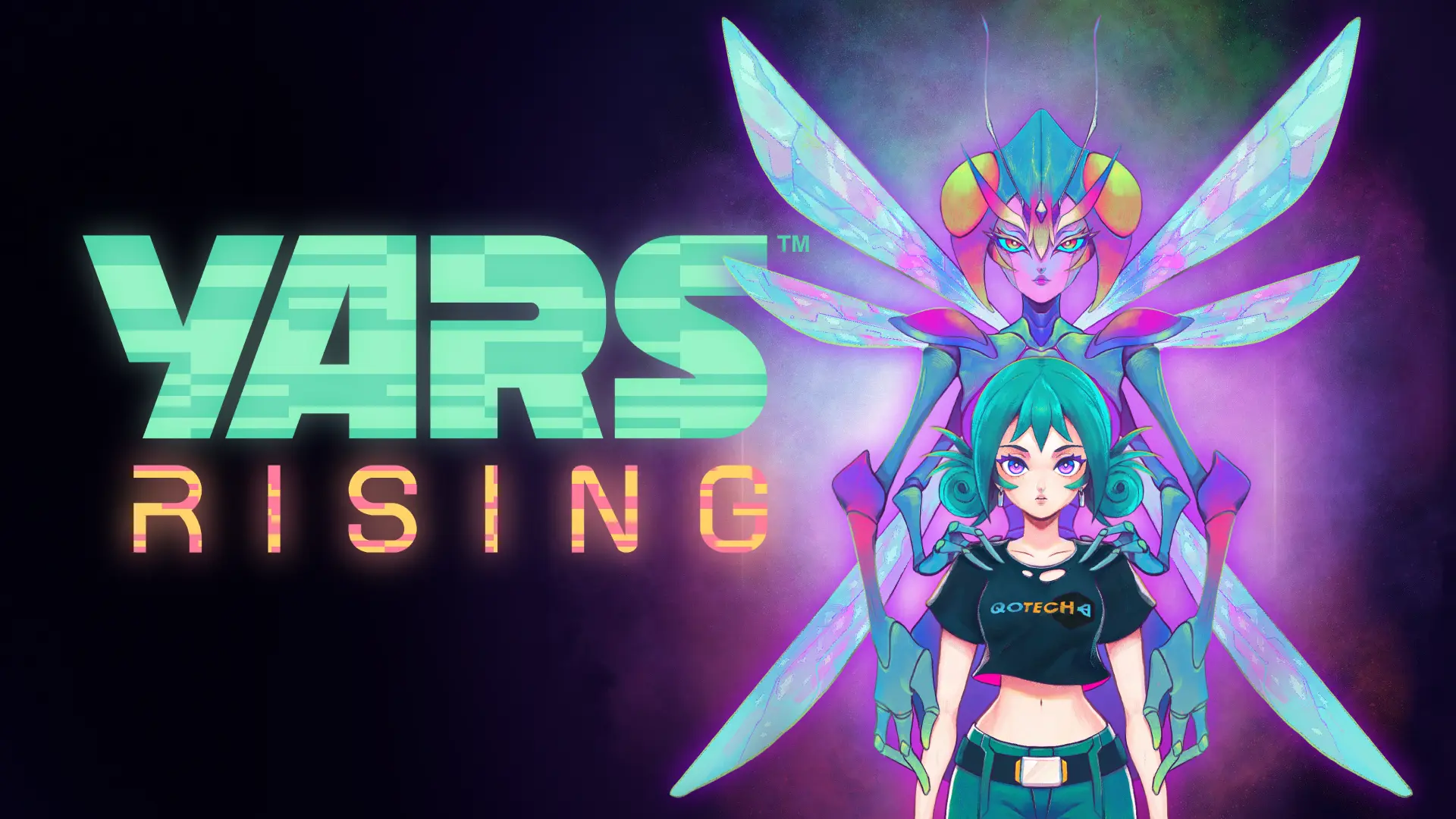
I have been following the games industry for so long that sometimes a new trickle of news will just cause my mind to malfunction, as I believe, for a split second, I have stumbled upon a glitch in reality. Howard Scott Warshaw’s 1982 Atari 2600 title, Yars’ Revenge, is a game that graying Gen Xers might cite as being highly influential, important, and highly influential in the broader game industry. Personally, I’m a bit too young to be part of that demographic, and consider Atari games to be games for programmers and game designers. They have historical significance, but everything they did was later better done by people with more time, support, and resources.
Sometimes, it can just be that simple. A game comes out, people like it, and the world moves on. However, the third gen incarnation of Atari retained ownership of the title, and IPs never die in this modern era. So… they licensed a GameBoy Color port of Yars’ Revenge in 1999. A port that fits this single screen game on a single screen. Huh. Honestly, I would just look at that and cancel the port outright. Instead, the developers at Vatical Entertainment pushed through with the project, sprucing it up with new graphics and pretty decent music but… who wanted to buy a GameBoy cartridge of a 17-year-old game in 1999?
Then, in 2005, when Infogrames Atari was lining their pockets with Dragon Ball money, they released a homebrew sequel to Yars’ Revenge, entitled Yars’ Return, for their Atari Flashback consoles. It’s a full-on Atari 2600 title that has its own history of getting updated releases over the years and is considered worse than the original. Just looking at the gameplay, it’s pretty clear why, as it awkwardly adds another dimension to the gameplay, while restricting movement space. It took something simple and made it less fun and iconic at the same time!
However, that wasn’t really a revival as much as a way to entice people who remembered Yars’ Revenge to buy an Atari Flashback console. It wouldn’t expand the audience for the title. …Which, for some reason, Atari really wanted to do. So they rebooted the series with 2011’s Yar’s Revenge. Not the revenge of a group of Yars, but rather the revenge of a singular individual known as Yar. Very important distinction.
Yar’s Revenge was a rail shooter a la Panzer Dragoon and Star Fox that released for Xbox Live Arcade and Steam, where it was quickly written off as mediocre. Still, it was an odd enough title for me to remember it at the very least. …Which is why it’s weird that the game simply lacks a pure longplay on the internet. The closest I could find is a narrated livestream from someone in 2019… where this 16:9 game was presented in a 4:3 resolution.
What makes the 2011 game so… memorable and/or interesting is how it morphed the story around the original game into something far less… unique, but also clearly earnest.
For those not privy to the lore from a 1982 video game, Yars’ Revenge is a sci-fi story about a race of common house flies who land on an alien world. There, their bodies adapted and mutated, transforming them into super-powerful beings who could eat anything and turn it into energy bullets and fly through space… on their wings. Also, they have buff human torsos. However, the Yars have been attacked by the unseen invaders known as the Qotile, who took over one of their planets, and are now in the midst of engaging in an interstellar war. Which is what’s going on in the game. The distance between two planets is being conveyed on a single screen, with bugs who must move at the speed of light! I love old video game bullshit like this!
Meanwhile, the 2011 game follows an anime bug girl— named Yar and from a race known as Yars— flying around in power armor as she wages an assault on the evil Qotile empire who previously enslaved her. Or at least I think so. The game’s story was given basically no budget, with cutscenes being conveyed with art stills, pans, and low energy backing music. There’s no voice acting, which makes the game feel bizarrely lifeless. Like it’s not even done, as the game is practically designed to have voice acting, given how dialogue boxes pop up during stages.
Every other game I can think of in the genre, including Star Fox 64, Panzer Dragoon Saga, Sin and Punishment, and Liberation Maiden had voice acting. For a two hour game like this, full English VO would cost maybe $25,000 in 2010/2011 money. But Atari was too cheap to add it and I think that’s why critics found the title so middling. Because going through some gameplay, it seems like a good enough rail shooter. Its graphics are not that impressive, but there are some solid environmental designs. Its UI elements have a slick aesthetic that, while a bit strange, do make it stand out. And I can tell there was a clear effort to make something different. Instead, it’s sitting with a 55 on Metacritic and nobody remembers it!
I think that if it had cheesy voice acting and its own IP, Yar’s Revenge would be more memorable, strangely enough. Instead, the game presumably didn’t do too well, the studio behind it, Killspace Entertainment, died two years later, and I doubt even Atari’s modern owners even remember they made it. Also, for all its faults, it is leagues better than Alone in the Dark: Illumination, Asteroids: Outpost, and Haunted House: Cryptic Graves. The unholy kusoge trinity of Atari reboots. Games so bad that Atari has delisted them.
Following that, Atari went into full nostalgia mode, publishing oodles of collections, reimaginings, and titles that fit the ‘Atari aesthetic’ in some way, shape, or form. This has affected many of the classic IPs, and Yars’ Revenge has been no exception. In fact, it received two new titles in 2022.
In recent years, Atari has teamed up with Adamvision Studios on the Atari Recharged series. A series of reimagined Atari games that aim to retain the same core gameplay appeal, while doing something different and more modern. With Yars: Recharged being one of the more radical departures. It’s effectively a completely different game, but one with a spiritual closeness to the original. They’re both about manipulating barriers and enemy targets, destroying them before unleashing a destructive burst of energy, wiping everything out. It could work just as its own thing, but it’s the type of sequel that could appeal to fans of the original, while still being palatable to less seasoned audiences.
Then, three months later, there was Yars’ Revenge Enhanced. A visual facelift of the 1982 original released as part of Digital Eclipse’s excellent Atari 50 collection. The wizards fully recreated the game with flashy modern graphics and included a toggle between the old graphics and new graphics. Which I think is a great way of illustrating both the power of graphics and how even a fairly basic game— written in Assembly— can still have some appeal.
…Also, Howard Scott Warshaw said he was working on an Atari 2600 sequel to Yars’ Revenge back in 2022, but nothing has come from that as far as I can tell.
Yars’ Revenge is currently in about the best spot it has been since 1982, or 1983. Back when you could get a cartridge on clearance for $15, or $47 in 2024 dollars, at your local Sears. That could be it, and I think that would be just fine. …Instead, Atari is partnering with WayForward to create Yars Metroidvania.
WayForward is an oddball developer who I’m shocked is still around in its current form. They started as a licensed GameBoy game developer in the 90s, saw great success during the first indie game boom, and rather than expand, they stayed the course. They are a versatile studio, have a lot of connections with great freelancers, and are open to working with whatever IP they can get their hands on. Not all of their games are great— some of them were ripe shit to be honest— but I admire their tenacity and how they managed to last so long without any decline.
…But they’ve also never been great at 3D game development. Double Dragon Neon always looked damn fugly up close. Bakugan Champions of Vestroia makes Pokémon BDSP look like a bold transition into the HD era. And if you told me Contra: Operation Galuga was a late Xbox 360 title…I’d believe you. I know that’s wrong, and I’d immediately say that Hard Corps Uprising was the only Contra game for 360— and looked way better— but I’d believe you. Still, I love ’em. They’re up there with Tose, Falcom, and Spike Chunsoft on Natalie’s list of unconditionally trusted developers.
Now that I’ve gone on a 1,400 word backstory tangent, let’s talk about the actual subject of this segment, Yars Rising. A 2.5D Metroidvania following Emi Kimura, a human hacker infiltrating the shadowy QoTech corporation who discovers a connection to a distant alien race of bug people, the Yars. The game will be more of a stealth-based affair, as Emi might have energy-based pew-pews, she is up against a dominating corporation who… are pretty transparently just Qotile with a cyberpunk skin.
Now… this all actually makes a lot of sense considering the dank lore that I just dug through. The game is likely a sequel to the original Yars’ Revenge, set on a far future Earth that has been infiltrated or conquered by the Qotile. In their ongoing war against the Qotile, the Yars have somehow connected with Emi, imbuing her with their powers in order to deal another blow to the Qotile.
…Or maybe this is actually a sequel to the 2011 Yar’s Revenge, as the Yar depicted in key art looks distinctly female, so she could be a redesigned version of the titular Yar from that game. I know that sounds like a stretch… but everything about this game is a damn stretch! Nothing about this immediately looks like Yars’ Revenge— it’s not even a shooter— and I refuse to believe that this was some diligently devised idea that was suggested by Atari. It’s more likely that they gave this license to WayForward, gave them a budget of $5 million and said ‘do whatever, we don’t care.’ Also, the $5 million figure is just my wild-ass guess for what a typical XBLA game would cost nowadays. That’s enough for 62.5 development years at an $80,000 developer/year cost! And I’d believe that this game was made by 20 people over 3 years.
As for why they would want to make a stealth-based sci-fi Metroidvania? Well, production probably started sometime members of WayForward finished 2021’s Metroid Dread. They probably loved it and wanted to make another stealth Metroidvania, with their prior one being Aliens: Infestation. A great late DS title with amazing sprite animation, permadeath, and was originally presented as a companion title for Aliens: Colonial Marines. The DS is FULL of games that would heavily benefit from a port/remaster, and this… is one of them. Mind you, it would be really hard to do that, as the game used two screens in the second best possible way. Bottom screen maps are GOATed, as the kids would say. Though, the actual best was Henry Hatsworth. …Which there isn’t a good longplay of on YouTube? What the HELL Gamers? This is like your one job!
Tangent aside, Yars Rising is due out for every major system sometime in late 2024. PS4, PS5, Xbox One, Xbox Series, Switch, and PC. …Also the Atari VCS console that exists purely as a vanity and enthusiast item.
Progress Report 2024-04-21
…Did you know that the people behind 2006’s Reservoir Dogs developed a turn-based RPG based on the South Korean CG animated TV show, Cubix: Robots for Everyone? Or that it was published by the 3DO company? The people who scammed a bunch of journalists into thinking that the M2 was real at E3 1995? …Not to be confused with M.2 drives.
And looking at a playthrough… It is one of the most bizarre RPGs I have ever seen, as it is more akin to a card game with a timing system than a typical JRPG. It also has upsettingly bad UX design and obscenely detailed animations for what was a cash grab that could be beaten in… 2.5 hours.
Things that make me wish that I dedicated my life to playing random oddball games for the internet, basically doing my version of Ross’s Game Dungeon, but for games that are even more eclectic and scattershot. Also, Ross’s Game Dungeon is my second favorite game review show on the internet, only preceded by the indelible Tim Rogers. …Yo, where’s that L.A. Noire review out?
2024-04-14: Busy with tax season, started reading Futaba-kun Change, got about halfway through because I was enjoying my time with the series, taking detailed notes.
2024-04-15: Finished reading Futaba-kun Change, glorious manga, worked on the first 1,000 words of the Showcase. Then I accidentally wrote 2,000 words for the preamble ramble, staying up later than I intended. Oopsie doodles!
2024-04-16: I wrote 2,300 words for the Futaba-kun Change showcase. I would have done more, but my mother had to switch from Accounting CS to QuickBooks Desktop and I had to help her in the transition.
2024-04-17: More QuickBooks issues, and I had to go to the office to fix a scanner issue. Wrote the 1,800 word Yars Rising section. I had to do legit research for this one, and I doubt there is a more comprehensive writeup to explain the history leading up to Yars Rising on the internet.
2024-04-18: Wrote 3,000 words for the TSF Showcase. The limited progress was due to QuickBooks help for my mother and my lack of desire to do ‘project work’ during half-hour break sessions for the ‘day job.’ Also, edited the Yar’s and preamble sections.
2024-04-19: UGH! Wrote, I dunno, 4,000 words for the TSF Showcase and edited it. This took WAY too long, and I regret not being prepared enough for a project like this, as I wasn’t even able to get the header image of associated Futaba-kun screengrabs ready.
2024-04-20: Got the 50+ Futaba images ready! And edited10,700 words for VD2.0.
Verde’s Doohickey 2.0: Sensational Summer Romp
Acts 1 and 2 Progress Report:
Current Word Count: 372,153
Estimated Word Count: 370,000
Words Edited: 238,347
Total Chapters: 33
Chapters Edited: 23
Header Images Made: 0
Days Until Deadline: 38
Or in other words… I made zero progress this week because of Futaba-kun. FUCK ME!
Header image contains a quickly modified version of the title screen from Mega Man 2, because I had to whip something up before going to bed.
Breaded Rump was a funny name!
I’ve forgotten a lot of my K-12 years and on the whole wish I could forget the rest since what little tends to come to mind unbidden from time to time is either utterly trivial or more often unpleasant. Not super-horrific, just not things I care to remember. It factors into my generally not being interested in fiction set in schools during those years. It doesn’t make sense to me that high school reunions are actually attended by anybody.
However, from your Rundown, Futaba-kun Change! sounds like it has such a bonkers kitchen sink quality to it that I can see checking that out sometime.
Created a Mangadex account to start a reading list there and I’m sure the Rundowns will be helpful for that. There’s apparently 889 titles with the keyword genderswap there, wow! Though it seems like the significance of the keyword to the plot may vary wildly.
I happened to read a one-shot titled Final Girl, where a male office worker faints outside of a movie theater and is put into the body of a young woman with a promiscuous backstory staying in a cabin with friends in… I guess a world where the slasher movie is reality? The fact that a genderswap happened is practically inconsequential; it could’ve been a real-world woman with knowledge of slasher tropes put into the slasher movie world and it would’ve played out the same way.
Glad you enjoyed the Futaba-kun write up!
MangaDex is full of gender swap manga, but a lot of them are one-shots, not particularly good, and while tagging has gotten better, you can run into stories that are more crossdressing than gender swap from time to time. I know my friend Cassie tracks that tag rigorously, and has given me more than a few recommendations.
Final Girl is a title on my list of Showcase candidates, and I was going to cover it a few weeks ago, but I figured it’s connected enough to horror that I would save it for my next busy season in October.
Final Girl would be an appropriate one for the Halloween season for sure.
Incredible to think that the 889 titles on Mangadex must be only some percentage of all the genderswap manga, since the site can’t possibly have everything. I wonder if it’s hundreds more or thousands?
There are WAY more. Just doing a quick search on MangaUpdates, there are over 3,7000 comics with a gender swap tag. Mind you, they do not have a crossdressing tag, so that may be overstated, but it’s also important to note that this is also not a complete list, and I have seen plenty of series that MangaUpdates does not catalog. The world of TSF is VAST and the more you look, the more you’ll find. Is most of it good? Probably not. So you need to keep on digging, as you never know when you’ll find a diamond in the rough!
3700+ is amazing.
“Detective Akechi in a frenzy” might be good for Halloween too. Though scanlation’s incomplete with just one chapter of a four volume series, you could touch on Edogawa Ranpo and Ero guro nansensu. If you’re not familiar with him, seems like his stuff would be up your alley. I’ve read a collection of his short stories and seen several film adaptations of his works: creepy, inspiredly weird stuff. Even just the title “The Human Chair” is brilliant.
I typically like to cover the entirety of finished series, rather than touch upon one chapter released YEARS ago. :P
I’m not sure if I’m missing something, but I don’t see how Edogawa Ranpo and Ero guro nansensu are related to TSF. Unless you’re just making a general recommendation.
That makes sense about restricting coverage to fully-translated series. No telling how long it may take for someone to get to the rest.
On Ranpo/Ero guro nansensu, see:
Wang, Evelyn. “The erotic Japanese art movement born out of decadence.” August 31, 2016. https://www.dazeddigital.com/artsandculture/article/32596/1/ero-guro
It’s relatively short with a bunch of illustrations. I thought possibly the bizarre and transgressive aspects might have some appeal, just a general recommendation. Aside from “the erotic, the perverse, the corrupt, and the bizarre,” there was also societal critique, embrace of the liberation of women, queer visibility in it, that article indicates.
Ranpo didn’t make any use of TSF of which I’m aware, but he was prolific and the percentage I’ve read probably doesn’t amount to even 10%. He did feature surgical and magical transformations of bodies, and did feature crossdressing, so if he didn’t do TSF he’s probably smacked his head in his grave, “why didn’t *I* think of that?”
WayForward is great! I recently got to chat with the director of River City Girls 2, and it was a fun time.
I wonder if any of your Japanese-speaking correspondents might know when TSF was first used to describe certain kinds of manga? The Japanese Wikipedia added it in 2006 but of course it could predate that. Would be interested to know for that matter if there’s been discussion in Japanese publications of the subject, forums discussing it in Japanese, etc.
FWIW started drafting an article for the English WP on TSF/TG (not in their article space yet). Somewhat challenging to find sources they’d consider acceptable, but plugging along. One of the earliest I could find states in part:
“Just as transsexual autobiographies form a genre with a set narrative structure, transsexual fiction also falls into a typical genre. Almost all of the popular stories on the commercial information service provider CompuServe follow a very similar story structure.” (Karen Nakamura in Gender Blending. Prometheus 1997).
Supports your assessment that it is a genre, with which I agree, rather than just some isolated plot device or tag or whatever. Nakamura was looking at a specific type of story that had then been available on CompuServe, by which I suppose was meant a BBS or forum hosted by CS but it’s not entirely clear. Nakamura’s description of prevalent narrative elements more or less matches what was common for A.S.S. on Usenet up to 1997 (both prior to Fictionmania – although Internet Archive’s oldest version of that site from 1999 states on its front page “This site contains most of the fiction stories found on the old Sierra Connnection BBS.”). Anyhow, the mentions of CompuServe and Sierra suggest some of the common story conventions could date back to the 1980s.
I do not really have Japanese-speaking correspondents. I just have Chari, who has been insightful and has been trying to amass information on TSF history for a good while. However, Chari does not delve too deeply into Japanese TSF communities, and mostly focuses on finding TSF’s manga origins.
Hold on, are you saying you are currently writing an article on TSF/TG? I’m not sure what you mean by English WP, but that sounds wild to me! I thought you were just an enthusiast, but you’re a tried and true academic!
Researching materials from the early proto-internet era is difficult, as it involves digging through archives that very well might be incomplete. I have a habit of forgetting about BBS and Compuserve, but they were home to a lot of early forms of online discourse and culture.
The main English-language Wikipedia (WP) I meant. I’ve edited there enough over the years, not recently, to know what should work there. Might try to address the issues with the a.s.s. usenet article there too which has a “More citations needed” flag on it and has been nominated for deletion three times. There was also a Fictionmania article that got deleted that *maybe* there’s enough sources for now to recreate but have to see first how the TSF/TG article when posted goes (and Fictionmania could be covered within it at least). Offline, I have book, journal and lecture credits only on other unrelated subjects. 🙂
I just tried a Google search in only the .JP domain and think I hit on a potential lead of sorts. Machine translating into English from a blog site:
“The term ‘TSF’ is a coined abbreviation for Transsexual Fiction, and it began to be used on web communities around 2001. This word was proposed by Tsukihana, who creates TSF novels. Additionally, the ‘F’ in TSF can also be interpreted as ‘Fantasy,’ and TSF is also a pun with SF (Science Fiction).” (tsff.sakura.ne.jp/tsf/) I wonder who the author of the blog is and who Tsukihana [Moonflower] might be.
“I, F, started looking at the TSF area’s site around 1998, and I started writing TSF-based SS around 2004, and it’s been about 2 years since I started publishing manga doujinshi by asking commercial writers, and I’m treated as newcomers from old people in the TSF area. I’m in a position to be done. […]
“Does TSF include changes from female to male as well?
“In current usage, it’s often understood to include changes from female to male as well. However, originally, it mainly referred to changes from male to female. On the website of Yaesu Kazunari, who introduced the term TS = TransSexual into the world of fiction, it is stated, ‘This is a site specializing in fiction works such as SF and fantasy where boys transform into girls.’ The collection of works he gathered also mainly focused on transformations from male to female. Additionally, the TS submission site called ‘Shonen Shoujo Bunko’ founded by Yaesu Kazunari also deals with transformations from boys to girls. Furthermore, in the explanation of the origin of the term TSF, it specifically targets only transformations from male to female. Moreover, during the operation of the site TS-WEEK around 2000-2001, discussions were based on the premise of transformations from male to female.” (tsff.sakura.ne.jp/tsf2/)
The author also indicated familiarity with fictionmania and other English language sites.
That ca. 2000 TS-Week site had translations into Japanese from Fictionmania (at least two stories by Brad Miller), reviews, captions, four panel cartoons, etc. One of the pages with a four panel cartoon: (web.archive.org/web/20181106134943/http://www.geocities.co.jp/Bookend/8817/backnumber/20000521/index.html)
Jeepers, you’ve gone deep down this rabbit hole. I guess you need to if you’re trying to make a gosh darn WIKIPEDIA article on TSF, which would do wonders to help boost its visibility. Also, I’m sure that you’re going to find a lot of smaller nuggets of information that don’t fit into a Wikipedia article, so do you have any plans on doing a more detailed write-up or article or some sort?
There’s no great challenge in just creating a Wikipedia article, a “stub,” but when it’s about subcultural or sex-related stuff the deletionists there can be quick to pounce if there’s not good sourcing. I’m just anticipating that and trying to put good sourcing in from the start – which isn’t typically how articles are created there.
TW-Week and that blogger F of TSF – possibly F(えふ)@F_TSF on Twitter – would seem potentially worth including in a history but probably won’t make the cut for WP where they’d be considered “unreliable sources,” “not notable,” or referencing them would be called “original research” on my part. So it might be worth my trying to write up elsewhere too where I’m not held to the same rules.
I found another website, a discussion board, where someone had posted back in 2017 the same thing as F of TSF, an assertion that 月華 (Moonflower) coined the term TSF. I wonder if it is the Twitter user 月華 @gekka3 whose bio states “Amateur TSF (transsexual fiction) writer. Wants to make a professional debut.” Clicking on “こちら” from the main page of the website (gekka3.sakura.ne.jp/index.html) leads to garbled symbols that indicate it’s using some foreign font I don’t have installed though, so I can’t machine translate it. But stuff on their blog linked from Twitter can be translated (blog.livedoor.jp/unrealnovels/).